
 Roofing Services
Residential Fencing That Fits Your Property
A fence usually gets attention when something goes wrong – a leaning panel after a storm, a gate that will not latch, or a backyard that suddenly feels too exposed. Good residential fencing solves those problems, but the best fence does more than mark a boundary. It adds privacy, improves security, helps with pets and kids, and gives the whole property a cleaner, more finished look.
For homeowners in Texas, the right fence also has to stand up to heat, heavy rain, shifting soil, and strong wind. That is where smart planning matters. A fence can look great on day one and still become a headache later if the material, layout, or installation does not match the property.
What residential fencing should do
A lot of fence decisions start with appearance, and that makes sense. You want the finished job to look good from the street and feel right in the backyard. But the better starting point is function. Ask what the fence needs to do every day.
If privacy is the top goal, a taller wood fence with limited spacing between boards usually makes the most sense. If you want to keep a dog secure without closing off the whole view, a different design may work better. Some homeowners care most about security around gates and access points. Others want curb appeal in the front yard and practical durability in the back.
That is why one-size-fits-all advice usually falls short. A fence for a family home in The Woodlands may need full backyard privacy and a safe gate for children. A rental property in Houston may need something durable, affordable, and easy to maintain between tenants. A home going on the market might benefit from a clean, attractive fence that helps the property show better without overspending.
Choosing the right residential fencing material
Material affects more than looks. It changes maintenance, lifespan, price, and how well the fence handles local weather.
Cedar fencing
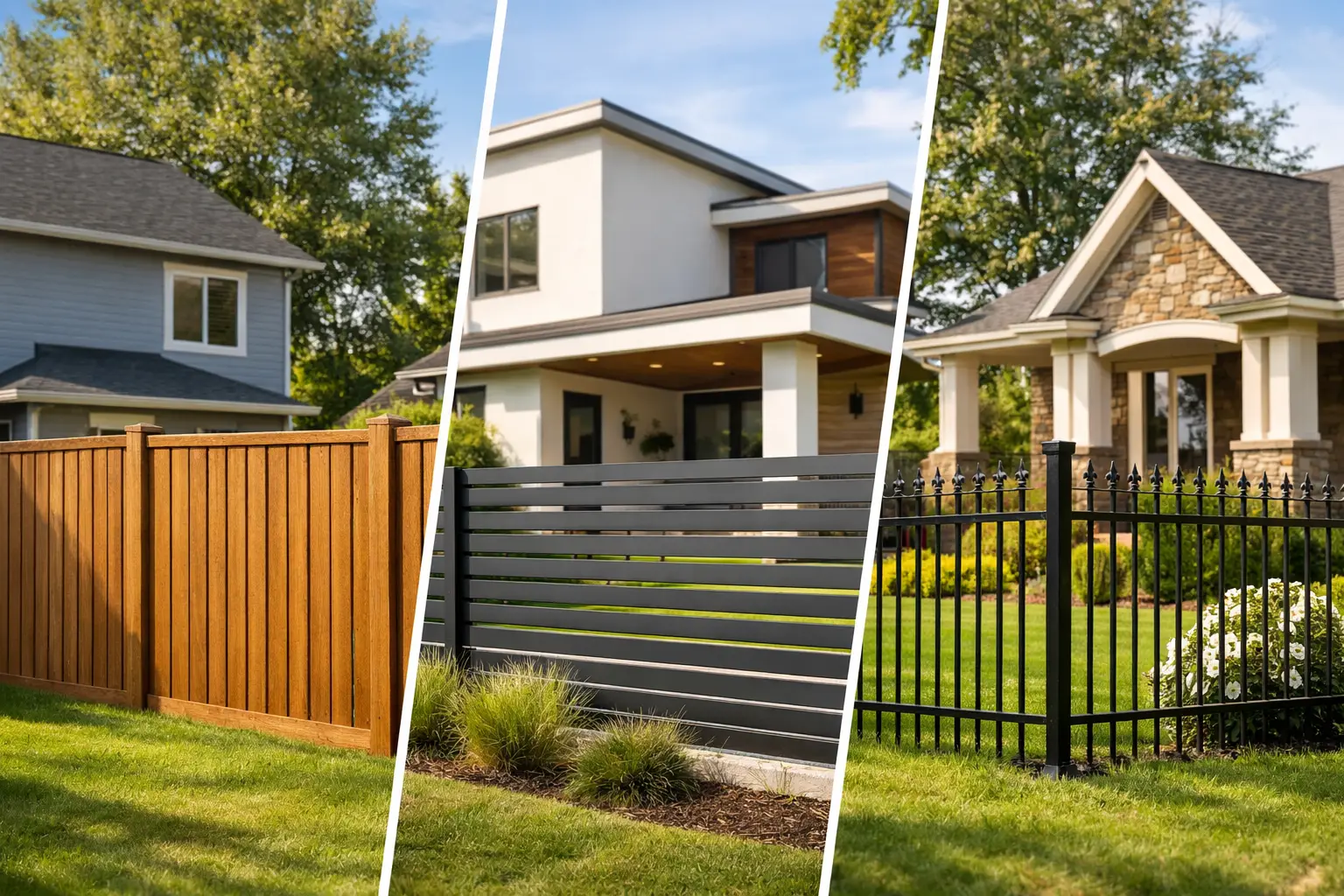
Cedar remains one of the most popular options for residential properties because it balances appearance and performance. It has a natural look that works with many home styles, and it generally handles outdoor conditions better than cheaper wood choices. Cedar is a strong option when homeowners want privacy, a custom design, and a fence that feels substantial.
That said, cedar is not maintenance-free. It still benefits from proper installation, sealing or staining, and occasional upkeep. If those steps are ignored, even a good cedar fence can age faster than it should.
Pine fencing
Pine is often chosen when budget matters most. It can provide the same basic function as cedar at a lower upfront cost, which makes it attractive for larger yards, investment properties, and straightforward replacement jobs. Pressure-treated pine also holds up better than untreated wood.
The trade-off is longevity and appearance over time. Pine can be a solid value, but it may require more attention and may not age as gracefully as cedar in the Texas climate.
Aluminum and metal fencing
If you want a cleaner, more open look, aluminum or metal fencing may be the better fit. These materials work well for front yard accents, pool areas, side boundaries, and homes where visibility matters as much as security. They can be durable and lower maintenance than wood, especially when installed correctly.
The downside is privacy. Metal fencing protects boundaries well, but it does not create the same enclosed feel as a full wood fence. For some homeowners, that is exactly the point. For others, it is a deal breaker.
Split rail and specialty options
Split rail fencing works best when the goal is definition rather than privacy. It is often used on larger lots, rural-style properties, or areas where a natural, open look fits the setting. Specialty fence solutions, including dog fences and custom layouts, can also make more sense than a standard build when the yard has unusual slopes, access issues, or pet containment needs.
Design matters more than most people think
The style of the fence changes how the whole property feels. Height, board spacing, gate placement, trim, and post caps may seem like small decisions, but together they affect both function and curb appeal.
For example, board-on-board designs can improve privacy and reduce sight lines through the fence as wood naturally shifts. Horizontal fencing creates a modern look, but it needs careful construction to avoid sagging or uneven lines. A decorative front fence may look great, yet still fail if the gate opening is too narrow or the placement disrupts driveway access.
Good design is not about adding extra features for the sake of it. It is about building a fence that fits the house, the lot, and how you actually use the space.
Common mistakes with residential fencing
Many fence problems start before installation even begins. Homeowners often choose based on the lowest price alone, without comparing material quality, post depth, drainage concerns, or the condition of the soil. A cheaper bid can become more expensive fast if the fence starts leaning, warping, or failing at the gate.
Another common issue is overlooking the layout. Property lines, utility locations, drainage paths, and tree roots can all affect the final result. On some properties, a straight fence line looks best. On others, adjusting the layout slightly creates a stronger, longer-lasting build.
Gate planning is another area where shortcuts cause trouble. Gates get the most daily use, which means they also get the most wear. If the gate frame, hinge hardware, or support posts are not built properly, that is usually the first place the fence starts failing.
When repair makes sense and when replacement is smarter
Not every damaged fence needs a full replacement. Sometimes a few broken pickets, one sagging gate, or isolated post damage can be repaired without rebuilding the entire structure. If most of the fence is still solid, targeted repairs may be the best value.
But there is a point where patching stops making financial sense. If multiple posts are failing, large sections are warped, or the fence has repeated storm damage, replacement often gives a better long-term result. A patched fence can still look uneven and continue creating maintenance costs.
That is why an honest assessment matters. The right answer is not always the biggest job. Sometimes it is a practical repair. Sometimes it is time to stop fixing the same problem and install something built to last.
Residential fencing for privacy, pets, and property value
Most homeowners are balancing several goals at once. They want privacy in the backyard, safety for children or pets, and a fence that improves the overall appearance of the home. A well-built fence can absolutely do all three, but priorities should be clear from the start.
If pets are part of the equation, spacing at the bottom of the fence matters just as much as height. If resale value is important, the fence should complement the home rather than overpower it. If privacy is the main concern, attention to board placement, gate gaps, and transitions around the sides of the house becomes more important than decorative details.
For many properties, residential fencing also supports value by reducing visible wear around the yard. It creates cleaner lines, improves first impressions, and makes outdoor space feel more usable. Buyers notice that. So do neighbors. Even when a fence is built for practical reasons, it often ends up improving curb appeal at the same time.
Why workmanship matters as much as material
Even the best materials can underperform if the installation is rushed. Posts need to be set correctly. Lines need to be straight. Gates need proper support. Hardware needs to hold up under repeated use. Those basics sound simple, but they are the difference between a fence that lasts and one that starts showing problems too soon.
That is one reason many homeowners prefer working with a full-service local contractor instead of treating fencing like a quick commodity purchase. You want a crew that understands soil conditions, weather exposure, property layouts, and how to build for the real demands of the area. You also want clear pricing, dependable scheduling, and a result that looks good without cutting corners.
GottaCallMAC works with homeowners who want exactly that – practical recommendations, fair pricing, and fence solutions built around the property instead of a generic package. Whether the job calls for cedar privacy fencing, pine for budget-conscious coverage, metal accents, or a custom layout for pets and access, the goal stays the same: get it done right and make it last.
If you are thinking about a new fence or dealing with one that is no longer doing its job, start with the real purpose of the project. Once that is clear, the right material, style, and budget usually follow a lot more easily.
