
 Roofing Services
Fence Repair: Fix It Now or Replace It?
A fence usually does not fail all at once. First, a gate starts dragging. Then one post leans after heavy rain. A few pickets crack, a section loosens, and before long the whole line looks tired. That is why fence repair matters early. Small problems are cheaper to handle, easier to contain, and far less likely to turn into a full replacement job.
For homeowners and property managers, the real question is not just whether a fence looks bad. It is whether the damage is cosmetic, structural, or creating a security problem. A loose board is one thing. A rotted post, storm-damaged panel, or gate that will not latch is another. Knowing the difference helps you make the right call before the issue spreads.
When fence repair makes sense
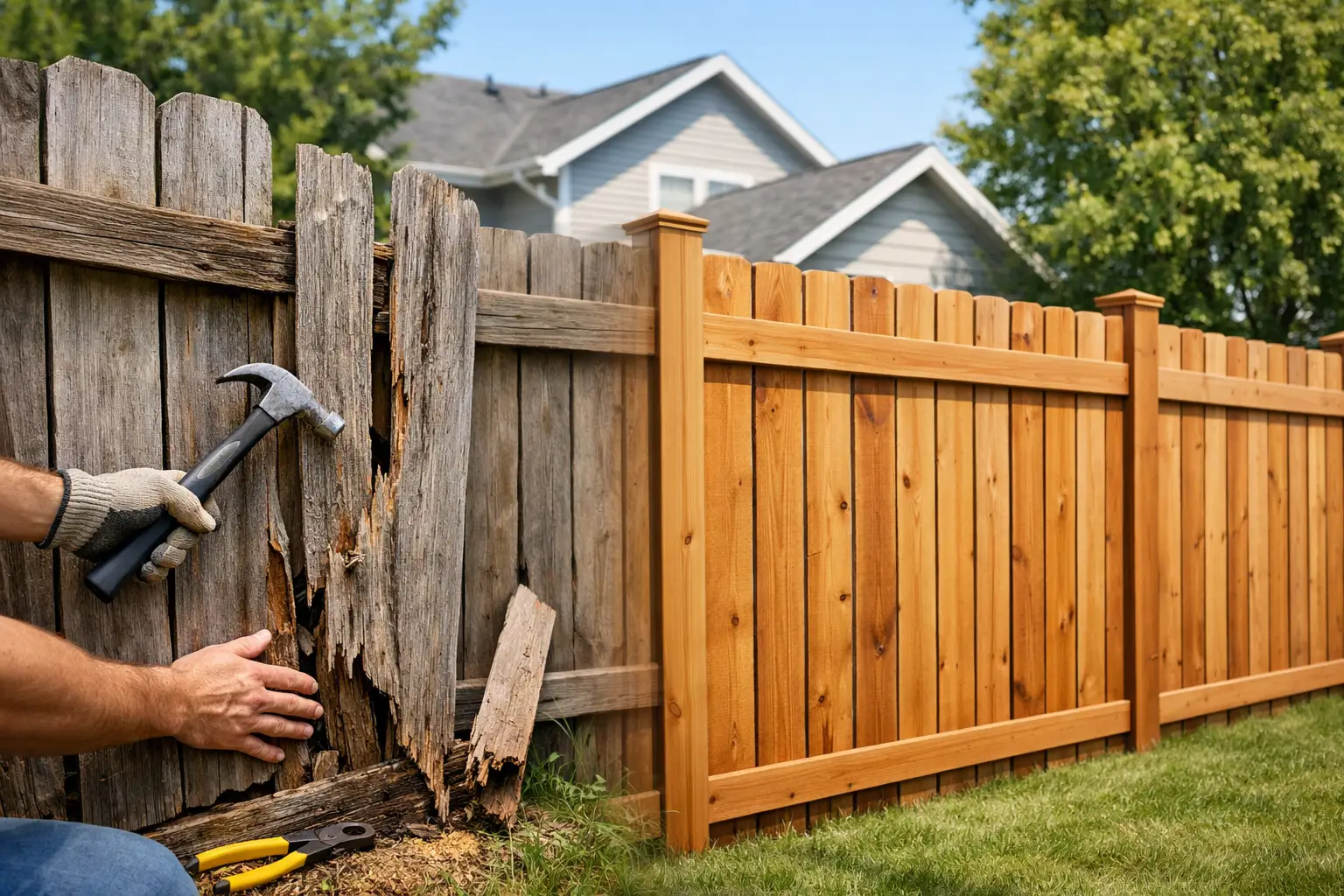
A lot of fence problems are repairable if the core structure is still sound. That is especially true with wood fences, where one damaged section does not always mean the full run is done for. If a few pickets are split, rails are loose, or hardware has worn out, targeted repair can restore function without the cost of rebuilding everything.
Post issues are where the decision gets more serious. If one post is leaning because the soil shifted or the concrete footing failed, that post may be replaced while the surrounding fence stays in place. But if multiple posts are failing, the fence has likely reached a point where repairs start becoming temporary. That is where an honest inspection matters.
Metal and aluminum fences tend to have different repair patterns. Instead of rot, you may see bent sections, impact damage, rust in key joints, or gate alignment issues. These problems can often be corrected, but it depends on how much force the fence has taken and whether the damaged section still matches the rest of the system.
Signs your fence may need more than a quick fix
Some damage looks minor until you get close. A fence can still be standing and already be past the point of reliable repair. That happens most often when the materials have broken down over time, not just from one event.
If the wood is soft at the base, if several posts are leaning in different directions, or if panels are pulling apart because the frame no longer holds tension, repair may only delay the inevitable. The same goes for repeated gate problems. If you have adjusted the latch, rehung the gate, and replaced hardware, but it keeps sagging, the problem may be in the post or surrounding structure.
Appearance matters too, especially for homes going on the market, commercial properties, and rental properties. Patchwork repairs can solve the immediate issue, but if the fence has widespread discoloration, warping, and visible age across every section, replacement may deliver better value than paying for repair after repair.
The most common fence problems in Southeast Texas
In the Houston area, fences take a beating from weather, moisture, heat, and shifting ground. Even a well-built fence can start showing wear sooner if it is exposed to standing water, hard sun, and storm activity year after year.
Wood fences often deal with rot near the bottom, warped pickets, fastener failure, and loose rails. Posts can shift when saturated soil expands and contracts. After strong wind or storm debris impact, it is common to see one damaged section that puts added stress on the next section beside it.
Gates are another frequent weak point because they move every day. Over time, hinges loosen, frames twist, and latches stop lining up. A dragging gate is not just annoying. It can damage the post, pull fasteners loose, and create a security issue if it no longer closes properly.
For commercial sites and larger residential properties, perimeter fencing can also suffer from vehicle impact, tree-related damage, and deferred maintenance. A repair that works on a backyard privacy fence may not be enough for a property where access control and appearance both matter.
What good fence repair should actually accomplish
A proper repair should do more than make the fence look straight for a few months. It should restore stability, improve function, and match the existing fence as closely as possible. If the repaired section is weaker than the rest, or if the root cause is not addressed, the same area will likely fail again.
That is why repair quality comes down to more than swapping out a few boards. The contractor needs to look at the post condition, rail attachment, fasteners, alignment, and overall load on the structure. If one section failed because water is pooling, because a gate is putting too much weight on a weak post, or because previous work was done incorrectly, fixing the visible damage alone is not enough.
A good repair also respects the look of the property. On wood fences, material matching can be tricky because new wood naturally looks different from older panels. Sometimes that contrast fades over time. Sometimes staining or sealing helps bring the appearance together. The point is to be realistic. Function comes first, but clean workmanship still matters.
Fence repair vs. replacement: what affects the cost
Most property owners are trying to answer two questions at once: what will this cost now, and what will it cost me later if I wait? That is the right way to look at it.
Repair is usually the better value when the damage is limited to a section or component. Replacing a gate, one post, or several pickets is far less expensive than rebuilding an entire fence line. But there is a tipping point where multiple repairs across an aging fence become more costly than starting over with new materials.
Material type affects the number too. Cedar, pine, metal, and aluminum all repair differently. Access matters as well. A fence line that runs through tight landscaping, backs up to a commercial boundary, or sits on uneven ground can take more labor. Urgency can also play a role. If a fence is down after a storm or creating an immediate safety issue, speed matters.
The smartest move is not always choosing the cheapest option on paper. It is choosing the one that holds up. A low-cost patch may feel like a win this week and become another repair bill next month.
Why fast action matters after storm or impact damage
Once a fence is compromised, the next problem usually comes quickly. A leaning section puts pressure on nearby posts. A gate that does not latch can swing in the wind and damage hinges or framing. An open gap can create issues with pets, privacy, and property security.
After a storm or accidental impact, timing matters. Wet wood can continue deteriorating. Loose hardware can tear out further. What starts as one broken section can spread if the line is not stabilized. Quick fence repair is often the difference between saving most of the fence and paying for a much larger rebuild.
This is one reason many owners prefer working with a full-service contractor. If the fence damage happened along with tree debris, drainage concerns, or other exterior issues, it helps to have one reliable team look at the full picture instead of treating the fence like an isolated problem.
Choosing the right contractor for fence repair
Not every repair is complicated, but it still needs to be done right. The contractor should be clear about whether repair is truly the best option, what materials will be used, and how closely the finished section will match the rest of the fence. If a company pushes replacement on every job, that is a red flag. If they promise a cheap repair without discussing the posts or underlying cause, that is another one.
Look for practical communication and straightforward pricing. You want someone who can explain what failed, what can be saved, and how long the repair is expected to last. Licensed, bonded, and insured matters too, especially for commercial sites and larger perimeter projects.
For many property owners in Spring, The Woodlands, Conroe, Houston, and nearby communities, responsiveness is just as important as craftsmanship. When a fence is broken, you do not want to wait around for vague scheduling or unclear estimates. You want a team that shows up, gives you a fair number, and gets the work handled on time. That is the standard GottaCallMAC is built around.
Fence repair is often about protecting more than the fence
A fence does a lot of quiet work. It defines property lines, protects pets and kids, adds privacy, supports curb appeal, and helps a home or business look maintained. When it starts failing, the issue is not just cosmetic. It affects how the whole property functions.
That is why putting off repair rarely saves money for long. The better move is to catch the problem while you still have options. Sometimes that means a simple section repair. Sometimes it means replacing the parts that can no longer do their job safely. Either way, the goal is the same: a fence that looks right, works right, and does not leave you dealing with the same problem again in a few weeks.
If your fence is leaning, sagging, separating, or showing storm damage, trust what it is telling you. Waiting usually makes the answer more expensive.
