
 Roofing Services
Commercial Fencing That Works Harder
A fence around a business has to do more than mark a line. It needs to control access, protect equipment, guide traffic, support liability concerns, and still look professional when customers or tenants pull in. That is why commercial fencing is rarely a one-size-fits-all job.
For business owners and property managers, the right fence comes down to function first. A warehouse yard has different needs than an office park, retail center, apartment complex, industrial site, or church property. The best results come from choosing a fence system that matches how the property is actually used day to day, not just what looks good in a photo.
What commercial fencing needs to do
At the commercial level, fencing is part security feature, part traffic control, and part curb appeal. In some cases, it is also about keeping the site compliant with insurance requirements, lease expectations, or safety standards. If employees, residents, vendors, delivery trucks, or the public move through the property regularly, the fence has to help operations instead of creating bottlenecks.
That means the conversation should start with practical questions. Are you trying to deter trespassing after hours? Keep dumpsters and equipment secure? Separate parking from pedestrian areas? Create a clean perimeter for a new development? Different goals lead to different fence heights, materials, gate setups, and repair priorities.
A lot of owners make the mistake of focusing only on upfront cost. Price matters, of course, but so does lifespan, maintenance, and how often the fence will take abuse from weather, lawn crews, vehicles, or heavy use. The cheapest option on day one is not always the most affordable option three years later.
Choosing the right commercial fencing material
Material selection is where a project can either get smarter or get expensive fast. There is no single best choice for every commercial property. It depends on visibility, security level, appearance, budget, and maintenance expectations.
Wood fencing for privacy and appearance
Wood is a strong option when privacy matters and a warmer, more finished appearance is part of the goal. It works well for apartment communities, mixed-use properties, service yards, and businesses that want screening from neighboring lots or public roads. Cedar is often a better long-term pick than lower-grade lumber because it holds up well and gives a cleaner look.
That said, wood does require maintenance. In Texas heat, rain, and humidity, boards can warp, fade, or loosen over time. If a property owner wants the look and privacy of wood, it makes sense to build with quality materials and expect occasional repair work as part of ownership.
Metal and aluminum for durability
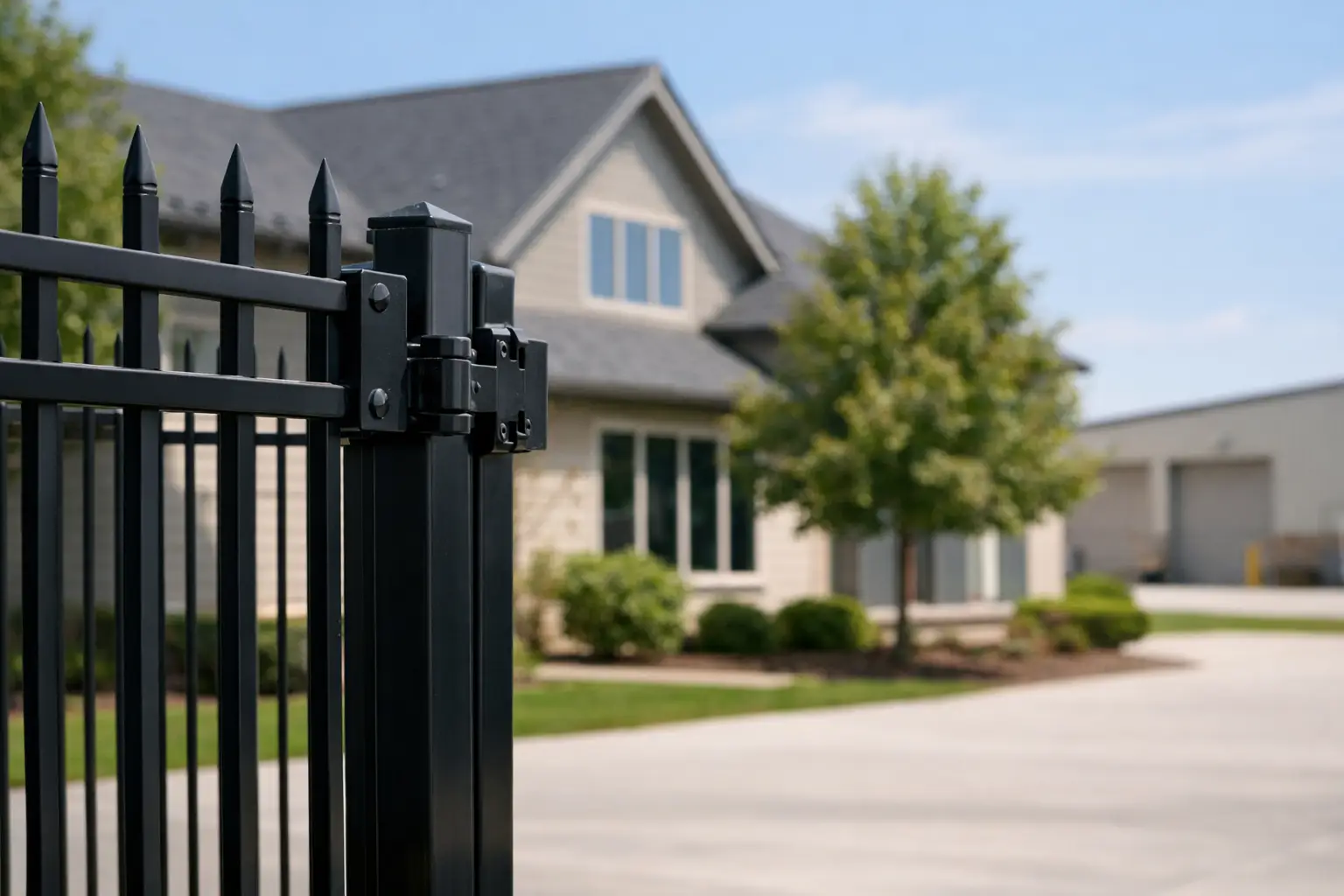
Metal fencing is often the better fit when durability and lower maintenance are the priority. Aluminum works well for commercial properties that want a polished look without the heavier upkeep of wood. It is common around office buildings, storefronts, community spaces, and places where appearance matters just as much as boundary control.
Steel or other heavier metal options are a stronger play for industrial sites, storage areas, and high-traffic zones. They can take more abuse and offer stronger perimeter protection. The trade-off is usually cost and, depending on the system, a more utilitarian appearance.
Chain link for function and value
Chain link remains one of the most practical options in commercial work because it covers a lot of ground at a reasonable price. It is especially useful for warehouses, utility areas, schools, sports spaces, back lots, and properties where visibility matters as much as security. Add privacy screening or security enhancements, and it can do even more.
It will not give the upscale finish some front-facing properties want, but for many businesses, function wins. When the goal is dependable perimeter control without overspending, chain link is still hard to beat.
Gates matter as much as the fence
A commercial fence is only as useful as the way people and vehicles move through it. Gates deserve just as much planning as panels and posts. Too narrow, and they slow deliveries. Too few, and traffic piles up. Too many, and the site becomes harder to secure.
For some properties, a simple swing gate does the job. For others, sliding gates, double-drive gates, or controlled entry points are worth the investment. If the property has regular vendor traffic, fleet access, or after-hours entry needs, gate design becomes a daily operations issue, not just a fence accessory.
This is also where repair needs show up first. Hinges sag, latches fail, posts shift, and high-use entry points wear out faster than the rest of the perimeter. A good commercial fencing plan looks at long-term gate performance from the start.
Commercial fencing and curb appeal
Security gets most of the attention, but appearance still matters. A fence is one of the first things customers, tenants, and visitors see. A faded, leaning, damaged fence can make a property look neglected even when the business itself is well run.
That is why commercial fencing should support the image of the property. A retail center may need a clean, attractive perimeter that feels welcoming. A multifamily community may need privacy fencing that also improves resident experience. A professional office may want ornamental metal that looks sharp without feeling overbuilt.
Good fence design balances toughness with presentation. You do not always need the most expensive material, but you do need something that fits the property type and sends the right message.
Repairs versus replacement
Not every fence problem means starting over. In many cases, targeted repair is the smarter move, especially when the damage is isolated to a few sections, one gate, or several failed posts. Fast repair can restore security, improve appearance, and buy more life from an existing system.
Still, there comes a point when repeated patchwork stops making financial sense. If multiple sections are leaning, materials are rotting or rusting throughout, gates no longer align, or storm damage exposed deeper structural issues, replacement may be the better investment. It costs more upfront, but it can save money compared to constant service calls.
For commercial properties, downtime matters too. A damaged perimeter can create safety concerns, access problems, and liability headaches. That is why quick assessment and honest recommendations matter more than a hard sell either way.
What property managers should look for
If you manage multiple sites, commercial fencing is not just a construction decision. It is a vendor decision. You need a contractor who shows up, communicates clearly, sticks to schedule, and understands that delays affect tenants, owners, and operations.
That means looking beyond materials and asking how the job will actually be handled. Will the layout be clear? Will gates be positioned for real traffic flow? Will the crew work around business activity when possible? Can they handle repairs as well as new installation? Those details make a major difference once the project starts.
For many property owners in Houston-area markets, weather is part of that equation too. Heavy rain, strong sun, shifting ground, and storm debris can all shorten the life of a poorly installed fence. Workmanship matters just as much as the material itself.
Why local experience helps on commercial fencing
Commercial properties in places like Spring, Conroe, The Woodlands, Humble, and greater Houston do not all face the same site conditions, but they do share some common pressures – weather exposure, growth, traffic, and the need for fast service when something breaks. A local contractor understands how those factors affect installation timelines, material performance, and repair urgency.
That is part of the value in working with a team built for practical service, fair pricing, and fast turnaround. GottaCallMAC works with property owners who need solutions that look professional, hold up, and make sense for the budget. Not every job needs the highest-end system on the market. Every job does need a fence that fits the property and gets installed the right way.
When to act on a fencing project
The best time to address a fence issue is usually before it becomes urgent. A gate that drags today can become a security problem next month. A few loose sections can turn into a larger repair after the next storm. And if you are preparing a site for tenants, buyers, inspections, or increased traffic, waiting too long can create unnecessary pressure.
A well-planned commercial fencing project protects the property, supports daily operations, and keeps the place looking cared for. That is a solid return whether you own one building or manage several. If your current fence is failing, outdated, or simply not doing the job, it is worth getting a clear estimate and handling it before it starts costing you more.
