
 Roofing Services
Different Types of Fences for Texas Homes
A fence usually gets attention only after something goes wrong. The dog finds a gap, the back lot feels too open, the old pickets start leaning after a storm, or a property line suddenly matters during a sale. That is why understanding the different types of fences matters before you spend money. The right fence should fit your property, your budget, and the way you actually use the space.
In the greater Houston area, that choice is not just about appearance. Heat, heavy rain, shifting soil, and wind all affect how a fence performs over time. A style that looks great on day one may turn into a maintenance headache if the material does not match the job. For homeowners, property managers, and commercial owners, the best fence is usually the one that balances privacy, durability, curb appeal, and cost without overbuilding or underbuilding.
Different types of fences and what they do best
Not every fence is trying to solve the same problem. Some are built for privacy. Some are there to define a boundary. Some need to keep pets safe, improve security, or hold up around pools, driveways, or large open lots. That is why comparing different types of fences starts with purpose first and style second.
Cedar fences
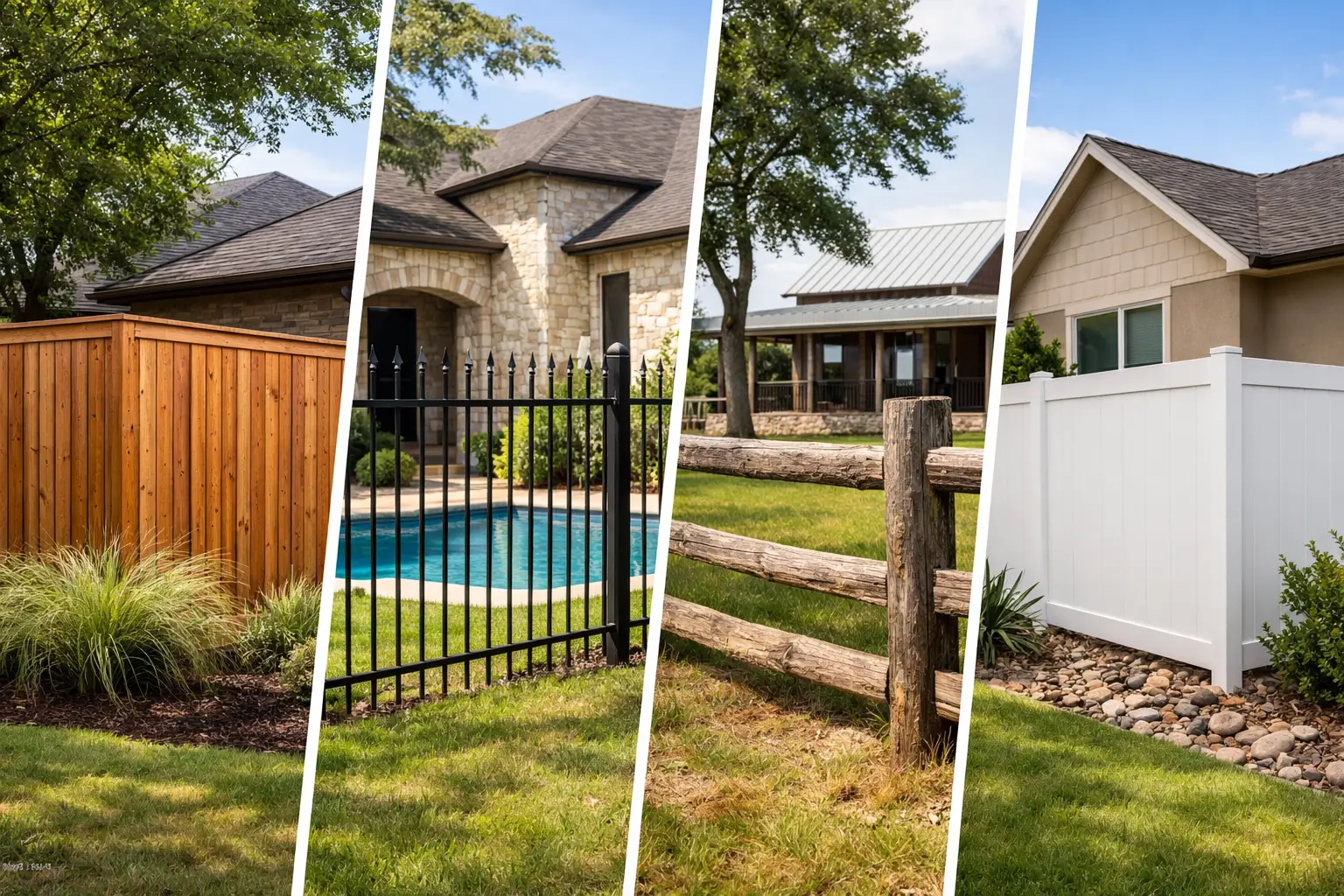
Cedar is one of the most popular choices for residential privacy fencing, and for good reason. It has a clean natural look, works well with a wide range of home styles, and handles outdoor conditions better than many budget woods. It is commonly used for full-privacy fences, shadowbox designs, and decorative gates.
The biggest advantage is the balance. Cedar gives you solid privacy, strong curb appeal, and good durability without pushing into the price range of premium specialty materials. It can also be stained for a richer look or left closer to its natural finish if you prefer a more classic backyard feel.
The trade-off is maintenance. Even a quality cedar fence will age faster if it is neglected. In Texas weather, routine sealing or staining can help extend its life and keep it looking sharp. If you want a wood fence that looks better longer, cedar is often worth the extra upfront cost.
Pine fences
Pine is a practical option when budget matters most. It is widely used for standard privacy fences and can be a smart choice for rental properties, starter homes, or larger projects where keeping costs down is part of the plan.
Pressure-treated pine helps resist rot and insect damage, which makes it more durable than untreated lumber. It can still deliver the clean, traditional fenced-yard look most property owners want. For many people, pine is the straightforward answer when they want function first.
The downside is that pine usually does not hold its appearance as well as cedar over time. It may be more prone to warping, shrinking, or checking depending on installation quality and exposure. If price is the top priority, pine makes sense. If long-term appearance matters more, cedar often wins.
Aluminum fences
Aluminum fencing is a strong choice when you want an open look without sacrificing structure or style. It is especially common around pools, front yards, commercial spaces, and properties where visibility matters.
One reason aluminum is so popular is low maintenance. It does not rot like wood and will not require the same ongoing upkeep. It also gives a more polished look than chain link while still allowing airflow and sightlines. For homes with landscaping, water features, or scenic views, that can make a big difference.
The trade-off is privacy. Aluminum is not the fence to choose if you want to fully block neighbors or street view. It is more about security, definition, and appearance than complete seclusion.
Metal fences
When people say metal fence, they may be talking about steel, wrought-iron-style systems, or other heavy-duty options designed for strength and security. These fences are often chosen for commercial properties, entry gates, perimeter protection, and homes that need a more substantial security feature.
Metal fences can make a property feel more secure immediately. They are durable, hard to breach, and well suited for custom gate work. They also bring a more upscale, permanent look when properly designed.
That said, not every property needs that level of build. Metal tends to cost more than basic wood fencing, and depending on the finish and material, rust prevention may matter. For security-focused projects, it is often money well spent. For a simple backyard privacy need, it may be more than necessary.
Split rail fences
Split rail fencing has a very different purpose from a privacy fence. It is best for marking boundaries, creating a ranch-style look, or defining larger outdoor areas without closing them off. On larger lots, acreage, and properties that want a more open country feel, split rail can look right at home.
It is visually lighter than solid-panel fencing and often less expensive in terms of material. It also works well when you want a decorative perimeter without making the property feel boxed in.
The obvious limitation is containment and privacy. Split rail will not do much to screen a yard, and by itself it may not be enough for smaller pets. In some cases, owners add wire mesh to improve function while keeping the same look.
Chain link fences
Chain link may not be the first choice for curb appeal, but it remains one of the most practical fencing options available. It is commonly used for backyards, commercial lots, schools, storage areas, and dog runs because it is cost-effective and dependable.
If you need to secure a space quickly and affordably, chain link does the job. It is also useful when visibility matters, since it does not block the view. For utility areas or side yards, that can be an advantage.
The trade-off is appearance and privacy. Chain link is functional, but it does not create the warm, finished look many homeowners want around main living areas. It is best when durability and value matter more than style.
Dog fences and pet-friendly fencing
Pet owners often need something more specific than a standard fence category. A dog fence has to consider height, spacing, digging behavior, and gate security. A short decorative fence may look nice, but it may not be enough for an active dog that jumps or pushes against weak points.
Wood privacy fences are a common pick for dogs because they limit outside distractions and create a secure barrier. Chain link can also work well, especially for larger enclosed areas. The right choice depends on the size and behavior of the animal as much as the property itself.
This is where custom planning matters. A fence that works for one family pet may fail completely for another. Getting the height, layout, and latch details right can save a lot of frustration later.
How to choose between different types of fences
The smartest way to choose is to start with the main reason you need the fence. If privacy is the goal, cedar or pine privacy fencing usually makes the most sense. If you want a decorative boundary or pool enclosure, aluminum may be the better fit. If security is the priority, metal deserves a closer look. If you are fencing a larger property line, split rail or chain link may be more practical.
Budget matters too, but it should not be the only factor. A cheaper fence that needs early repairs can cost more in the long run. On the other hand, paying for a premium material where a simpler option would do is not always smart either. The right answer depends on how long you plan to stay on the property, how visible the fence is, and how much maintenance you are willing to take on.
Local conditions should also shape the decision. In places like Spring, Conroe, The Woodlands, and across the Houston area, weather and soil movement can be hard on poorly installed fencing. Material matters, but installation matters just as much. Good posts, proper spacing, quality hardware, and a layout that fits the property can make the difference between a fence that lasts and one that starts leaning too soon.
When custom fencing is worth it
Some properties do not fit neatly into off-the-shelf solutions. Sloped yards, corner lots, oversized gates, business access points, and mixed-use spaces often need a custom approach. That does not always mean expensive. It usually means building the fence around the way the property actually functions.
A practical contractor will help you weigh appearance against maintenance, budget against lifespan, and privacy against openness. That is especially helpful when you are comparing several materials that could all work but deliver different long-term results. For many property owners, that guidance is what prevents overpaying or choosing the wrong style the first time.
If you are sorting through different types of fences, the best next step is simple. Think about what your property needs to do every day, not just what looks good in a photo. A fence should protect your space, match the property, and hold up when Texas weather puts it to work.
