
 Roofing Services
Fence Options That Work in Texas
A fence usually gets attention when something goes wrong. A panel leans after a storm, a gate stops latching, the dog finds a weak spot, or the backyard suddenly feels too exposed. But the right fence does more than mark a property line. It adds privacy, improves curb appeal, helps with security, and gives your home or commercial property a more finished look.
Around the greater Houston area, that choice matters more than people think. Heat, humidity, hard rain, shifting soil, and fast-growing landscaping all put pressure on outdoor structures. A fence that looks good on day one still has to perform six months from now and five years from now. That is why material, layout, installation quality, and maintenance all deserve a closer look before you commit.
Choosing a fence that fits the property
Not every fence should solve the same problem. Some homeowners want full backyard privacy. Others care more about keeping kids and pets safe without closing off the whole view. Commercial properties may need controlled access, perimeter definition, and durability first, with appearance as a close second.
That is where a lot of fence projects go sideways. People pick a style based only on a photo, then realize later it does not match the way they actually use the property. A tall cedar privacy fence can be a great fit for a backyard in Spring or The Woodlands, especially if neighbors are close. On a larger lot, split rail may make more sense where the goal is boundary definition and a more open look. Aluminum or metal fencing often works well when you want a cleaner appearance and lower routine maintenance.
There is also the question of how the fence connects to the rest of the property. A new fence should work with gates, drive access, sidewalks, drainage patterns, and nearby trees. If those details are ignored, even a well-built installation can create frustration later.
Fence materials and what to expect
Cedar fence
Cedar stays popular for good reason. It has a clean, natural appearance, works well for privacy fencing, and holds up better than many people expect when it is properly installed. It is often a strong choice for homeowners who want a balance of appearance, strength, and value.
That said, cedar is still wood. In Texas weather, it can fade, warp, or shrink over time if it is neglected. It may need staining or sealing depending on the look you want and how much maintenance you are comfortable with.
Pine fence
Pine is usually a more budget-friendly wood option, which makes it attractive for large yards and cost-conscious projects. Treated pine can serve well when installed correctly and maintained over time.
The trade-off is that pine typically needs more attention than cedar. If the main goal is to keep initial cost lower, it can be a smart move. If you want a wood fence with a longer-lasting premium appearance, cedar often wins.
Aluminum and metal fence
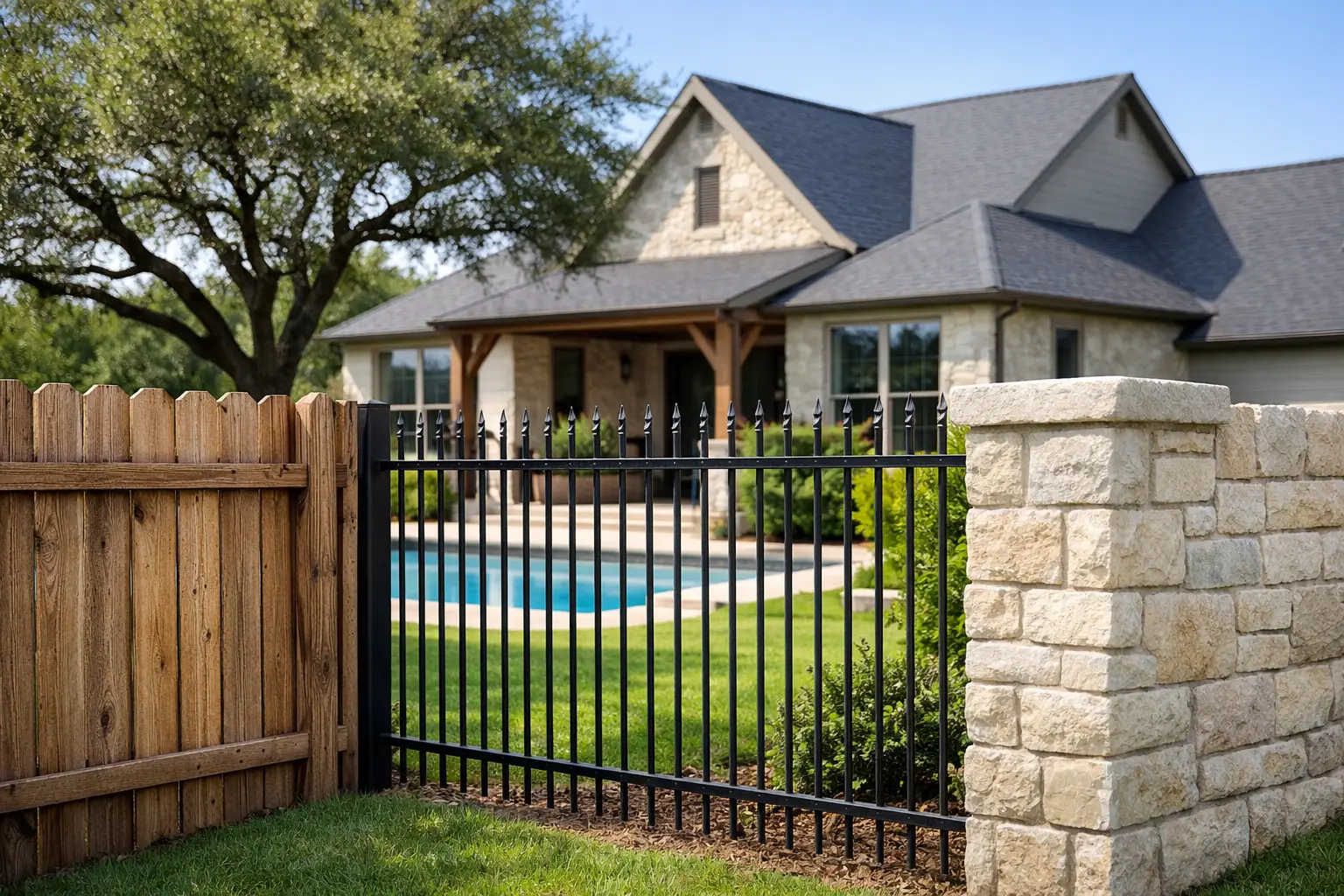
Aluminum and metal fencing are a good fit when you want durability, visibility, and a more polished look. These fences are common around front yards, pools, commercial spaces, and properties where you do not want a solid wall effect.
They are not the best choice for privacy unless combined with landscaping or other design features. But for strength, cleaner lines, and lower upkeep, they are hard to ignore.
Split rail and dog fence options
Split rail fences work well on larger properties, decorative boundaries, and spaces where openness matters. They are not built for privacy, but they can add structure and curb appeal.
Dog fences are more situation-specific. The right design depends on the size, behavior, and energy level of the animal. A small decorative barrier may look fine, but it will not help much if you have a determined jumper or digger. In those cases, height, spacing, and reinforcement matter a lot more than appearance alone.
What makes a fence last longer
A fence is only as strong as its installation. Materials matter, but so do the posts, hardware, alignment, and depth of the set. In this part of Texas, soil movement and moisture changes can work against a poorly installed fence pretty quickly.
One common mistake is focusing only on the pickets or panels because that is what you see first. The real test is in the structure behind them. Posts need proper placement and support. Gates need enough strength to avoid sagging. Sections should be laid out with drainage and grade changes in mind instead of forcing a straight line where the yard does not allow it.
Tree roots are another issue people underestimate. A fence line that looks simple on paper may be far more complicated once roots, slopes, or old concrete are involved. That does not mean the project should be avoided. It means the plan should account for real site conditions before work begins.
When fence repair makes more sense than replacement
Not every damaged fence needs to be torn out and rebuilt. In many cases, targeted repair is the better value. A few broken boards, a damaged gate, loose hardware, or a section pushed over by wind may be fixable without replacing the entire fence.
The key question is whether the damage is isolated or structural. If the posts are failing across multiple sections, repairs can turn into a temporary patch job that costs more in the long run. But if the fence is still fundamentally sound, repair can restore function and appearance at a much lower price.
This is where honest evaluation matters. Property owners do not want to pay for full replacement when a solid repair will do the job. At the same time, no one wants to keep sinking money into a fence that is already near the end of its life. A dependable contractor should tell you the difference clearly.
Fence design is about more than looks
A fence changes how a property feels. It affects privacy, traffic flow, visibility, pet safety, and even resale appeal. That is why design should be practical first and attractive second, not the other way around.
For example, taller privacy fencing may be the right call for a backyard, but not for every front-facing section. A wide gate can be helpful for equipment access, but only if it is framed to handle regular use. Decorative top trim may improve appearance, but it also adds cost and may not fit every neighborhood or commercial setting.
There is always a balance. The best fence projects usually come from matching the design to the day-to-day use of the property, not just to a style trend.
Why local conditions matter for any fence project
Texas weather is hard on exterior construction. Sun exposure dries materials out. Moisture creates swelling and movement. Storms can test every weak point in a fence line, especially older sections and gates.
That is why local experience counts. A fence built for dry, stable conditions somewhere else may not perform the same way here. Homeowners and property managers in places like Conroe, Tomball, Humble, Katy, and The Woodlands need solutions that account for weather swings, drainage issues, and the realities of local soil.
It also helps to work with a contractor who understands that speed matters. A broken fence is not just an eyesore. It can create a security issue, a pet containment problem, or a liability concern for a rental or commercial property. Fast turnaround and clear pricing are not extras. They are part of getting the job handled the right way.
Getting the best value from a fence installation
The cheapest quote is not always the best value, but neither is the highest. What matters is whether the scope is clear, the materials are appropriate, and the workmanship is built to hold up.
That means asking practical questions. What material fits your goals and budget? Are you solving for privacy, appearance, containment, or security? Will the gate get daily heavy use? Is this a short-term improvement before a sale, or a long-term investment for the property?
A good contractor should make those decisions easier, not more confusing. The right team will explain your options, point out trade-offs, and give you a fence plan that fits the property instead of pushing a one-size-fits-all answer. That is the approach GottaCallMAC brings to fence installation and repair across the Houston area – dependable work, fair pricing, and solutions built around what the customer actually needs.
If your fence is leaning, aging out, or simply not doing its job anymore, the next step does not have to be complicated. A straightforward estimate and an honest recommendation can tell you whether repair or replacement makes the most sense, and that is usually where better property decisions start.
