
 Roofing Services
How to Spot Roof Leaks Before Damage Spreads
A small brown spot on the ceiling can look harmless for weeks. Then one hard Texas rain turns it into dripping water, damaged drywall, wet insulation, and a repair bill that could have been avoided. Knowing how to spot roof leaks early gives you time to act before moisture spreads through the structure of your home or commercial property.
Leaks are not always directly above the stain you see indoors. Water can enter near a vent, pipe, chimney, valley, or damaged shingle, then travel along framing before it appears in a completely different room. That is why a careful look after heavy rain matters.
Start Inside: The Early Signs of a Leak
The ceiling is often the first place property owners notice trouble, but do not wait for water to drip. Look for yellow, brown, or gray discoloration on ceilings and upper walls. These stains may grow darker after a storm, even if the area feels dry by the time you inspect it.
Paint that bubbles, peels, or feels soft can also point to trapped moisture. In a finished room, watch for sagging drywall, a musty smell, or trim that is separating from the wall. These signs do not always mean water is coming from above. A plumbing line, condensation issue, or HVAC problem can create similar symptoms. Still, it is smart to rule out a leak quickly, especially after strong wind and rain.
Check closets, corners, and rooms that do not get much daily attention. A leak often starts where nobody is looking, such as an upstairs hallway, storage room, garage, or the ceiling below an attic.
How to Spot Roof Leaks in the Attic
If it is safe to access your attic, bring a flashlight and inspect it during the day. Turn off the attic light first. Pinpoints of daylight around penetrations or through damaged decking can reveal places where rain may get in.
Look closely at the underside of the roof deck, rafters, insulation, and areas around vents and pipes. Dark streaks, water marks, damp insulation, mold growth, or wood that looks swollen are all warning signs. Fresh moisture may feel cool or appear shiny, while older leak evidence can look like a dry, dark stain.
Pay attention to smell as well. A persistent musty odor is often a clue that moisture has been present longer than expected. It does not always mean there is an active leak, but it deserves investigation before hidden damage gets worse.
Do not step on exposed ceiling drywall or lean heavily on it from above. If the attic framing is difficult to navigate, or you see widespread wet insulation, call a qualified contractor rather than risking a fall or causing more damage.
Check the Exterior From the Ground
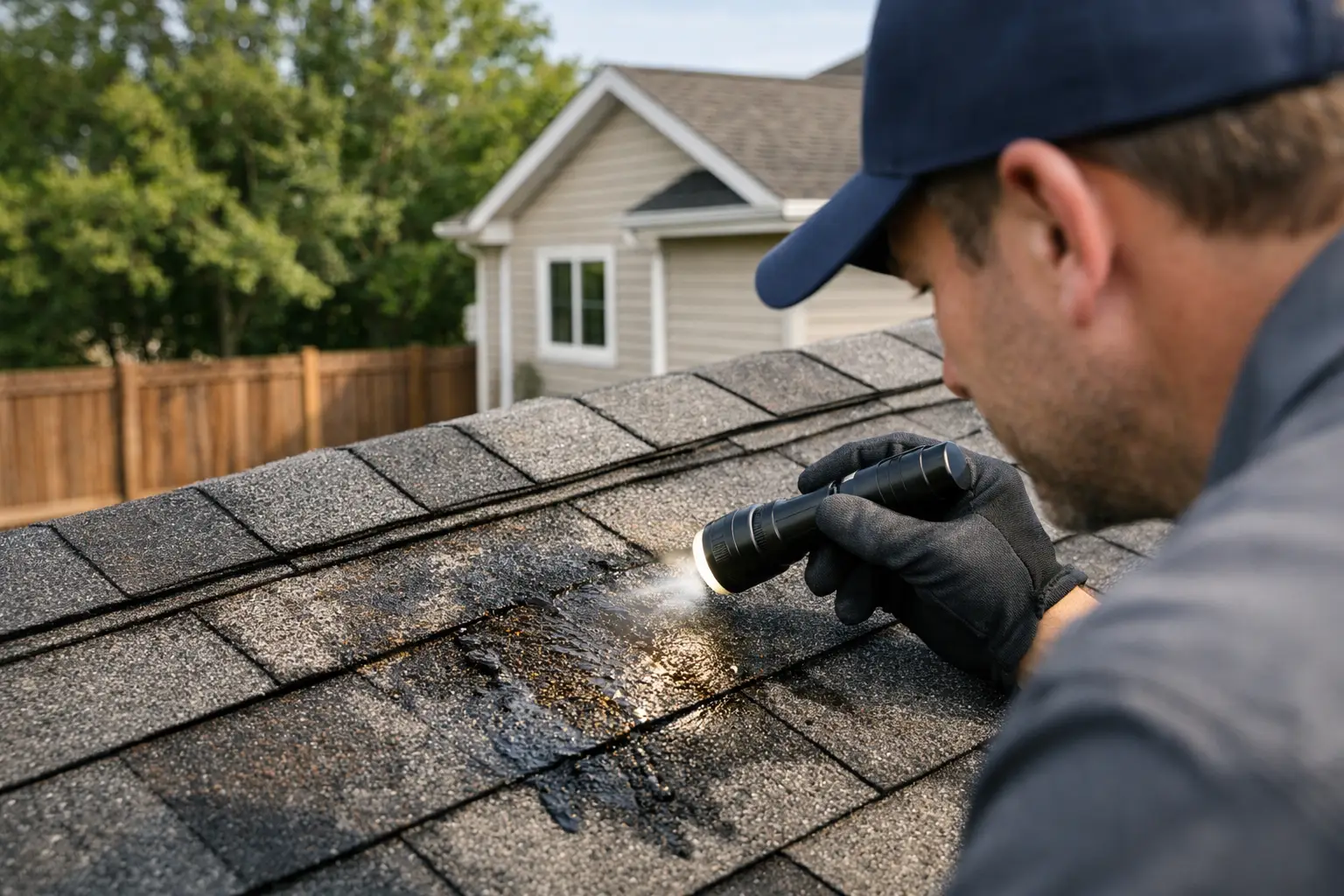
You do not need to climb onto the roof to notice many common problems. A good ground-level inspection with binoculars can reveal missing, lifted, curled, cracked, or visibly worn shingles. After a storm, look for shingles or pieces of flashing on the ground around the building.
Focus on areas where water changes direction or meets another surface. Valleys, skylights, chimneys, vents, pipe boots, wall intersections, and edges are common leak locations because they depend on properly installed flashing and sealants. Debris piled in these areas can hold water and speed up wear.
Gutters matter, too. If they are packed with leaves, pine needles, or shingle granules, water may back up where it should be draining away. Granules in gutters can be a normal sign of aging, but a heavy amount after a storm may indicate shingle wear. Also check for gutters that pull away from the fascia or overflow in one location during rain.
Tree branches deserve a close look. Limbs rubbing against the roof surface can wear it down over time, while a broken limb can cause immediate damage. In Spring, The Woodlands, Houston, and nearby communities, storm winds can turn an overhanging branch into a fast-moving problem.
Watch What Happens During and After Rain
The best time to identify an active leak is often during a steady rain, but stay indoors and stay safe. Walk through the home and check ceilings, attic access points, windows, and exterior walls. Take photos of stains, drips, or wet areas as soon as you find them. Pictures help document changes and give a repair professional useful information.
Outside, notice whether gutters overflow, water pools near the foundation, or runoff pours behind the gutter instead of through it. These conditions may not be the direct source of an interior leak, but they can point to drainage problems that need attention.
After rain stops, check whether a ceiling stain expands, whether the attic smells damp, or whether water appears around light fixtures. If water is near electrical fixtures, turn off power to that area if you can do so safely and contact a professional right away. Never touch a wet light fixture or attempt to open it.
Signs That Often Get Mistaken for a Roof Leak
Not every ceiling stain has the same cause. Plumbing leaks are more likely if the stain sits beneath a bathroom, laundry room, kitchen, or water line and appears even during dry weather. HVAC condensation can create moisture near air handlers, ducts, or vents, particularly during long periods of hot, humid weather.
Condensation in an attic can also mimic a leak. Poor ventilation, air escaping from the living space, or wet insulation may create moisture on the underside of the deck. The difference matters because the repair approach is not the same. A contractor should inspect the full area rather than simply patching the visible stain.
That is also why caulk is rarely the right long-term answer for every suspected leak. It may temporarily slow water at a small gap, but it can hide the real issue or redirect water elsewhere. A proper repair starts with finding where water enters and checking the materials around it for damage.
When a Leak Needs Immediate Attention
Some situations should not wait for a convenient appointment. Act quickly if water is actively dripping indoors, a ceiling is sagging, drywall is soft or bulging, or water is near electrical equipment. Put a bucket under the drip if it is safe, move furniture and valuables out of the area, and avoid puncturing a bulging ceiling unless a trained professional tells you otherwise.
You should also arrange an inspection promptly after hail, falling branches, or a major windstorm, even when no leak is obvious. Wind damage can loosen materials just enough to let the next storm drive water underneath. Catching that issue early is usually simpler and less expensive than repairing soaked insulation, framing, walls, and flooring later.
Keep Small Problems From Becoming Major Repairs
A few routine habits can make leaks easier to catch. Keep gutters clear, trim back branches that touch or hang over the roof, and walk around the property after severe weather. Inside, check your attic and ceilings a few times each year, especially before and after the stormiest parts of the season.
If you find a suspicious stain or exterior damage, do not assume it will stay small because the drip stopped. Water takes unpredictable paths, and a temporary dry spell does not fix the opening that allowed it in. A timely inspection can identify the source, explain the repair options clearly, and help protect the property you have worked hard to maintain.
The safest next step is simple: document what you see, limit further water exposure, and have the cause checked before the next round of rain has a chance to do more damage.
