
 Roofing Services
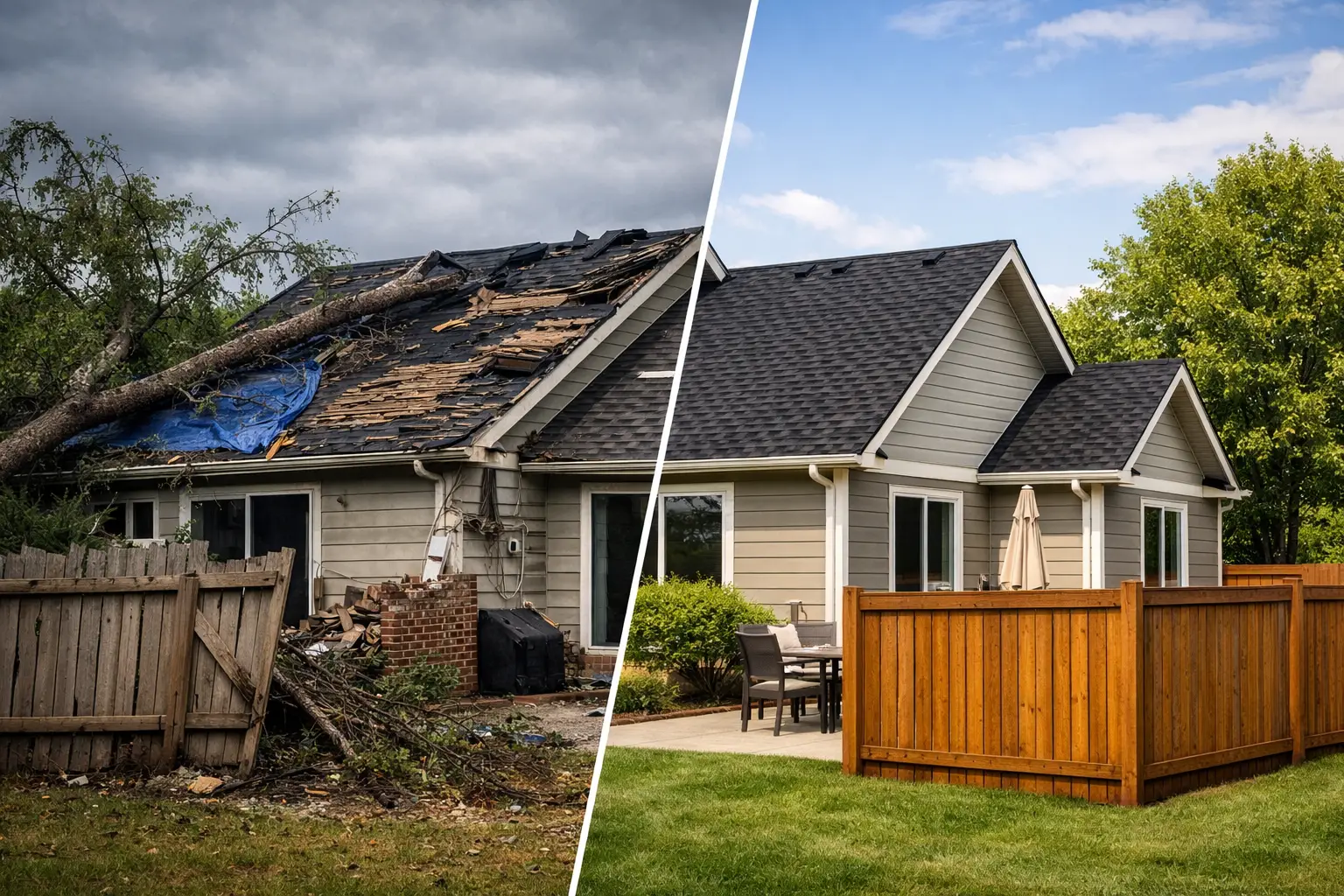
Storm Restoration Before and After Results
A storm can turn a secure property into a long list of urgent problems in a single afternoon. The real value of storm restoration before and after is not just the visual change. It is the difference between a property that remains exposed to more damage and one that is safe, stable, functional, and ready to use again.
For homeowners, property managers, and business owners around Houston, the first view after severe wind, heavy rain, or falling limbs can be overwhelming. A fence may be down, a tree may be leaning over a driveway, siding may be damaged, and water may have entered through an opening. The best restoration plan handles the immediate hazards first, then brings the entire property back together without leaving you to coordinate several contractors.
Storm Restoration Before and After: The First 48 Hours
Before restoration begins, the priority is safety. Downed fence sections can expose a yard, create a hazard for pets, or block access. Broken limbs can shift without warning, especially when they are hung up in another tree or resting on a structure. Water-damaged drywall, flooring, and exterior materials may look manageable at first but can deteriorate quickly if moisture is not addressed.
The “before” stage should be documented clearly. Take photos and video from several angles before moving debris or making temporary repairs, as long as it is safe to do so. Capture damaged fencing, trees, exterior walls, gates, interior finishes, standing water, and any affected personal property. This record helps you understand the full scope of the work and may be useful when discussing the damage with your insurance provider.
Then, focus on stabilizing the property. That can mean removing hazardous limbs, clearing blocked walkways, securing a damaged gate, covering an exposed opening, or placing temporary barriers around an unsafe area. Emergency work is not always pretty. It is meant to prevent the situation from getting worse while a lasting repair plan is put in place.
A good contractor will distinguish between temporary protection and permanent restoration. A quick patch may be appropriate to keep the property safe tonight. It is not always the right long-term fix for a fence, exterior wall, drainage issue, or water-damaged room. Knowing that difference protects your budget and avoids paying twice for the same problem.
What Complete Restoration Actually Looks Like
The most convincing before-and-after photos show more than debris disappearing. They show that each damaged part of the property was evaluated, repaired properly, and finished to match the surrounding space as closely as practical.
For a fence, the before picture may show leaning posts, missing pickets, a twisted gate, or panels flattened by wind and fallen branches. The after result should include solidly set posts, aligned panels, secure hardware, and a gate that opens and latches correctly. If only one side of a fence is damaged, replacing that section may make sense. If the remaining fence is already weak, a larger replacement can be the better value. The right choice depends on the age of the material, the condition of the posts, and how well new work can tie into the existing fence.
Tree work often makes the biggest immediate visual difference. Before cleanup, a property may have broken limbs across a lawn, branches pressing against a fence, or a damaged tree that threatens nearby structures. After professional trimming, removal, and haul-off, the goal is not simply a cleaner yard. It is safer access, reduced risk from unstable limbs, and a clear path for other repairs to begin.
Exterior restoration may also involve siding, trim, paint, gates, decks, and drainage-related repairs. Wind-driven debris can crack panels, loosen trim, or damage outdoor structures in places that are easy to miss from the ground. A thorough inspection matters because small openings can allow water into wall cavities, where it can affect insulation, drywall, and flooring later.
Inside the property, the before stage may include stained ceilings or walls, swollen baseboards, soft flooring, peeling paint, or damp drywall. The after stage should not stop at a fresh coat of paint. Materials that have been compromised need to be dried, removed, or repaired as needed before cosmetic work begins. Painting over a moisture problem may improve the appearance for a short time, but it does not correct the cause.
One Storm Can Create Several Separate Projects
Storm damage rarely stays in one trade category. A falling limb can damage a fence, block a driveway, scrape siding, and leave a yard full of debris. Water entering through an exterior opening can lead to drywall, flooring, trim, and paint repairs indoors. That is why managing the work through one dependable contractor can save time and reduce confusion.
Instead of arranging separate crews for tree removal, fence repair, debris hauling, siding repair, drywall, flooring, and painting, property owners can benefit from one coordinated scope of work. The order matters. For example, clearing a damaged tree should happen before repairing the fence beneath it. Drying and repairing affected interior areas should come before new flooring or paint is installed.
At GottaCallMAC, the goal is to make that process easier for local property owners. A coordinated approach helps prevent gaps between jobs, keeps the work moving, and gives you one clear point of contact from the first estimate through the final cleanup.
How to Judge Before-and-After Work Beyond the Photos
Before-and-after images can be useful, but they do not tell the entire story. A clean final photo does not show whether posts were installed securely, whether damaged materials were fully removed, or whether the work addressed the source of water intrusion. Ask practical questions about what was found, what was repaired, and why that repair approach was recommended.
Look closely at the details when the work is complete. Fence lines should be straight and stable. Gates should swing without dragging. New siding or trim should sit flush and look consistent with adjoining areas. Drywall should have smooth seams and corners. Flooring should feel level underfoot. Paint should have even coverage, clean edges, and no signs that it is hiding unresolved damage.
Cleanup also matters. Storm restoration can leave behind nails, branches, broken material, sawdust, and other hazards. The property should be left safe to walk through, with debris hauled away and affected work areas cleared. For commercial sites and rental properties, this is especially important because tenants, customers, and employees may return before every repair is fully complete.
When Repair Makes Sense and When Replacement Is Smarter
Not every damaged item needs full replacement. A newer fence with one broken panel may only need a targeted repair. A tree with minor limb damage may be safely trimmed and preserved. A small section of damaged drywall can often be removed and replaced without disturbing the entire room.
But there are times when a larger project is the better financial decision. Repeatedly repairing old, rotted fence posts can cost more over time than replacing the affected run. Trying to save severely damaged materials may lead to uneven results or future failures. If a gate, deck, wall finish, or flooring was already near the end of its useful life before the storm, replacement may provide a cleaner result and better long-term value.
A straightforward estimate should explain these options without pressure. Property owners deserve to know what is urgent, what can wait, and where spending a little more now may prevent another repair later.
A Better Way to Move Forward After the Storm
The best after photo is not just a picture of a cleaned-up property. It is a property where the fence is secure, dangerous trees are handled, exterior damage is repaired, interior spaces are usable, and you are no longer wondering what needs attention next.
Start by documenting the damage, keeping people away from unstable areas, and getting a clear assessment of the full scope. A fast, fair estimate and dependable workmanship can turn a stressful cleanup into a practical plan for getting your property back in shape.
