
 Roofing Services
How to Choose a Fence Contractor Houston Trusts
A leaning fence after a hard rain, a gate that will not latch, or a backyard with no real privacy can turn a simple property upgrade into an urgent job. The right fence contractor Houston property owners choose should do more than put up panels. They should help you select a fence that fits your land, your budget, your daily needs, and the Texas weather it will face year after year.
Houston-area properties are not all the same. A compact neighborhood yard in Spring has different needs than a large commercial lot in Conroe or a rural property outside Tomball. Before you commit to a material, style, or price, take a close look at what the fence needs to accomplish.
Start With the Job Your Fence Needs to Do
A fence can add privacy, define a property line, protect children and pets, improve curb appeal, or help control access to a business site. Most projects involve more than one of these goals, but one need usually drives the decision.
For example, a homeowner replacing an old backyard fence may care most about privacy. A property manager may need a durable perimeter fence and dependable gates. A family with dogs may need a fence that is secure at ground level, with a latch that stays closed and openings that do not create escape routes.
Be clear about your priorities before requesting an estimate. That makes it easier for a contractor to recommend the right height, layout, post depth, gate placement, and material instead of giving you a generic quote that does not solve the actual problem.
Choose Materials for Houston Conditions, Not Just Appearance
The best-looking fence is not always the best fit for the job. Heat, humidity, heavy rain, shifting soil, and stormy conditions can all affect how a fence performs. Material choice matters, but so do installation details such as post setting, drainage around the fence line, hardware quality, and proper gate support.
Cedar and Pine Fencing
Wood fencing remains a popular choice because it offers privacy, warmth, and a classic look that works with many Texas homes. Cedar is often preferred for its natural character and resistance to decay. It can be a strong option for privacy fences, shadowbox designs, and custom gates when installed with quality posts and hardware.
Pine can be a more budget-friendly choice, especially for homeowners who want the look and coverage of a traditional wood fence at a lower starting cost. Treated pine needs regular care, and it may show weathering sooner than cedar. That does not make it a poor choice. It simply means maintenance should be part of the plan.
Aluminum and Metal Fencing
Aluminum fencing gives a clean, open look without blocking views. It is often a good choice around pools, landscaped areas, entryways, and properties where visibility matters. It does not provide privacy on its own, but it offers low-maintenance security and a more polished appearance than many basic fence options.
Metal fencing can be a practical fit for commercial properties, wide lots, and areas where strength and access control are priorities. The right design depends on the property and the intended use. A contractor should explain the trade-offs between visibility, security, maintenance, and cost instead of steering every customer toward the same material.
Split Rail and Dog Fences
Split rail fencing works well for larger properties, decorative boundaries, and spaces where an open, natural look makes sense. It is not designed for privacy, but it can define a property line without making a yard feel closed in.
Dog fences need more attention than many people expect. The height of the dog, its tendency to dig or jump, the terrain, and the gate location all matter. A fence that looks good but leaves a gap beneath the bottom rail can become a daily headache. Discuss your pets honestly during the estimate so the installation can be built around how they actually use the yard.
What a Fence Contractor in Houston Should Check First
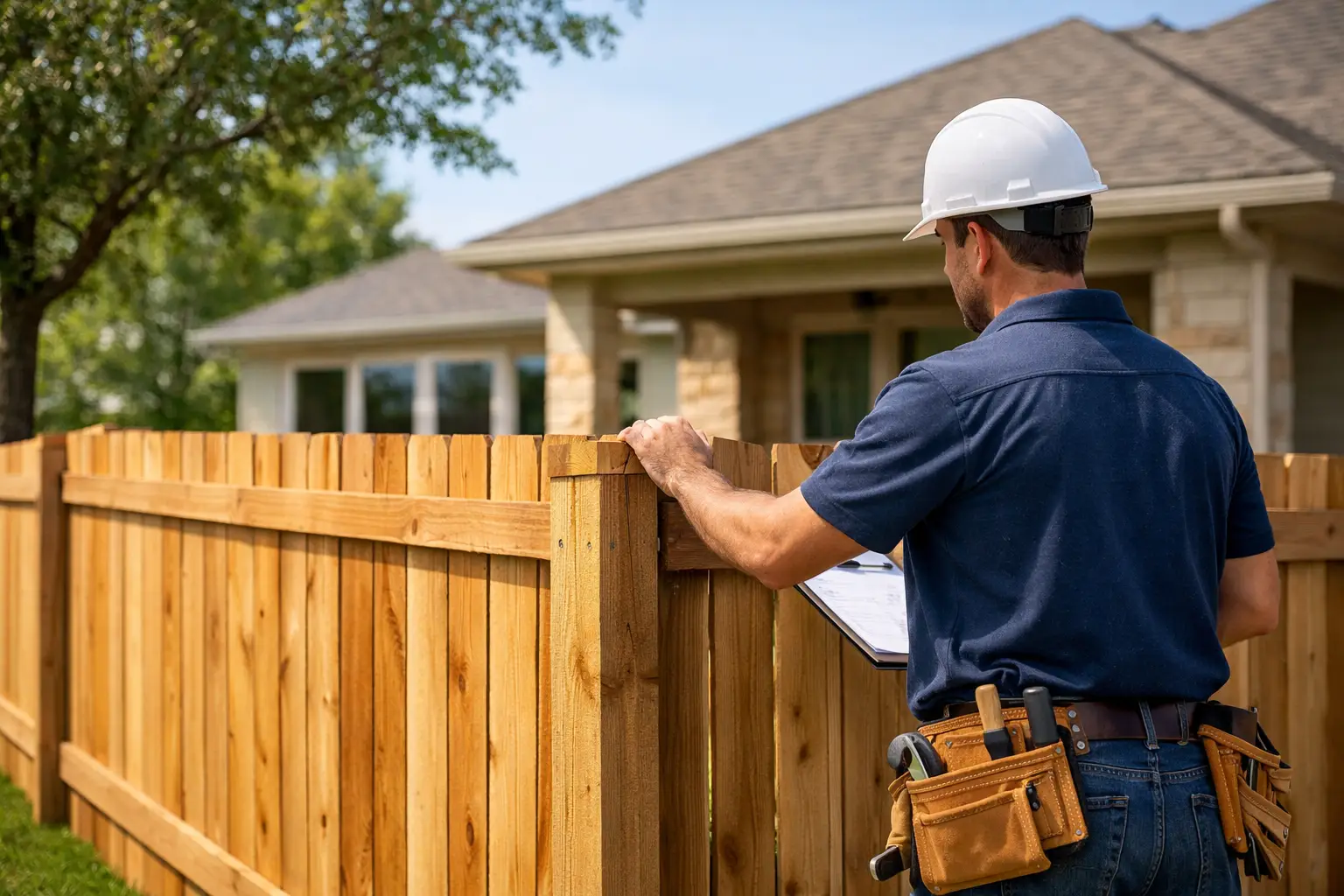
A professional estimate should involve more than measuring the length of the fence line. The contractor needs to look at the conditions that can affect the finished project and its long-term performance.
They should consider slopes, drainage paths, tree roots, existing structures, gate swings, and access for materials and equipment. On older properties, it is also smart to discuss the condition of any existing fence, possible shared boundaries, and whether removal and disposal are included in the quote.
Property lines deserve special attention. Do not assume an old fence sits exactly on the boundary. If there is any uncertainty, review your survey and speak with the appropriate parties before construction starts. A fence is a major improvement, and getting the placement right at the beginning is far easier than correcting it later.
For commercial sites and managed properties, access points are especially important. Ask how gates will operate, who needs keys or codes, and whether the design allows room for deliveries, maintenance equipment, or emergency access. These details are easy to overlook until the fence is already installed.
Ask Better Questions Before You Hire
Price matters, and it should. But the lowest quote is not always the lowest final cost if it leaves out removal, hardware, haul-off, repairs to nearby areas, or work needed to make a gate function correctly. A clear estimate protects both the customer and the contractor.
When comparing fence contractors, ask these questions:
- What materials, fence height, and gate hardware are included in the price?
- Will the estimate include removal and disposal of the existing fence?
- How will posts be installed for the soil and conditions on this property?
- What is the expected start date and completion timeline?
- Is the contractor licensed, bonded, and insured?
- How are change requests or unexpected site conditions handled?
You do not need a complicated construction education to make a good decision. You need straightforward answers. If a contractor is vague about materials, timing, or what the price covers, that is a sign to slow down and ask for details in writing.
Plan Gates Like They Are Their Own Project
A fence gate gets used more than nearly any other part of the installation. Yet gates are often treated as an afterthought. A poorly supported gate can sag, drag, or stop latching long before the rest of the fence shows age.
Think about how you use the space. A walk gate may be enough for everyday backyard access, while a double gate may be worth the investment if you need room for lawn equipment, trailers, or service access. Gate placement should work with driveways, pathways, trash pickup, and the direction water flows during heavy rain.
Hardware also matters. Strong hinges, dependable latches, and properly set gate posts make a real difference in daily use. If security is a priority, discuss lockable options and the best way to keep the gate accessible to the people who need it without making it inconvenient.
Consider Repairs Before Replacing the Whole Fence
Not every damaged fence needs a complete replacement. A few broken pickets, a worn latch, or one leaning section may be repairable if the posts and surrounding structure are still sound. Repair can be the smart move when the rest of the fence has useful life left.
Replacement often makes more sense when multiple posts are failing, large sections are rotting, the fence has repeated storm damage, or the layout no longer works for the property. It can also be more cost-effective to replace a consistently failing fence than to keep paying for temporary fixes.
A dependable contractor should be willing to explain both options. At GottaCallMAC, the goal is to give property owners a practical recommendation based on the condition of the fence, not push a larger project when a repair will do the job.
Get a Quote That Lets You Move Forward Confidently
Your fence should feel like an improvement from day one: more privacy, better security, a safer space for pets, or a cleaner boundary around the property. The best results come from choosing a contractor who listens to how you use the space, explains the materials and costs clearly, and builds the project on a schedule that respects your time.
Before you approve the work, walk the property once more, confirm the fence line and gate locations, and make sure the estimate reflects what you discussed. A free, clear estimate is not just about finding a fair price. It is the first step toward a fence that does its job well for years to come.
