
 Roofing Services
Tree Removal: When to Cut and Who to Call
That leaning oak in the backyard might look like a weekend problem, right up until the next hard wind pushes a heavy limb over your fence or driveway. Tree removal usually becomes urgent for the same reason most property work does – waiting too long turns a manageable job into a bigger, more expensive mess.
For homeowners and property managers around Houston, Spring, The Woodlands, Conroe, and nearby communities, trees are part of the value of the property. They add shade, privacy, and curb appeal. But when a tree is dead, diseased, storm-damaged, uprooting sidewalks, or hanging too close to structures, keeping it in place is not always the safer or cheaper choice.
When tree removal makes sense
Not every problem tree needs to come down. Sometimes trimming, thinning, or selective limb removal is enough to restore clearance and reduce risk. A healthy tree with one overextended branch is a different situation than a split trunk, exposed roots, or major decay near the base.
Tree removal is usually the right move when the tree is structurally unsound, clearly dying, or already affecting nearby improvements. That could mean branches scraping a building, roots disturbing concrete, trunk damage after a storm, or a tree that now leans more than it used to. If mushrooms are growing around the root flare, bark is sloughing off in large sections, or the canopy is bare on one side while the rest of the yard is thriving, those are warning signs worth taking seriously.
There is also the issue of location. A tree in the middle of an open lot gives you more room for options. A tree boxed in by fencing, sheds, power lines, patios, parked vehicles, or neighboring structures is a different job altogether. In those cases, removal is less about appearance and more about controlling risk before something fails.
The cost of waiting too long on tree removal
A lot of property owners hesitate because they do not want to spend money on a tree that is still standing. That is understandable. The trouble is that damaged trees rarely improve on their own, especially after Texas storms, saturated soil, or long dry stretches that weaken the root system.
A compromised tree can damage fencing, crush landscaping, block access, crack pavement, and create liability issues if it falls into a shared area or onto a neighboring property. For commercial sites and rentals, there is also the day-to-day safety concern. If tenants, customers, delivery drivers, or maintenance crews regularly pass under unstable limbs, delay becomes a gamble.
There is a financial trade-off too. Planned tree removal is almost always simpler than emergency tree removal after a storm. When a tree is partially down, tangled in a fence line, or resting on a structure, labor, equipment needs, and cleanup complexity all go up. Acting early gives you more control over timing, access, and cost.
What to expect from a professional tree removal job
A good tree removal job starts with a realistic assessment, not a rushed guess. The first question is whether the whole tree needs to go or whether trimming can solve the problem safely. A trustworthy contractor should be willing to tell you when removal is not necessary.
If removal is the right call, the plan should account for height, lean, branch spread, nearby obstacles, access for equipment, and the condition of the trunk and root zone. Taking down a tree in a wide-open space is one kind of project. Removing one over a fence, close to a home, or in a tight side yard takes more precision.
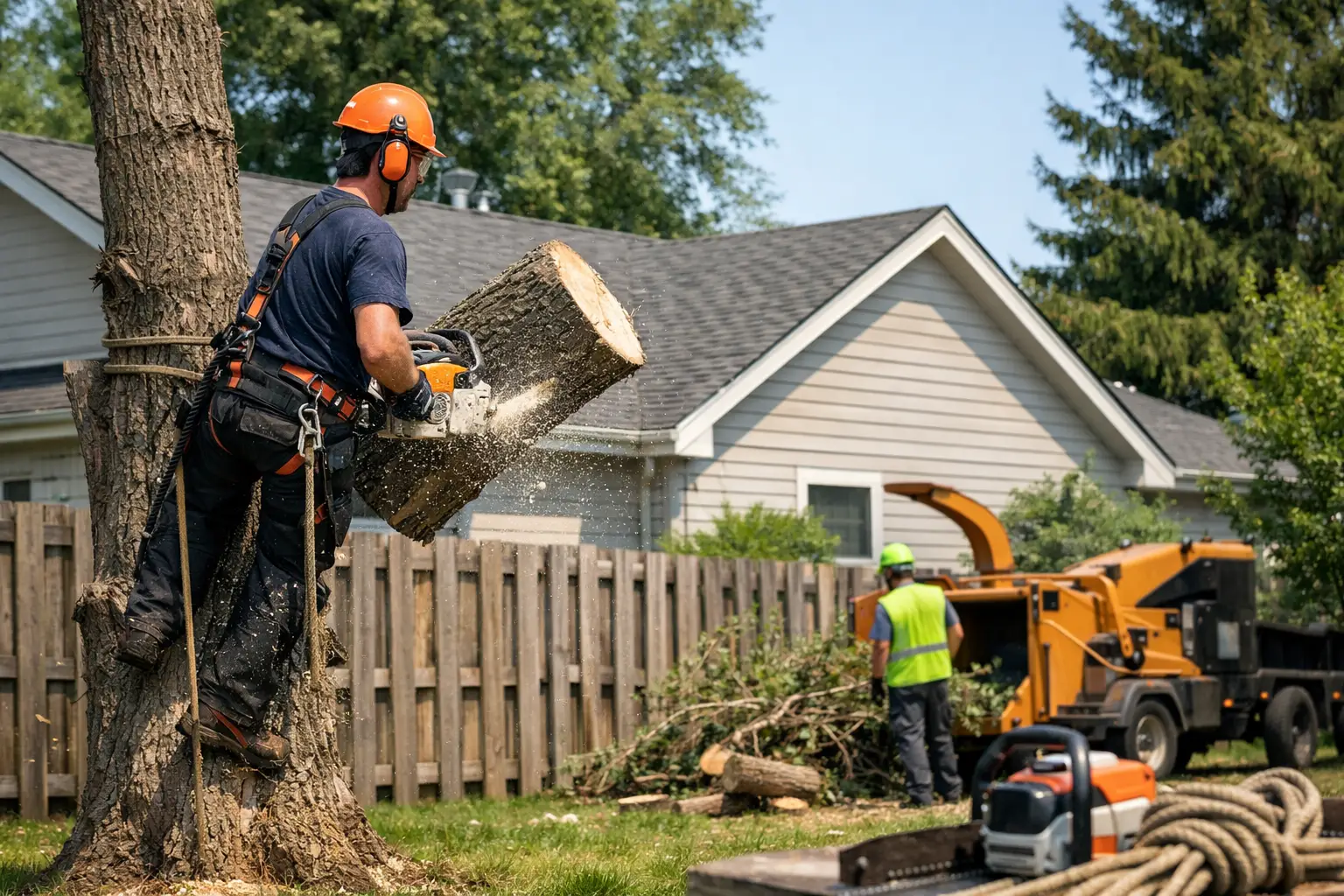
Most jobs include section-by-section dismantling rather than one dramatic cut. That is how professionals protect surrounding property. Limbs are taken down in a controlled way, the trunk is reduced in stages, and debris is managed as the work progresses. For many owners, cleanup matters almost as much as the removal itself. A yard full of brush, sawdust, and heavy rounds is not a finished job.
Stump handling is another point to discuss up front. Some clients only need the tree gone above grade. Others want the stump ground down so they can restore turf, build a fence line, replant, or improve the look of the lot. It depends on your next step for the property.
Tree removal near fences, homes, and driveways
This is where experience shows. In a region where outdoor structures matter, tree work often overlaps with other property improvements. A failing tree can take out a cedar fence, damage a gate, ruin a deck area, or make a yard unusable long before it fully falls.
That is one reason many owners prefer working with a contractor who understands the property as a whole. If the tree sits over a fence line, near a driveway entrance, or inside a larger cleanup project, it helps to have one team that can assess access, protection, removal, and repair needs together. It saves time and usually reduces the headaches that come from coordinating multiple companies.
For example, if a tree has pushed against a perimeter fence for years, removal may be only part of the fix. Once the weight and root pressure are gone, you may still need post replacement, panel repair, grading, or additional clearing. Looking at the entire site leads to better decisions than treating the tree as an isolated issue.
Storm damage changes the timeline
After a storm, the obvious damage gets attention first. A broken limb in the yard is easy to spot. The harder part is identifying the tree that looks mostly intact but has hidden structural damage. Cracks in the trunk, torn branch unions, lifted roots, and sudden lean often show up after high winds and saturated ground.
This is not the time for guesswork. A tree may stand for weeks after a storm and still fail later once the soil dries, the canopy shifts, or another weather event adds stress. If a tree is hanging over a home, fence, parking area, or common-use space, quick evaluation matters.
There are cases where trimming can reduce the hazard and preserve the tree. There are also cases where storm damage has already made tree removal the safest route. The right answer depends on how much of the structure is compromised and what sits in the fall zone.
Choosing the right company for tree removal
Price matters. So do insurance, equipment, and judgment. Tree removal is not basic yard work, especially around occupied homes and developed lots. You want a team that is licensed, bonded, and insured, shows up when scheduled, explains the scope clearly, and leaves the site in good shape.
It is also smart to ask what is included. Some quotes cover cutting only. Others include haul-off, limb cleanup, log removal, stump grinding, and surface cleanup. A lower number is not always the better value if you are left paying someone else to finish the job.
For many Texas property owners, responsiveness is the deciding factor. If you are dealing with a hazardous tree, you do not want to chase callbacks for three days just to get an estimate. A dependable local contractor should make the process simple – inspect the site, explain the risk, give a fair price, and get the work handled without dragging it out.
That practical, one-call approach is why many local owners choose GottaCallMAC when a property problem starts affecting safety, access, or appearance. When the same team can handle tree services along with fencing, storm cleanup, land clearing, and other exterior repairs, the project moves faster and with fewer surprises.
A smart time to remove a tree
People often ask whether there is a best season for tree removal. The honest answer is that it depends. If the tree is dangerous, the best time is now. If the issue is more about planning, access conditions, weather, and your broader property goals may influence timing.
Dryer conditions can make equipment access easier in some yards, while cooler months may be better for visibility when foliage is reduced. On the other hand, waiting for the perfect season does not make sense when a tree is already failing. Safety comes first, and aesthetics come second.
If you are unsure whether you need removal or trimming, start with an evaluation before the next storm makes the decision for you. A good contractor will tell you the truth, even if that means a smaller job than you expected.
A problem tree rarely gets cheaper, safer, or easier by sitting there one more season. If something on your property looks off, trust that instinct and get it checked while you still have options.
