
 Roofing Services
A fence replacement, storm repair, bathroom update, or tree removal can produce estimates that are hundreds or even thousands of dollars apart. That does not automatically mean one contractor is overcharging or another is offering a bargain. Knowing how to compare contractor estimates helps you see what is actually included, protect your property, and choose work that will hold up after the crew leaves.
The goal is not simply to find the lowest number. It is to find the best value for the exact work you need, with clear expectations before the project begins.
Start With the Same Scope of Work
Estimates are only comparable when contractors are pricing the same job. If one company is quoting a six-foot cedar privacy fence with steel posts and another is pricing treated pine with wood posts, you are not looking at a true price difference. You are looking at two different products and likely two different service lives.
Before requesting estimates, write down the basics: what needs to be repaired, replaced, removed, or built; the approximate size of the area; the materials you prefer; and any must-have details. For example, a gate installation should identify the gate width, hardware, latch type, post style, and whether the old gate will be hauled away.
A good estimate should turn that conversation into a clear scope. It does not have to read like a legal document, but it should make it easy to tell what the contractor plans to do. Vague wording such as “repair fence” or “paint room” leaves too much room for assumptions.
How to Compare Contractor Estimates Line by Line
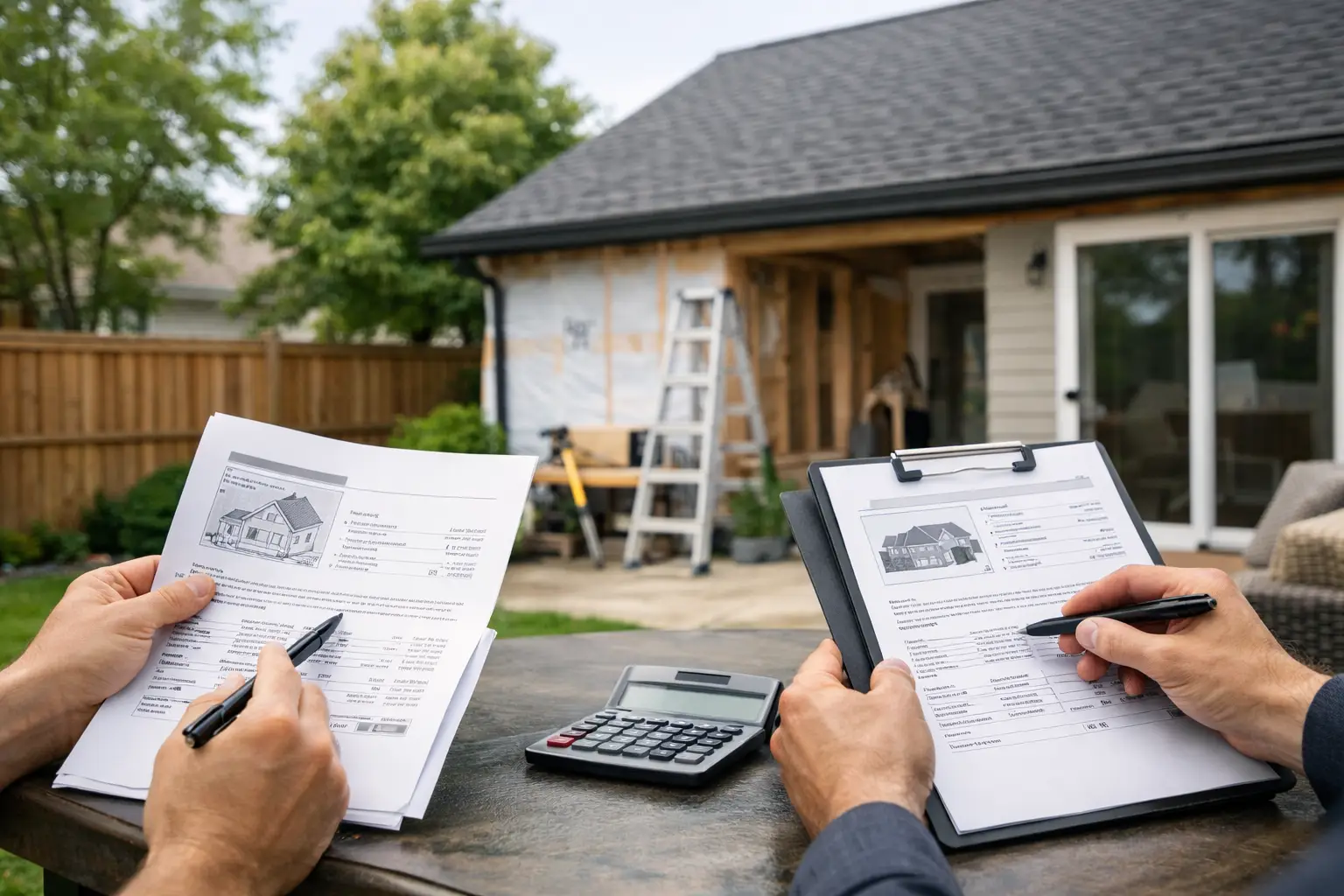
Put the estimates next to each other and look beyond the total at the bottom. Check whether each proposal addresses the same details, including materials, labor, cleanup, and project timing. A lower estimate may exclude steps that another contractor has already included.
For larger work, ask for a breakdown that separates major parts of the job. You should be able to understand whether the price includes demolition, site preparation, installation, finishing work, debris removal, and disposal fees. On a land-clearing project, for instance, cutting down brush is different from removing stumps, hauling debris, grading the area, or preparing it for the next phase of construction.
Pay close attention to quantities. Fence estimates may list linear footage, number of gates, post spacing, rail count, picket type, and stain or sealant if requested. Flooring estimates should identify the square footage, material type, underlayment, transitions, and removal of existing flooring. When quantities are missing, it is harder to know whether every contractor measured the same area.
If an estimate is unclear, ask the contractor to explain it in plain language. A professional should be willing to walk you through the work, not pressure you to sign before you understand the details.
Check Material Quality, Not Just Material Names
Two estimates can both say “wood fence” while describing very different builds. Ask about the specific grade and type of lumber, post material, fasteners, gate framing, and finish. In the Houston area, heat, humidity, heavy rain, and shifting soil can be tough on exterior work. The construction details matter.
The same principle applies indoors. A paint estimate should identify the surfaces being prepared, the number of coats, and who supplies the paint. A drywall repair quote should state whether texture matching and final sanding are included. For remodeling work, confirm the fixture allowance, cabinet grade, tile selection, and any finish work that can affect the final cost.
The most expensive option is not always necessary. A rental property, starter home, commercial site, or long-term family home may need different materials and finishes. The right choice depends on how the property is used, how long you plan to keep it, and what maintenance level makes sense for you.
Look for Labor, Preparation, and Cleanup
The visible installation is only one part of a quality job. Preparation often determines how long the finished work lasts.
For a fence, that may mean proper layout, secure post setting, level rails, and gates that open and close correctly. For painting, it can mean patching, sanding, protecting surrounding surfaces, and cleaning up afterward. For tree service, it may include safe removal methods, hauling branches, and leaving the site clear rather than leaving you with a pile to manage.
Ask each contractor what happens to old materials, construction debris, brush, or damaged components. Confirm whether cleanup is included in the quoted price. A proposal that looks less expensive can become more costly when hauling, disposal, or finishing work appears later as an extra charge.
Understand Allowances and Possible Extras
Some projects involve conditions that cannot be fully seen until work begins. Hidden rot, damaged framing, buried concrete, uneven subfloors, unexpected electrical issues, or storm-related damage may require additional work. That is normal. What matters is how the contractor handles it.
Read the estimate for terms such as “allowance,” “not included,” “as needed,” or “subject to site conditions.” An allowance is a placeholder amount for a product or task that has not been finalized. It is not necessarily a problem, but you should know what it covers and what happens if the actual cost is higher.
Ask these questions before you approve the work: What could change the price? Will I receive approval before extra work begins? How will changes be documented? A written change order protects both sides by keeping scope and cost decisions clear.
Compare Credentials and Protection
Price matters, but the contractor working on your home or commercial property should also be properly protected. Ask whether the company is licensed where applicable, bonded, and insured. Request current proof of coverage when the project involves significant labor, equipment, trees, structural work, or potential property damage.
This is not paperwork for paperwork’s sake. It helps protect you if an accident occurs or something is damaged during the job. It also signals that the contractor is operating as a legitimate business, not simply offering a quick cash deal.
You can also ask who will perform the work. Some contractors use their own crews, while others rely on subcontractors for parts of a project. Either approach can work, but you should know who is responsible for scheduling, quality control, communication, and the final result.
Review Schedule, Payment Terms, and Warranty
A fair estimate should tell you when work can start, how long it is expected to take, and whether weather or material availability could affect the schedule. Fast turnaround is valuable, especially after a storm or when a property sale is pending, but a promise that sounds too good to be realistic deserves a closer look.
Review the payment schedule as carefully as the total price. A reasonable deposit may be needed to reserve labor or purchase materials, but be cautious about paying the full amount before work is complete. The agreement should explain when additional payments are due and what the final payment depends on.
Also ask about workmanship and material warranties. Get the terms in writing. A warranty has more value when the contractor clearly explains what is covered, how long coverage lasts, and who to contact if an issue comes up.
Watch for Red Flags in a Low Estimate
A low bid can be a good deal when a contractor has efficient crews, strong supplier relationships, or lower overhead. It can also signal that important parts of the work were missed. Do not reject a lower estimate automatically, but do ask why it is lower.
Be careful when an estimate has no business information, no written scope, no insurance details, no project timeline, or a request for full payment upfront. Other warning signs include high-pressure sales tactics, unexplained cash-only pricing, and verbal promises that do not appear in the estimate.
A dependable contractor does not need to hide behind a vague number. They should be ready to explain their price, answer reasonable questions, and put the agreement in writing.
Make the Final Decision on Value
Once you have compared the details, choose the estimate that gives you confidence in the work, the materials, and the people doing the job. That may be the lowest qualified bid, but it may also be a slightly higher proposal that includes better materials, cleaner job-site practices, reliable scheduling, and clear protection if something changes.
For homeowners and property managers in Spring, The Woodlands, Conroe, Houston, and nearby communities, the best contractor relationship starts with a straightforward conversation. Gotta Call Mac provides free estimates and clear, practical guidance so you can compare your options without guesswork.
A good estimate should leave you feeling informed, not cornered. When the scope is clear and the questions are answered before work begins, you can move forward knowing exactly what your investment is buying.
