
 Roofing Services
A leaning pine near the driveway, a dead limb over a backyard fence, or a storm-damaged oak can turn into a costly problem fast. Professional tree services help homeowners and property managers handle those risks before they damage vehicles, structures, utility lines, landscaping, or the people using the property.
For Texas property owners, tree work is not just about keeping a yard neat. It is about safety, access, drainage, curb appeal, and protecting the improvements you have already invested in. Whether you need a few branches trimmed back or a large tree removed, the right approach depends on the tree, its location, and what is around it.
When Tree Services Are More Than Routine Maintenance
Healthy, well-placed trees add shade, privacy, and character to a property. But trees can also become a liability when branches grow too close to a home, hang over a fence, block a driveway, or weaken after high winds and heavy rain.
The warning signs are not always dramatic. A tree may look fine from the street while hiding deadwood high in the canopy, decay near the trunk, split limbs, or roots lifting a walkway. Overgrown branches can scrape siding, interfere with gates, shade out grass, and leave piles of leaves in gutters and drains. On commercial sites and rental properties, an unaddressed hazard can also create avoidable maintenance calls and safety concerns.
Tree care works best when it is handled before an emergency. A planned trimming job is usually safer, faster, and more affordable than waiting until a broken branch is hanging over a fence after a storm.
Tree Trimming for Safety, Clearance, and Growth
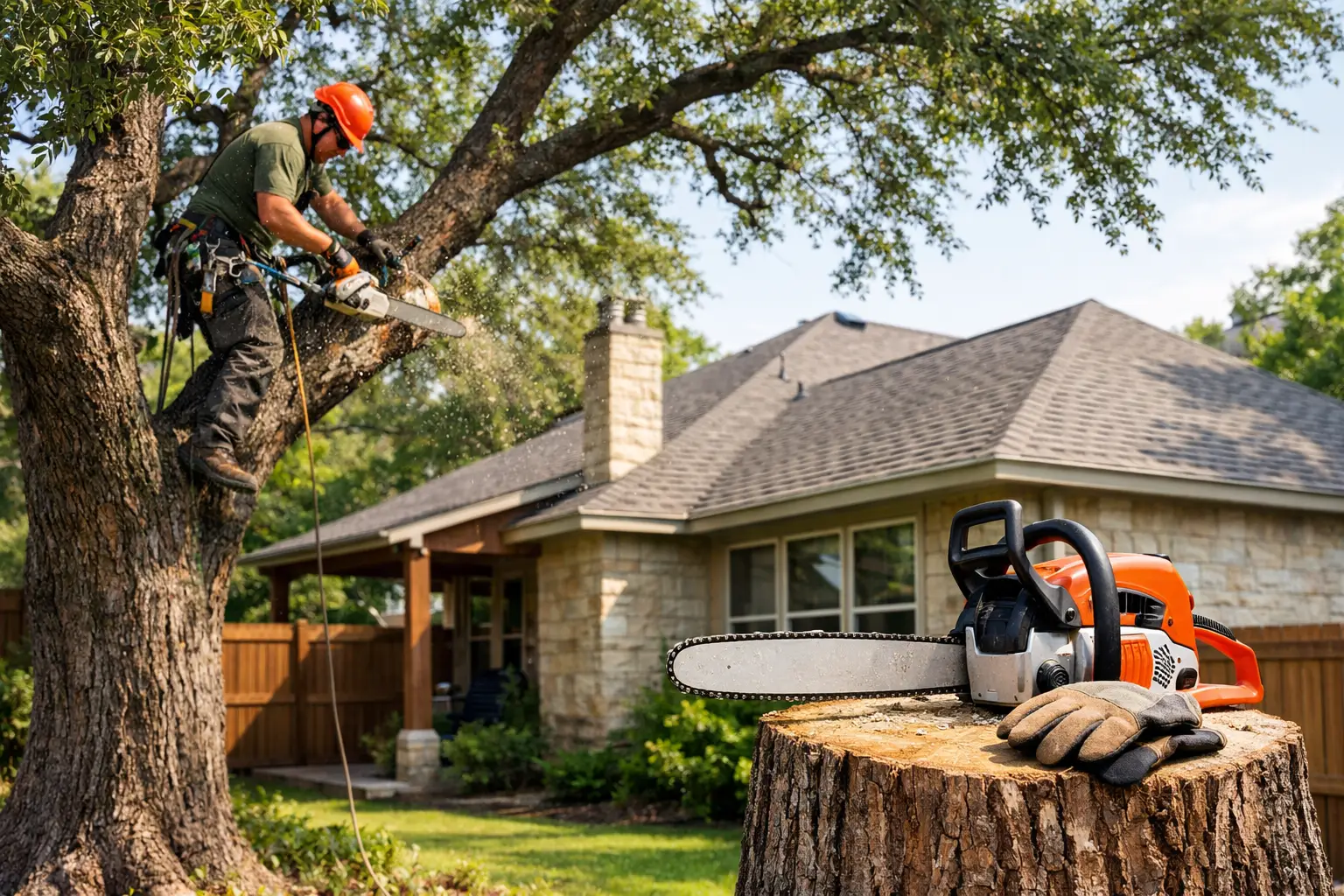
Tree trimming is often the right solution when the tree is structurally sound but has grown beyond the space available. The goal is not to cut back every branch. Good trimming removes dead, damaged, rubbing, or poorly placed limbs while maintaining the tree’s natural form.
For homeowners, trimming can create clearance above a driveway, walkway, patio, or play area. It can keep limbs from pressing against a structure or crossing a property line. For property managers, regular trimming helps maintain clear parking areas, entryways, signs, and common spaces.
Timing matters. Some trees handle pruning better during certain seasons, while urgent hazards should be addressed whenever they appear. The amount removed matters too. Taking off too much at once can stress a tree, encourage weak new growth, and leave it more exposed to the Texas heat. That is why a quick, aggressive cut is not always the best value.
What a Professional Trimming Visit Should Address
Before work begins, the crew should look at the tree’s condition, the nearby structures, access points, and the safest direction for branches to come down. A thoughtful job considers the entire site, not just the limbs being cut.
A professional plan commonly includes removing deadwood, reducing branches that overhang high-use areas, lifting lower limbs for clearance, and thinning crowded growth when appropriate. It should also include cleanup. Leaving a yard covered in brush and cut limbs defeats the purpose of hiring help in the first place.
Tree Removal Is Sometimes the Responsible Choice
Removal is not the first answer for every problem tree. However, it is often the safest choice when a tree is dead, severely diseased, structurally compromised, uprooted, or growing in a location where failure could cause significant damage.
A tree may need removal if it has a major trunk crack, extensive decay, a severe lean that has recently worsened, root damage, or large dead limbs throughout the canopy. Trees damaged by storms deserve close attention, especially when branches are twisted, partially detached, or caught in other trees. What looks stable from the ground may not be safe to leave in place.
Removal also makes sense when a tree prevents a planned property improvement, crowds a fence line, blocks access for equipment, or takes up space needed for a deck, addition, driveway, or land-clearing project. The decision is practical: preserving a healthy tree is valuable, but not when it creates an ongoing hazard or makes the property harder to use.
Large removals require careful planning. Crews may need to dismantle the tree in sections rather than dropping it in one piece. This is especially true in neighborhoods with close homes, fences, pools, landscaping, and utility lines. The safest method may take more time, but it reduces the chance of collateral damage.
Storm Damage Calls for Fast, Careful Decisions
Strong winds and saturated ground can change a tree’s condition overnight. After a storm, walk the property carefully and look for hanging limbs, cracked trunks, exposed roots, branches on fences, and trees leaning toward occupied areas.
Keep people and pets away from damaged trees. Do not try to pull down a hanging limb with a rope, climb a damaged tree, or cut branches that are under tension. Limbs can shift without warning, and trees near power lines require special caution. If a line is down or a tree is contacting electrical equipment, keep clear and contact the utility provider or emergency services as needed.
Once the immediate danger is controlled, a professional assessment can determine whether trimming, cabling, removal, or cleanup is the most sensible next step. In many cases, tree work needs to be coordinated with fence repair, debris removal, or other exterior restoration. One dependable contractor can make that process far less frustrating than calling separate crews for every part of the job.
Protecting Fences, Buildings, and Outdoor Spaces
Trees and fences share the same ground, but they do not always coexist easily. Roots can push against fence posts, trunks can grow into panels, and falling limbs can crack wood, bend metal, or pull an entire section out of alignment. Regular tree maintenance protects the fence and helps the tree avoid unnecessary damage.
If you are planning a new cedar, pine, aluminum, or metal fence, consider nearby trees before installation. Leave room for trunk growth, root spread, maintenance access, and future trimming. Building a fence tightly around a young tree may look fine now, but it can become a repair issue within a few years.
The same thinking applies to patios, decks, outdoor kitchens, and play areas. A little planning can preserve useful shade while reducing the risk of branches hanging over the places where your family, tenants, customers, or employees spend time.
Choosing Tree Services You Can Trust
Tree work is skilled labor with real risks, so price should not be the only factor. Ask what is included in the estimate, whether debris hauling is included, how the crew will protect nearby improvements, and whether stump grinding or stump removal is part of the scope. Those details prevent misunderstandings after the work is finished.
It is also smart to choose a contractor that is licensed, bonded, and insured, particularly for larger trees or work near fences, buildings, and high-traffic areas. Clear communication matters just as much. You should know what will be trimmed or removed, what access the crew needs, and what the property will look like when the job is complete.
GottaCallMAC provides practical tree trimming, removal, storm cleanup, land clearing, and property improvement services for owners who want quality work without juggling multiple contractors. Free estimates and competitive pricing make it easier to address a tree issue before it grows into a bigger repair bill.
A tree does not have to fall to cause damage. If branches are overgrown, a trunk is showing signs of decline, or storm debris is affecting your property, scheduling an inspection now can protect your yard, your fence, and your peace of mind.
