
 Roofing Services
A fence can look great on installation day and still become a costly headache if the material, layout, and construction do not fit your property. Knowing how to choose cedar fencing starts with more than picking a stain color. In the Houston area, heavy rain, humidity, shifting soil, strong sun, and storm-season wind all affect how a fence performs over time.
Cedar remains a popular choice because it gives homeowners the warm, finished look of real wood while naturally standing up better to decay and insects than many other wood options. Still, not all cedar boards, fence styles, or installations are equal. The right choice depends on what you need the fence to do: create privacy, contain pets, secure a commercial lot, define a boundary, or improve curb appeal before a sale.
How to Choose Cedar Fencing That Fits Your Property
Start with the purpose, not the board. A six-foot privacy fence may be right for a backyard near a busy street, while a shorter decorative fence can make more sense along the front of a home. For a pool area, pet enclosure, rental property, or commercial site, access points and gate use may matter as much as the fence panels themselves.
Think about the view from both sides. A standard privacy fence has a finished side and a rail side, but a good-neighbor design looks finished from either property. That upgrade can be worthwhile when the fence runs along a shared property line or is visible from a street. If privacy is the priority but you still want airflow, a board-on-board design provides overlapping boards that limit sightlines without creating a completely solid wall.
Also consider local rules before settling on height and placement. HOA guidelines, city requirements, utility easements, and property lines can all affect the project. A fence installed a few inches into an easement or across a boundary can create problems that no stain or repair will solve later. If there is any uncertainty, verify the boundary with a survey before installation begins.
Choose the Right Cedar Grade
The word “cedar” describes a species, not a single quality level. Grades vary, and that difference shows up in appearance, strength, and price.
Clear cedar has few knots and a smooth, uniform appearance. It is an attractive option for highly visible fences, modern designs, or properties where a polished finish matters. It also costs more because the boards are more consistent and have less natural variation.
Knotty cedar is the practical choice for many residential projects. Sound, tight knots give it a more natural character while keeping the price lower than clear-grade boards. For many yards in Spring, Tomball, The Woodlands, and surrounding communities, knotty cedar offers the best balance of looks and budget.
Be cautious with boards that have loose or large knots, deep splits, obvious warping, or heavy damage along the edges. Those boards may still have a place in less visible sections, but they can weaken the fence and create an uneven look. A lower quote is not always a better value if it depends on thin pickets or inconsistent lumber.
Understand the Difference Between Cedar Pickets and Cedar Posts
Many cedar fence quotes include cedar pickets but use pressure-treated pine posts and framing. That is not automatically a concern. In fact, pressure-treated posts are commonly used because they are built for direct ground contact and can provide reliable structural support when installed correctly.
The key is to ask what materials are being used for pickets, rails, posts, gates, and fasteners. A fence is only as dependable as its framework. Cedar pickets attached to undersized rails or poorly set posts will not hold their shape for long, especially after repeated rain and heat cycles.
Match the Fence Style to Privacy, Wind, and Maintenance
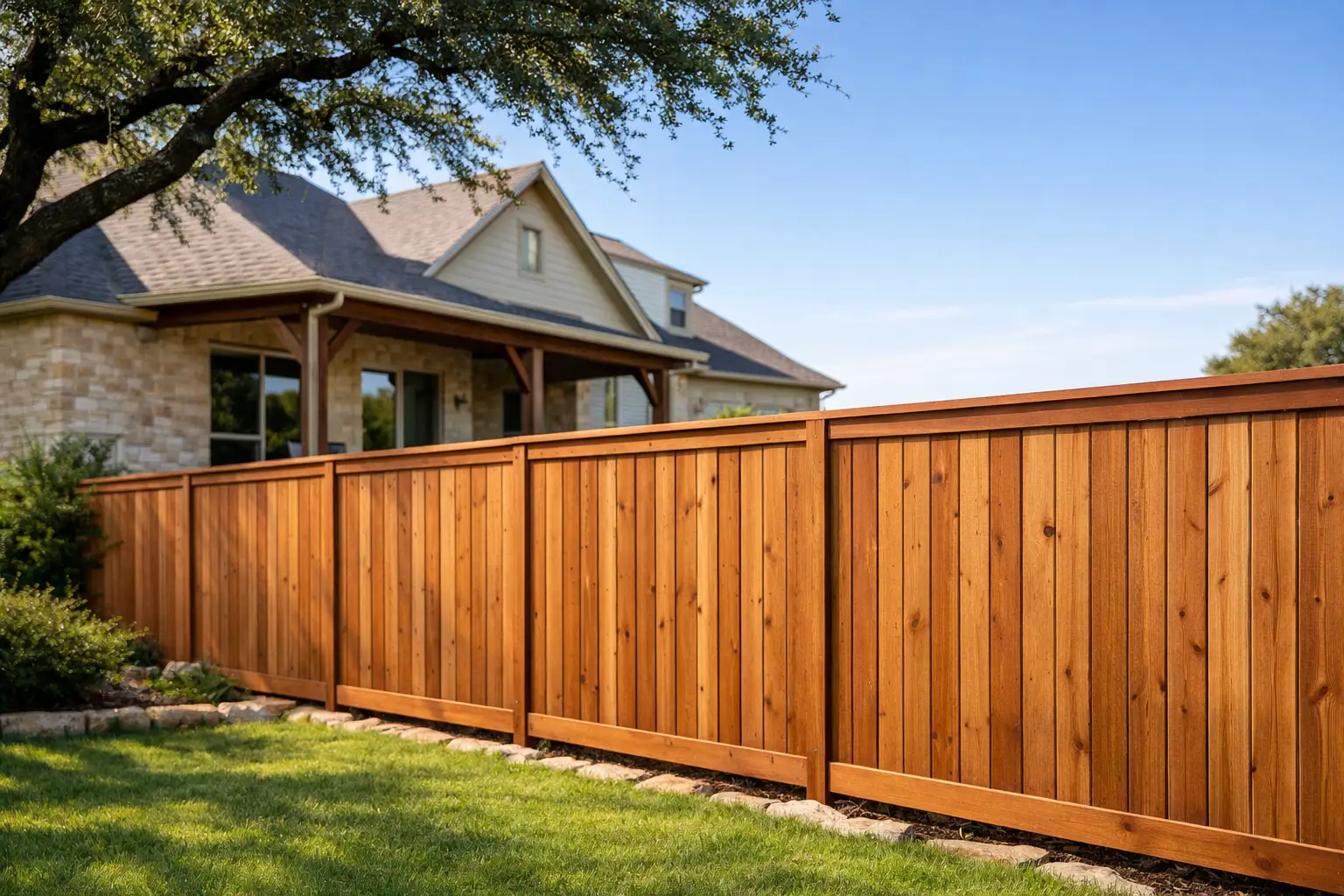
A solid vertical privacy fence is the classic choice for a reason. It blocks views, creates a clear boundary, and works with most home styles. A cap and trim detail adds a finished appearance and helps protect vulnerable picket ends from direct water exposure.
For areas exposed to wind, the design deserves extra attention. Completely solid fencing catches more wind than an open design, which puts added stress on posts, rails, and gates. A shadowbox or board-on-board fence can be a smart middle ground. It maintains privacy from most angles while allowing some air movement through the structure.
Horizontal cedar fencing offers a clean, contemporary look, especially around patios, decks, and updated exterior spaces. It requires careful framing because long horizontal boards need support to prevent sagging or bowing. It can be worth the investment when appearance is a major goal, but it is usually not the lowest-cost cedar option.
If you want a more open boundary, consider a cedar ranch rail or spaced-picket design. These work well for larger lots, garden areas, and properties where visibility matters. They do not provide the privacy of a solid fence, but they can make a yard feel less closed in.
Do Not Overlook Posts, Fasteners, and Gate Construction
The details underneath the pickets determine whether a fence stays straight. Posts should be set to an appropriate depth for the fence height, soil conditions, and wind exposure. In much of Southeast Texas, installers also need to account for soil movement and drainage. Standing water around posts can shorten the life of any fence, including cedar.
Galvanized or exterior-rated screws and fasteners are a better long-term choice than materials that can rust, streak, or fail early. Ask whether the fence will be nailed or screwed, and what type of hardware will be used on gates. There is no single answer for every project, but the contractor should be able to explain the method and why it suits your fence.
Gates need their own plan. A wide driveway gate, a frequently used pedestrian gate, and a small side-yard gate have different structural demands. Gates are often the first part of a fence to sag because they carry moving weight. Strong hinges, reinforced framing, dependable latches, and properly supported gate posts are worth paying for upfront.
Plan for Cedar’s Natural Look and Ongoing Care
Fresh cedar starts out in shades of tan, honey, and reddish brown. Left unfinished, it gradually weathers to a soft gray. Some property owners love that aged appearance; others prefer to keep the warmer natural color with a quality exterior stain or sealer.
Sealing is not mandatory the moment a new cedar fence goes up. New lumber often needs time to dry before it accepts a finish properly. The right timing depends on the moisture level of the wood and the product being used. A contractor or stain manufacturer can help you avoid applying a coating too early, which can lead to peeling or uneven absorption.
For a maintained finish, plan to clean the fence periodically and reapply a protective stain or sealer as needed. South-facing sections and areas exposed to sprinklers, tree cover, or poor drainage may need attention sooner than sheltered sections. Cedar is naturally durable, but it is still wood. Regular care helps it stay cleaner, straighter, and more attractive.
Compare Cedar Fence Quotes the Smart Way
A clear estimate should tell you more than the total price. It should identify the fence height, linear footage, cedar grade or picket type, post material, rail count, gate specifications, demolition or haul-off needs, and whether staining is included. If one quote is dramatically lower, compare those details before assuming it is the same fence.
Ask how the contractor handles slopes, roots, drainage areas, and existing structures. A straight run across level ground is simple. A property with elevation changes, mature trees, concrete edges, or narrow access may require additional labor and a different installation approach. Honest planning prevents surprise costs and helps the finished fence look intentional rather than patched together.
For property managers and homeowners preparing to sell, durability and appearance should be weighed together. A basic fence may solve an immediate boundary problem, while a better-grade cedar design can improve tenant appeal, backyard usability, and the overall impression of the property. The best value is the one that fits the job without paying for upgrades you do not need.
Get the Installation Right From Day One
Cedar fencing is a solid investment when the materials and workmanship match the conditions on your property. Gotta Call Mac helps homeowners and property owners choose practical fence designs, explain the options clearly, and complete projects with dependable craftsmanship and fair pricing.
Before making a final decision, walk your yard, note where you need privacy and access, and look closely at drainage, trees, slopes, and shared boundaries. A free, detailed estimate should give you a fence plan you can feel good about long after the new-wood color has settled into your landscape.
