
 Roofing Services
A damaged perimeter, an unsecured service entrance, or a gate that will not close can create a problem fast. The right commercial property fence solutions protect your people, equipment, inventory, and daily operations without making the property look neglected. For business owners and property managers, a fence is not a decorative afterthought. It is part of the property’s security plan, curb appeal, and long-term maintenance budget.
At Gotta Call Mac, we help commercial clients make practical fencing decisions based on how their property actually works. That means looking beyond the first installation price and choosing a fence that fits the traffic, exposure, security needs, and appearance of the site.
Start With What the Fence Needs to Do
Every commercial fence has a job. A warehouse yard may need clear boundary control and a durable vehicle gate. A multifamily community may need attractive fencing around shared spaces, equipment areas, or pet areas. A retail center may need to discourage after-hours access while keeping storefronts visible and welcoming.
Before choosing a material, consider who needs access, what needs protection, and how much visibility the property requires. A fence designed only to mark a boundary is different from one designed to control entry or keep valuable equipment out of sight.
It also helps to think about the next five to 10 years. If your property will add parking, expand storage, change tenants, or increase vehicle traffic, the fence and gates should support those plans. Replacing a short section later is manageable. Rebuilding an entire perimeter because the access points no longer work is an expense most owners would rather avoid.
Commercial Property Fence Solutions by Material
The best material depends on the property, not a one-size-fits-all answer. Cost matters, but so do maintenance needs, expected lifespan, local conditions, and the way customers see your business.
Chain Link for Practical Security
Chain link remains a dependable choice for commercial yards, construction areas, utility spaces, athletic facilities, and storage lots. It provides a strong, visible boundary at a reasonable price and can cover large perimeters efficiently.
For added security, commercial chain link can be built with taller posts, privacy screening, heavier-gauge wire, and reinforced gates. Vinyl-coated chain link is another option when you want a cleaner finish and added protection from the elements. The trade-off is appearance. For customer-facing properties, standard chain link may feel too industrial unless it is paired with screening or landscaping.
Ornamental Metal and Aluminum for Curb Appeal
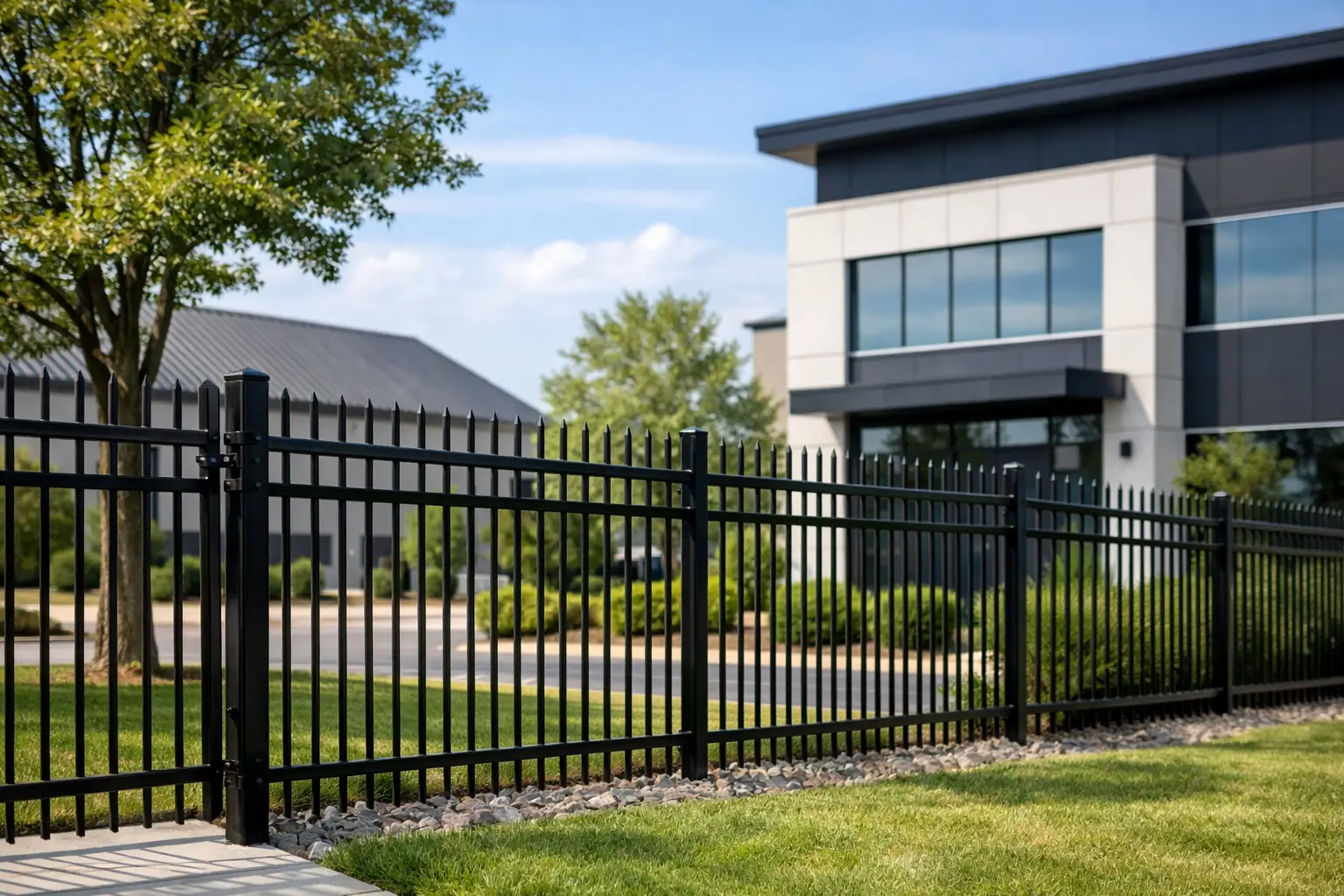
Metal and aluminum fencing work well for office buildings, medical facilities, apartment communities, schools, and retail properties where appearance is part of the customer experience. These systems create a polished, open look while still defining the property and limiting access.
Aluminum is especially useful around landscaped areas, pools, walkways, and decorative entrances because it resists rust and requires little upkeep. Steel or ornamental metal can offer greater strength for high-traffic locations. The upfront investment is usually higher than chain link, but the clean appearance and lower maintenance can make sense for the right site.
Wood Fencing for Privacy and Separation
Cedar and pine fencing can be a good fit when a business needs privacy, noise buffering, or visual separation. Restaurants, medical offices, mixed-use properties, and multifamily communities often use wood fencing around dumpsters, service areas, patios, and maintenance zones.
Cedar offers natural durability and a more finished appearance. Treated pine is often the more budget-conscious choice. Both need periodic attention in the Texas climate. Sun, moisture, and shifting soil can affect boards, posts, and fasteners over time, so quality installation and repair access matter.
Split Rail and Custom Designs for Open Properties
Not every commercial property needs a closed perimeter. Split rail fencing can define entrances, drive lanes, green space, or large grounds while maintaining an open appearance. It is often a practical choice for properties that want to guide traffic and establish boundaries without creating a hard visual barrier.
Custom fence combinations can also solve difficult layouts. A property may use ornamental metal at the front, privacy fencing around service areas, and chain link around equipment or storage. Matching each section to its purpose often delivers better value than forcing one material across the entire site.
Gates Matter as Much as the Fence
A commercial fence is only as functional as its access points. Gates need to match the type of traffic entering and leaving the property, including employees, visitors, delivery vehicles, service crews, and emergency access.
A walk gate may be enough for a side entrance, while a double swing gate can serve a wider service drive. Sliding gates are often a better option when driveway space is limited or when larger vehicles need consistent access. The key is planning the opening width, swing direction, grade changes, and daily use before installation begins.
Gate repairs deserve quick attention. Sagging hinges, bent frames, loose latches, damaged rollers, and failing hardware can create security gaps or prevent business operations from moving as scheduled. A small issue can become a major headache when it blocks a delivery, leaves a lot exposed overnight, or creates a safety concern for tenants.
Plan for Houston-Area Conditions
Commercial fences in Spring, The Woodlands, Houston, Conroe, and surrounding communities deal with heat, humidity, heavy rain, high winds, and soil movement. Those conditions can shorten the life of a poorly installed fence.
Posts need proper depth and stable setting. Drainage around the fence line should be considered, especially in low areas where standing water can weaken wood components or cause erosion around posts. Metal components need finishes and hardware suited to moisture exposure, while gates need enough clearance to keep working when the ground shifts.
Storm damage is another reason to work with an experienced local contractor. After strong winds or falling limbs, a leaning fence or damaged gate may need more than a quick patch. The repair should address the cause, whether that is broken posts, weakened sections, debris impact, or poor drainage, so the same failure does not keep returning.
Budget for the Full Scope, Not Just the Linear Footage
Fence estimates are often discussed by the foot, but commercial projects have several cost drivers. Material type, height, post depth, gate size, terrain, demolition, access restrictions, and site preparation all affect the final price.
For example, a straight run of fence on level ground is simpler than a perimeter that crosses drainage areas, slopes, utility zones, or heavily landscaped sections. Removing an old fence, clearing brush, hauling debris, and repairing damaged gate areas may also be necessary before the new work can begin.
The lowest quote is not always the lowest cost over time. A better-built fence with properly set posts, dependable hardware, and a design that fits the property can reduce repeat repairs and operational disruptions. At the same time, not every job calls for the most expensive material. A fair contractor should explain the options clearly and help you spend where it matters most.
Keep Your Fence Working With Timely Repairs
Routine checks can prevent a minor repair from becoming a replacement project. Walk the perimeter periodically and look for leaning posts, loose boards, rusted hardware, gaps below the fence, damaged mesh, and gates that drag or fail to latch.
Pay close attention after storms, landscaping work, utility work, or tenant turnover. These are common times for fences and gates to take a hit. If a section is compromised, repair it promptly. A visible gap tells people the property may be easy to access, and it can invite more damage.
For property managers, it is smart to keep records of repairs and note recurring trouble spots. If the same gate needs adjustment repeatedly or one side of the property keeps developing drainage-related issues, a more permanent correction may save time and money.
Choose a Contractor Who Can Handle the Site
Commercial fencing can involve more than installing posts and panels. The property may need brush clearing, tree trimming, debris removal, storm cleanup, or repairs to nearby exterior features before the work can be completed correctly. Working with a full-service local contractor can reduce scheduling delays and the stress of coordinating several crews.
Ask for a clear scope of work, material options, gate details, expected schedule, and a straightforward estimate. You should also confirm that the contractor is licensed, bonded, and insured. Those basics matter when work is happening around tenants, employees, customers, vehicles, and active business operations.
A well-planned fence protects more than a property line. It helps your business look cared for, keeps daily traffic moving, and gives you fewer problems to manage. When you are ready to improve security, privacy, or curb appeal, start with a free estimate and build the solution around the way your property needs to operate.
