
 Roofing Services
A fence that looks great on installation day is only part of the job. Around Houston, Spring, The Woodlands, and surrounding communities, intense sun, heavy rain, humidity, shifting soil, and wind can expose weak materials and poor installation quickly. So, what type of fence lasts longest? For most residential properties, a properly installed aluminum fence is usually the longest-lasting practical choice. But the best fence for your property still depends on privacy needs, budget, security, and how much maintenance you are willing to handle.
What Type of Fence Lasts Longest?
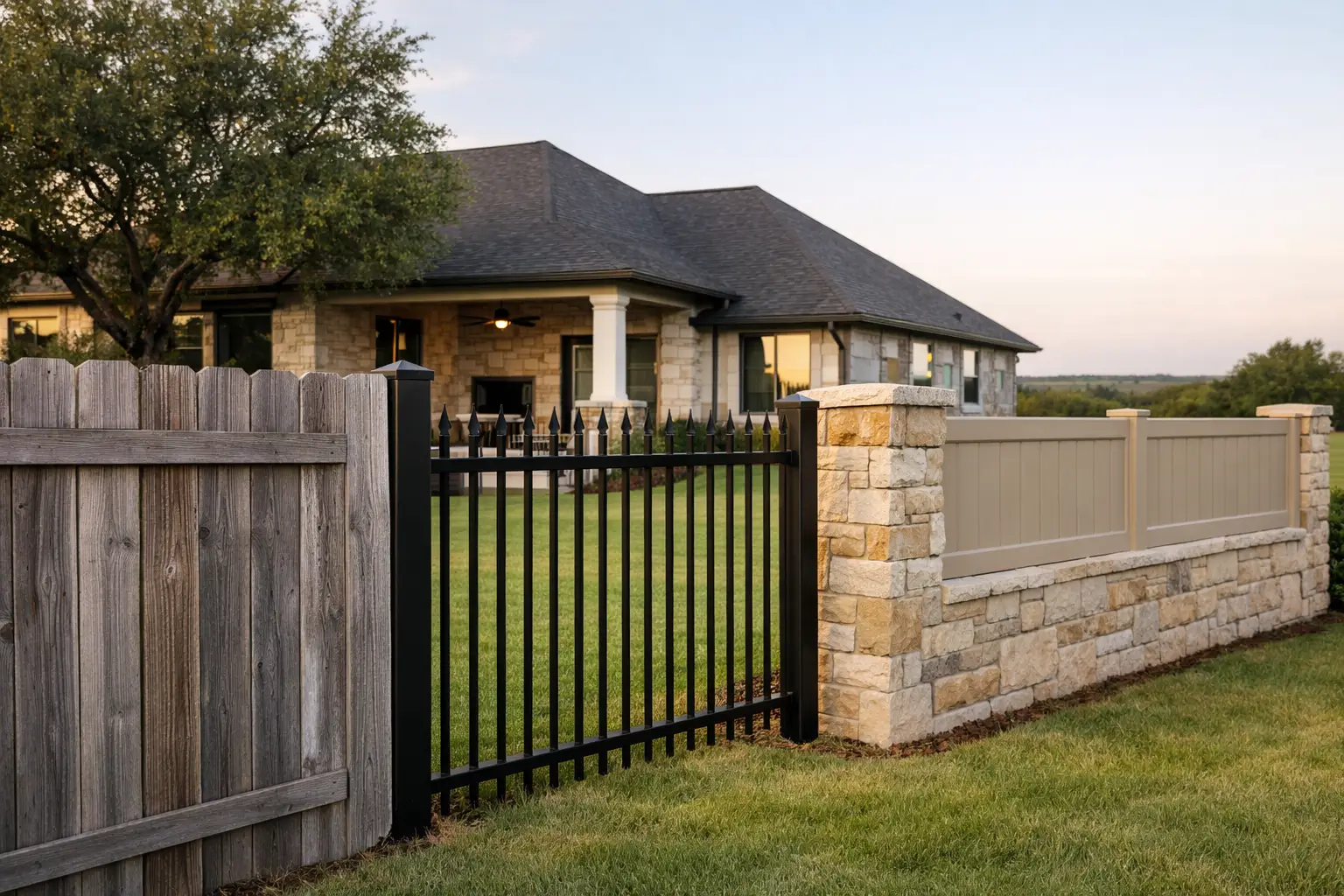
Aluminum fencing generally offers the best combination of long service life, low maintenance, and clean appearance. A quality powder-coated aluminum fence can commonly last 30 to 50 years or longer. It does not rot like wood, will not be damaged by termites, and does not rust the way untreated or poorly protected steel can.
That does not mean aluminum is automatically right for every yard. Its open picket design does not provide privacy, and it is not the best choice when a property needs a heavy-duty security barrier or a solid enclosure for large dogs. Still, for front yards, pool areas, estate properties, commercial sites, and homeowners who want a fence they will not need to stain or replace every few years, aluminum is hard to beat.
If the question is strictly about maximum lifespan with no concern for cost or appearance, masonry walls made from brick, stone, or block can last for generations. However, they are major construction projects, not a typical fence installation. For most property owners, aluminum is the long-term winner, while other fence types may be a better fit for a specific purpose.
Fence Lifespans: What You Can Realistically Expect
Material matters, but realistic lifespan depends on product quality, post depth, drainage, gate hardware, and routine care. A fence can fail early because the posts lean, the gate sags, or water stays trapped at the base – even if the panels themselves are in good shape.
Aluminum: 30 to 50+ Years
Aluminum is the low-maintenance leader. It is lightweight but durable, and its powder-coated finish holds up well against rain and humidity. Unlike iron or steel, aluminum does not form red rust. It may oxidize slightly over many years, but that is usually a cosmetic issue rather than a structural problem.
Aluminum is especially useful on sloped yards because many systems can be adjusted to follow the grade. It also delivers a polished, open look without blocking views. If a pool, pond, wooded lot, or landscaped front yard needs a dependable boundary, aluminum can add curb appeal while keeping long-term maintenance low.
The trade-off is privacy. Aluminum fencing is designed to be seen through. Homeowners who want a backyard screened from neighbors will usually need wood, vinyl, composite, or a privacy-focused metal system instead.
Steel and Metal: 20 to 40+ Years
Steel fencing can last a long time, particularly when it is galvanized and professionally powder coated. It is stronger than aluminum and can be the better choice for properties that need added security, larger gates, or a more substantial perimeter. Ornamental steel can also create a traditional, upscale appearance.
Its weak point is corrosion. Scratches, failed coatings, poor drainage, and neglected repairs can allow rust to spread. In humid Gulf Coast conditions, that maintenance cannot be ignored. Regular inspections and prompt touch-up work make a big difference.
For ranch-style properties, commercial lots, or locations that need a tough boundary, metal fencing can be an excellent long-term investment. The right material and finish are important. A bargain metal fence with thin coating may cost less upfront but can create repair work much sooner than a better-built system.
Vinyl: 20 to 30 Years
Vinyl fencing does not rot, attract insects, or require staining. For homeowners who want a white privacy fence or a clean, consistent look, it can be a practical option. Routine cleaning with mild soap and water is often enough to keep it looking presentable.
Texas heat is the main consideration. Lower-quality vinyl can become brittle over time, fade, warp, or crack after impacts. A vinyl panel can also be harder to repair cleanly than a wood picket if a mower, vehicle, falling branch, or strong wind damages one section.
Quality vinyl with reinforced rails and properly set posts can serve a property well for decades. It is not as naturally strong as steel, and it may not offer the same lasting value as aluminum, but it is a solid low-maintenance privacy option.
Cedar: 15 to 25 Years
Cedar is one of the best natural wood choices because it contains oils that help resist insects and decay. It has a warm appearance that works especially well for backyard privacy fences, decorative gates, and homes where a natural finish matters.
Even cedar needs care in this climate. Sun dries and grays the boards, while humidity and rain can encourage mildew, warping, and rot if the fence is not sealed and maintained. A quality stain or sealant every few years can extend its life and preserve its color.
Cedar is often worth the higher initial cost when appearance and privacy are the priorities. It can last a long time, but it is not a set-it-and-forget-it material. Homeowners should expect some maintenance to get the full value from it.
Pressure-Treated Pine: 10 to 20 Years
Pressure-treated pine remains a popular choice because it is affordable, widely available, and works well for privacy fences. When installed correctly and sealed after it has dried, it can provide dependable service for many years.
The lifespan varies widely. Lower-grade boards may twist, split, or shrink sooner. Posts can rot early when they are set in poorly drained soil or when water regularly collects along the fence line. In many cases, the posts and gate framing need attention before the pickets do.
For homeowners balancing cost with the need for a traditional privacy fence, treated pine is often the practical choice. Choosing better-grade lumber, using proper fasteners, and keeping vegetation off the fence can add meaningful years to its life.
Composite: 25 to 40 Years
Composite fencing is made from a blend of recycled wood fibers and plastic. It can offer the look of wood without the usual concerns about rot, insects, and staining. It is often durable, private, and available in colors that do not need regular painting.
The downside is cost. Composite materials can be more expensive than wood and vinyl, and some products may expand or contract in extreme heat. It is important to select a system designed for outdoor Texas conditions and installed with the correct spacing.
For a homeowner who wants privacy, a modern appearance, and less maintenance than wood, composite can be a strong long-term option. It may not be the least expensive fence today, but it can reduce future maintenance and replacement costs.
The Installation Matters as Much as the Material
A long-lasting fence starts below ground. Posts need the correct depth for the fence height, soil conditions, and wind exposure. They must be aligned, braced, and secured properly so the fence remains straight as the ground expands, contracts, and drains after heavy rain.
Gate construction is another major factor. Gates carry more movement and weight than standard panels. Weak hinges, undersized posts, or poor framing can lead to dragging and sagging long before the rest of the fence wears out. A well-built gate should open, close, and latch smoothly from day one.
Drainage also deserves attention. Constant contact with wet soil shortens the life of wood posts, encourages corrosion on metal components, and can shift the fence line. Before installation, look for low spots, downspout discharge areas, and sections where water pools after storms.
How to Make Any Fence Last Longer
The simplest maintenance habit is to walk the fence line twice a year and after major storms. Look for leaning posts, loose fasteners, cracked boards, damaged coatings, rubbing gates, and soil erosion around the base. Small repairs are more affordable than waiting for a section to fail.
Keep sprinklers from spraying the fence every day, and trim vines, shrubs, and grass back from the panels. Vegetation traps moisture against wood and can hide damage on every material. For wood fences, clean and reseal the surface as needed. For coated metal, touch up scratches before corrosion has a chance to spread.
Do not overlook the gate. Lubricate hinges when needed, tighten hardware, and correct sagging early. A gate that drags across the ground puts stress on posts and can turn a minor adjustment into a larger repair.
Choosing the Longest-Lasting Fence for Your Property
The right answer is not always the material with the highest possible lifespan. An aluminum fence may last decades, but a cedar privacy fence may better serve a family that wants a secluded backyard. Steel may be the smarter choice for a commercial property that needs more security. Treated pine can make sense when a property needs an attractive boundary now and budget matters most.
Before choosing, think about what the fence must do every day: contain pets, create privacy, protect a pool area, define a commercial property, improve curb appeal, or secure a gate entrance. Then compare the initial price with realistic maintenance and replacement costs over the next 15 to 30 years.
At Gotta Call Mac, we help property owners choose fencing that fits the job, the property, and the budget – without pushing a material that does not make sense. A free estimate is a good time to discuss the soil, layout, gate needs, and finish options that will help your fence stay strong and look right for years to come.
