
 Commercial Remodeling
A fence in Greater Houston has a tougher job than most people realize. It has to handle long stretches of heat, heavy rain, humidity, shifting soil, and the occasional storm season without giving up privacy or curb appeal. A well-built cedar fence Houston property owners can rely on starts with more than attractive pickets. It starts with the right layout, sound posts, quality materials, and workmanship that accounts for local conditions.
At GottaCallMAC, we help homeowners, landlords, property managers, and businesses make practical fencing decisions every day. Whether you are replacing a worn-out privacy fence, building around a new pool or patio area, or repairing storm damage, the goal is simple: a fence that looks good, works hard, and makes sense for your property and budget.
Why Cedar Works Well for Houston Properties
Cedar remains a popular choice because it has a warm, natural appearance and handles outdoor exposure better than many basic wood options. Cedar contains natural oils that help it resist moisture and insect activity. That does not make it maintenance-free, but it gives homeowners a strong starting point for a durable wood fence.
Appearance is another reason cedar stands out. The grain, color, and texture can make a backyard feel more finished than a standard treated-pine installation. Cedar works especially well for homes in The Woodlands, Spring, Magnolia, Tomball, and surrounding communities where a fence is a major part of the landscape and outdoor living space.
The trade-off is cost. Cedar usually costs more than treated pine, and the grade of lumber makes a difference. Lower-grade boards may have more knots, variation, or warping potential. A clear estimate should explain what material is being used, how the fence will be framed, and whether gates, old-fence removal, staining, or repairs are included.
Cedar Fence Houston Designs Worth Considering
The best fence style depends on what the property needs it to do. Privacy, airflow, security, appearance, pet containment, and neighboring fence lines all affect the right choice.
Standard privacy fencing
A traditional side-by-side privacy fence is a straightforward option for many homes and rentals. Pickets are installed next to one another to create a solid visual barrier. It is practical, clean-looking, and often the right fit when a property needs privacy without adding unnecessary cost.
Board-on-board cedar fencing
Board-on-board fencing uses overlapping pickets. As wood naturally expands and contracts through Houston’s changing weather, the overlap helps maintain privacy rather than exposing gaps between boards. It also creates a more finished appearance from both sides of the fence.
This style uses more material and labor than a basic privacy fence, so it is not always the lowest-cost choice. For a backyard that faces a busy street, a close neighbor, or a high-use outdoor area, though, the added coverage can be worth considering.
Top caps and trim
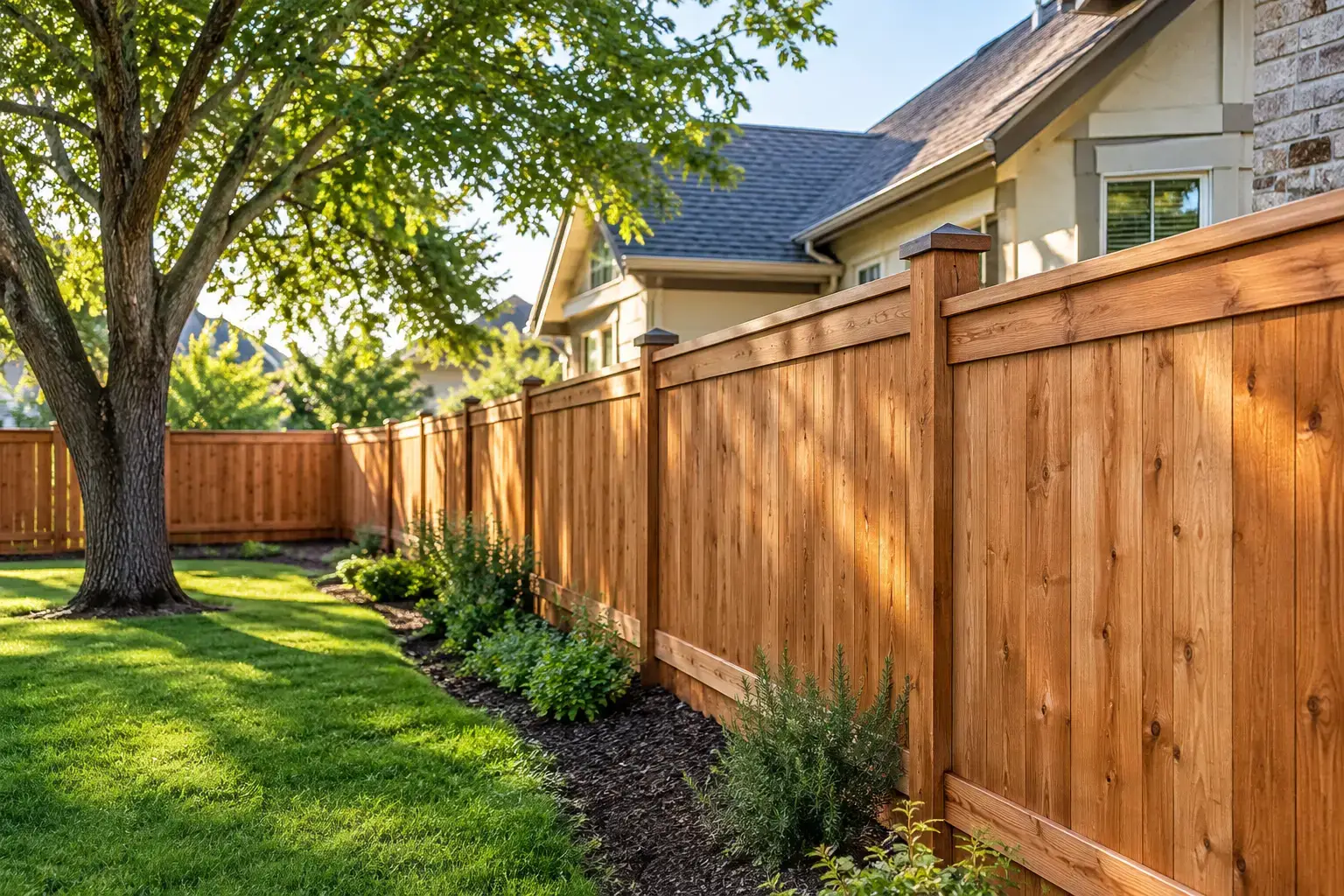
A top cap can give a cedar fence a cleaner, more substantial look while helping protect exposed picket ends from direct rain. Trim details can also dress up a fence line facing a driveway, common area, or commercial entrance. These upgrades are most valuable when they fit the overall property rather than being added just for decoration.
Gates that match the fence
A strong fence deserves a gate that does not sag after a season of use. Gates need proper framing, reliable hinges, latches that operate smoothly, and posts capable of carrying the load. A wider equipment gate, double gate, or high-traffic side gate may need additional reinforcement. Gate construction should be part of the conversation from the beginning, not an afterthought after the fence is complete.
What Really Determines Fence Longevity
Good cedar is only one piece of a long-lasting fence. In Houston-area soil, post installation and drainage are often just as important as the pickets homeowners see every day.
Posts need to be properly set, aligned, and spaced for the fence design. Rails need secure connections. Pickets should be installed with consistent spacing and fastening so the fence looks straight and performs as intended. On properties with low spots, standing water, tree roots, slopes, or soft ground, the installation plan may need to change.
Rot boards are another smart detail to discuss. A rot board runs along the bottom of the fence, lifting cedar pickets away from direct ground contact. Because the lower section of a fence usually takes the most moisture and weed-trimmer damage, replacing a rot board later can be simpler than replacing the full fence line.
Trees also matter. Roots can affect post placement, while overhanging limbs can scrape fencing or drop debris during storms. GottaCallMAC can assess the fence and surrounding trees together when a property needs both fence work and tree trimming, removal, or storm cleanup. Coordinating the work can prevent a new fence from being installed beneath a problem limb or beside a root issue that should have been addressed first.
Cedar Fence Maintenance Without Overcomplicating It
Cedar does not need constant attention, but a little care goes a long way. Check the fence after severe weather, especially around gates, posts, and areas where water tends to collect. Remove vines, piled leaves, and soil that hold moisture against the boards. Keep sprinkler heads from soaking the same section of fence every day when possible.
Staining or sealing can help preserve cedar’s color and add another layer of moisture protection. The timing depends on the product, the condition of the wood, and the weather. Some homeowners prefer cedar’s natural weathered appearance, while others want to keep a richer tone. Either choice can work when the fence is kept clean and repaired before small problems become larger ones.
If a few pickets crack, a rail loosens, or a gate begins dragging, repair may be the practical answer. But when multiple posts are leaning, rot is widespread, or the fence has reached the end of its usable life, replacement is usually the better investment. An honest site visit should help you understand which situation you have instead of pushing a one-size-fits-all solution.
Planning a Cedar Fence Installation or Replacement
Before work starts, think through how the fence will be used. A family with dogs may need a tight bottom line and dependable gate latch. A rental owner may prioritize a clean, durable privacy fence that is easy to maintain. A business may need controlled access, a wider gate, or a fence design that works with existing ornamental metal or aluminum fencing.
It also helps to identify utility areas, air-conditioning equipment, drainage paths, landscaping, and access points for crews and materials. If an old fence is being removed, ask how debris will be handled and whether nearby trees, shrubs, or structures require extra care.
A professional estimate should cover the fence style, wood type, height, post and rail construction, gate details, removal needs, and any site conditions that could affect the work. Clear communication before the project is what keeps expectations realistic once the work begins.
Get a Practical Cedar Fence Plan for Your Property
A cedar fence can add privacy, define a property line, improve a rental’s condition, and make outdoor space more enjoyable. The right result comes from matching the fence design to the property, not simply choosing the first fence style you see.
For dependable cedar fence installation, replacement, repair, and gates throughout Greater Houston, contact GottaCallMAC for a free estimate. Call 936-290-3502 or visit www.gottacallmac.com to talk through your project. A clear plan and quality workmanship can make the next fence you build one you will not have to worry about every season.
