
 Roofing Services
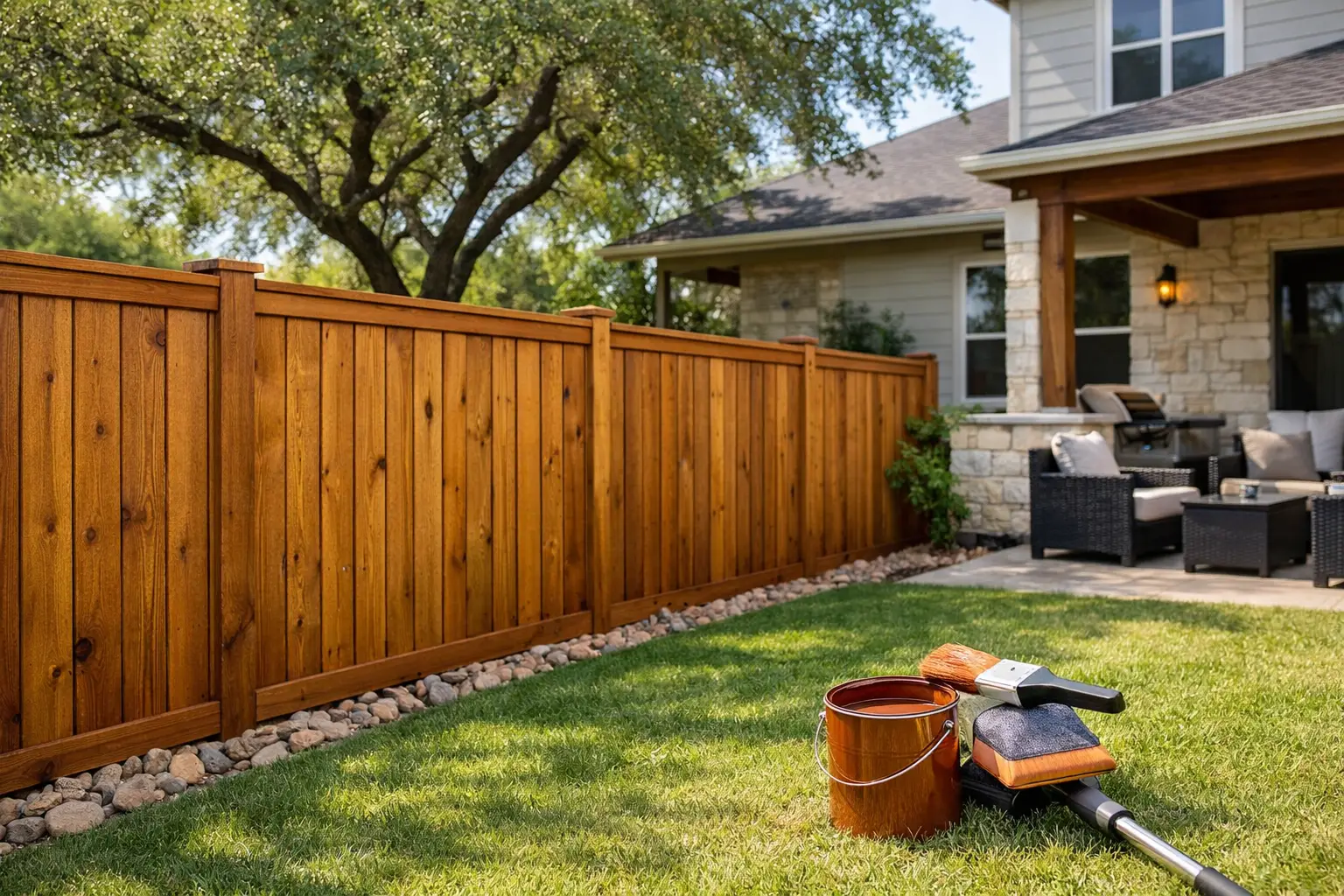
Texas sun can fade a new cedar fence faster than many homeowners expect. Add heavy rain, humidity, sprinkler overspray, and mildew, and a fence that looked warm and rich at installation can turn gray, blotchy, or dark within a season. This cedar fence stain review focuses on what actually matters for properties around Houston, Spring, The Woodlands, Conroe, and nearby communities: protection, appearance, upkeep, and value over time.
The short answer is that a quality penetrating stain is usually the best fit for cedar. It protects the wood without hiding its grain or creating a thick surface layer that can peel. The right product still depends on the fence’s age, condition, desired color, and how much maintenance you are willing to handle.
Cedar Fence Stain Review: What Performs Best
For most cedar privacy fences, semi-transparent penetrating stains offer the best balance of appearance and protection. They let cedar’s natural grain show through while adding pigments that slow UV fading. That matters in Southeast Texas, where direct afternoon sun can be just as hard on a fence as rain.
Transparent or clear water repellents are a reasonable choice when the cedar is brand new and you want to preserve its natural color. The trade-off is shorter protection from sunlight. Clear finishes may resist water for a while, but they contain little or no pigment to block UV rays. Cedar will still gradually silver or gray, especially on south- and west-facing fence runs.
Semi-transparent stains are the practical middle ground. They add color without making the fence look painted, help hide minor color variation between boards, and are generally easier to maintain than film-forming coatings. Cedar tones, natural browns, warm honey colors, and medium walnut shades usually work well, though very dark colors can show dust and pollen more readily.
Solid stains provide the strongest color coverage and can help renew an older fence with uneven boards, previous discoloration, or stubborn cosmetic imperfections. They look closer to paint, however, and cover much of cedar’s grain. A good solid stain can perform well, but it needs careful prep and should be maintained before the coating begins to crack or peel.
Oil-Based vs. Water-Based Fence Stain
There is no automatic winner between oil-based and water-based stain. The better choice depends on the wood and the job conditions.
Oil-based penetrating stains are well known for soaking deeply into dry, absorbent cedar. They can give the wood a rich, even look and often perform well on older fences that have begun to dry out. Their drawback is that they can take longer to dry, may have a stronger odor during application, and can be less forgiving if applied during humid or rainy weather.
Water-based stains have improved significantly and are popular because they dry faster, have easier cleanup, and offer good color retention. Quality water-based products can resist mildew well, which is useful in humid areas. But cedar must be properly cleaned, dry, and ready to accept the product. A rushed application over damp boards can lead to uneven color and reduced lifespan.
A contractor should not select a stain based on the label alone. Wood moisture, board age, prior coatings, and weather during the work all affect the result. A premium stain applied to poorly prepared wood will not outperform a properly applied product on a clean, dry fence.
The Finish Matters More Than the Name on the Can
Product reviews often focus on a brand’s promised number of years. Those numbers can be helpful, but they are not a guarantee for every fence. A shaded side yard, a fence facing intense afternoon sun, and a section beside a sprinkler zone will weather at different speeds.
Look for a stain designed for exterior wood that offers UV protection, water resistance, and mildew resistance. More importantly, use the finish best suited to the fence’s condition. Penetrating stains are usually easier to refresh because they wear away gradually. Thick coatings can become a bigger repair project once they start lifting from the wood.
Prep Work Decides Whether Stain Lasts
The most common reason a cedar fence stain disappoints is not the stain itself. It is inadequate preparation. New cedar may look clean, but it can carry mill glaze, dust, or natural surface oils that limit absorption. Older cedar can hold mildew, dirt, loose fibers, and remnants of prior coatings.
A dependable staining job begins with a close inspection. Damaged pickets, loose rails, popped fasteners, and leaning posts should be addressed before staining. Stain improves and protects wood, but it cannot fix structural fence problems.
The fence should then be cleaned with an appropriate wood cleaner and rinsed carefully. Pressure washing can help when handled correctly, but excessive pressure can rough up cedar fibers and leave the surface fuzzy. The goal is to clean the wood, not carve it. If the fence is heavily weathered, light sanding after cleaning may be needed to smooth raised grain and help the stain apply evenly.
Drying time is not optional. In humid Texas weather, a fence may need longer than expected before it is ready for stain. Applying finish to wood that still holds too much moisture can trap problems under the surface and reduce penetration. Checking moisture levels is a more reliable approach than simply guessing based on the calendar.
Color Choices That Make Sense for Cedar
Natural cedar stain colors remain popular because they complement brick, stone, painted siding, and most outdoor spaces without competing for attention. They are also easier to touch up than bold colors when a single picket needs replacement down the road.
Lighter semi-transparent shades show the grain beautifully but may need maintenance sooner in full sun. Medium brown shades often provide a good balance of warmth and UV protection. Darker stains offer stronger pigment coverage, but they can make a smaller yard feel enclosed and may show scratches, pollen, and sun fade more clearly.
Before committing to a color, test it on a few boards in different parts of the fence. Cedar does not always accept stain uniformly. Knots, grain direction, board age, and moisture differences can all change the final shade. Looking at a sample in morning light and late-afternoon light can prevent an expensive surprise.
How Long Should a Cedar Fence Stain Last?
A realistic maintenance schedule is more useful than a big promise on a can. In this climate, a semi-transparent cedar fence stain may need attention every two to three years on highly exposed areas. Shaded or protected sections may last longer. Clear sealers often require refreshing sooner, while solid stains can last longer when properly maintained but may take more effort to repair when they fail.
Watch for fading, water soaking into the boards instead of beading up, mildew growth, and dry-looking wood. These are signs to clean and recoat before the fence becomes severely weathered. Staying ahead of maintenance usually costs less than waiting until the surface needs aggressive cleaning, sanding, or board replacement.
Sprinklers deserve special attention. Repeated overspray can leave mineral deposits, encourage mildew, and age one section of the fence much faster than the rest. Adjusting sprinkler heads away from the fence is one of the simplest ways to protect your investment.
When to Call a Fence Professional
Homeowners can handle a small staining project, particularly on a newer fence with easy access. Larger privacy fences are different. Prep takes time, stain must be applied consistently, and missed edges or lap marks are easy to spot after the finish dries. Repair needs, uneven ground, landscaping, gates, and weather timing can add more complexity.
For a fence that needs repairs along with staining, working with one dependable local contractor keeps the project simpler. Gotta Call Mac can inspect the cedar, address fence concerns, and help homeowners choose a finish that matches the condition of the wood and the look they want.
A cedar fence should not need to look brand new forever to look well cared for. With the right stain, careful preparation, and timely maintenance, it can keep adding privacy, curb appeal, and value to your property for years.
