
 Roofing Services
Best Fence for Dogs, Pools, and Privacy Needs
A fence has to do more than mark a property line in Texas. It may need to hold back an energetic dog, protect access to a swimming pool, block a neighbor’s view, stand up to humidity and storms, and still look right with your home. The best fence for dogs, pools, and privacy depends on which job matters most – and whether one fence needs to handle all three.
For many homeowners, a well-built cedar privacy fence is the strongest all-around choice. But aluminum, chain link, metal, and mixed-material designs can be smarter in certain yards. Choosing the right material before installation helps avoid costly changes later.
Start With What Your Fence Must Do
The first question is not, “What fence looks best?” It is, “What problem needs solved?” A fence designed mainly for privacy does not always meet pool safety requirements. A fence that keeps in a small dog may not contain a large, determined escape artist. A low-maintenance metal fence may offer excellent visibility around a pool but provide almost no privacy.
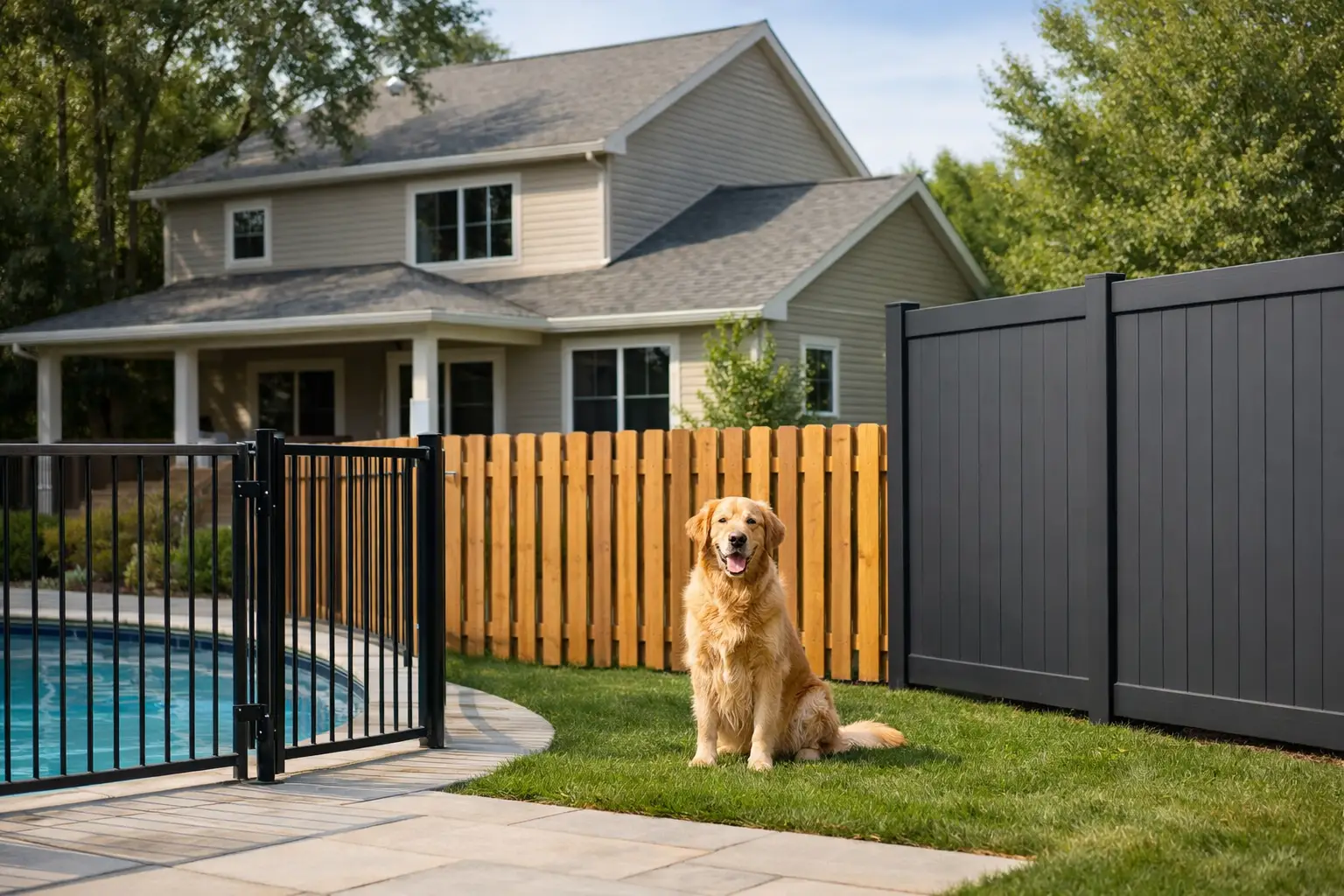
If your property needs a fence for more than one purpose, it often makes sense to divide the space into zones. For example, a tall cedar fence can secure the backyard perimeter and create privacy, while an aluminum barrier encloses the pool area inside the yard. This approach gives you privacy at the property line and clear sightlines where they matter most.
Before choosing a style, think through the height you need, who will use the yard, gate locations, drainage, slopes, neighborhood rules, and local pool barrier requirements. A professional measurement and site review can catch issues that are easy to miss from the driveway.
Best Fence for Dogs: Secure, Durable, and Hard to Climb
Dogs do not all challenge fences the same way. A small dog may slip through wide pickets. A large dog may lean, jump, dig, or test a loose gate. The best dog fence is one that matches your dog’s size, strength, behavior, and activity level.
Cedar Privacy Fencing for Most Dogs
A solid cedar privacy fence is a dependable choice for many households. It blocks distractions beyond the yard, which can reduce barking at passing people, dogs, and wildlife. With properly spaced pickets and sturdy posts, it also gives most dogs a secure boundary without an open view of the street.
A 6-foot cedar fence is common for backyard privacy and dog containment. Some larger or athletic dogs may require additional height where local rules allow. If digging is a concern, discuss ways to reinforce the bottom edge during installation. The gate deserves equal attention – a strong latch, aligned hinges, and no oversized gaps are essential.
Cedar has a warm, natural appearance and holds up well when installed correctly. Like any wood fence, it benefits from maintenance over time, including cleaning, staining, or sealing as needed. Houston-area heat, moisture, and shifting soil make quality posts and installation especially important.
Chain Link for Large Yards and Practical Containment
Chain link remains one of the most affordable and practical options for enclosing a large dog run or broad backyard. It provides reliable containment, lets air move freely, and does not block visibility. For property owners managing multiple dogs, rental homes, or commercial spaces, it can be a sensible value.
The trade-off is appearance and privacy. Dogs can still see outside activity, and a standard chain link fence does not stop a dog from barking at what it sees. Privacy slats or screening can help, but they add cost and can catch wind. A vinyl-coated chain link option may offer a more polished look than standard galvanized material.
Metal and Aluminum for Dogs That Respect Boundaries
Ornamental metal or aluminum fencing can look sharp around landscaped yards, but it is not the right answer for every dog. The rails and spacing work well for calm, larger dogs that are not jumpers or diggers. Smaller dogs may fit through openings, while strong dogs can sometimes push against lighter fencing.
If you choose aluminum around a dog area, confirm the picket spacing and fence height before ordering. It is an attractive, low-maintenance choice when your dog’s behavior and size make it suitable.
Best Fence for Pools: Safety Comes Before Style
A pool fence has one job that cannot be compromised: limiting unsupervised access to the water. That means the full barrier system matters, not just the fence panels. Gates, latches, closing mechanisms, gaps, height, and placement all need careful planning.
Aluminum Pool Fencing Offers Clear Sightlines
Aluminum fencing is often the preferred choice around pools because it is clean-looking, durable, and open enough to maintain visibility. Parents and guests can see the pool area from the patio or house, while the barrier clearly separates the water from the rest of the yard.
Aluminum does not rust like traditional iron and handles humid conditions well. It is also available in several heights, colors, and decorative styles. The open design will not provide privacy by itself, but landscaping or a separate perimeter privacy fence can solve that without blocking the view of the pool.
Mesh and Removable Barriers Have a Place
Some families use removable mesh fencing as an additional layer of protection, particularly when young children are present. It can be a practical option for a pool-specific barrier, but it should be selected and installed with safety requirements in mind. It is not a substitute for responsible supervision or proper gate hardware.
Wood privacy fencing can be part of a pool enclosure when built to meet applicable requirements, but it needs thoughtful design. A solid fence offers privacy, yet it can limit visibility into the pool area. If children are in the home, many owners prefer an interior aluminum barrier even when a tall perimeter fence already surrounds the yard.
Do Not Treat the Gate as an Afterthought
The gate is usually the weakest point in any pool fence. A pool gate should close and latch reliably, with hardware placed and adjusted to discourage young children from opening it. Gates can shift over time as soil moves and hinges wear, so routine inspection matters. If a gate drags, fails to latch, or has a growing gap underneath, repair it promptly.
Best Fence for Privacy: Cedar Is Often the Local Favorite
When the goal is to create a private backyard, cedar fencing is difficult to beat. It gives homeowners a solid visual barrier, helps define an outdoor living space, and complements everything from traditional homes to newer construction. Board-on-board cedar fencing is especially popular because overlapping boards reduce gaps as wood naturally expands and contracts.
A standard side-by-side privacy fence costs less in many cases and provides a clean, straightforward look. Board-on-board fencing adds material and labor, but it generally offers better coverage from both sides. Horizontal cedar fencing provides a more modern style, though it may require heavier framing and careful installation to keep lines straight.
Pine can also be a budget-friendly choice for privacy fencing, especially when treated for exterior use. It can deliver the coverage you need at a lower initial price. Cedar is often chosen for its natural appearance and long-term appeal, while treated pine may make sense when upfront cost is the main concern.
One Fence or a Combined Fence Plan?
A single 6-foot cedar privacy fence can often handle dogs and backyard privacy very well. It may also serve as part of a pool barrier if designed and installed to meet relevant requirements. Still, that does not automatically make it the best complete pool safety solution.
For a home with dogs, children, and a pool, a combined plan is usually worth considering. Use a secure perimeter fence to contain pets and create privacy. Then install a separate pool enclosure with a self-closing, self-latching gate. This adds another barrier between children or pets and the water while keeping the pool visible from the home.
It costs more than installing one basic fence, but it can make daily use of the yard safer and less stressful. The right plan depends on the layout of the home, patio, pool, gates, trees, and existing fence lines.
Details That Make a Fence Last
A good fence material can still fail early if the installation is rushed. Posts need proper depth and secure setting. Gates need enough support to avoid sagging. Fence panels should follow the grade without leaving escape gaps beneath them. On sloped yards, stepped or racked construction may be necessary to maintain a clean, secure line.
Ask about post size, rail construction, gate framing, hardware, and how the crew will handle existing roots, drainage paths, or uneven ground. A low quote that skips these details may not be a bargain once repairs start.
For homeowners in Spring, The Woodlands, Conroe, Houston, and nearby communities, GottaCallMAC can help match the fence design to the way you actually use your property. A free estimate gives you a chance to compare materials, heights, gate options, and costs before work begins.
The right fence should make the yard easier to enjoy – a safe place for the dog to run, a private place to relax, and a better-protected space around the pool.
