
 Roofing Services
A brown ceiling spot after a hard Texas rain is not a problem to watch for another season. Water can move along decking, framing, and insulation before it shows up indoors, turning a manageable repair into damaged drywall, stained paint, or mold concerns. The good news is that affordable roof repair options do exist when the issue is caught early and the work matches the actual source of the leak.
The lowest price is not always the best value, but neither is replacing more than the property needs. A dependable contractor should inspect the condition, explain what failed, and give you a clear estimate for a repair that protects the home without inflating the scope.
Start With a Targeted Inspection
A leak near a chimney, vent pipe, skylight, or wall does not automatically mean the whole surface has failed. These areas depend on flashing, sealants, pipe boots, and properly installed transition materials. When one of those components cracks, lifts, or separates, a focused repair may be all that is needed.
A good inspection looks beyond the visible stain. The contractor should check for missing or damaged shingles, exposed fasteners, loose flashing, worn pipe boots, soft spots, clogged drainage areas, and storm-related damage. They should also look in the attic when possible. That helps distinguish an active leak from old staining and identifies whether moisture has damaged the wood underneath.
For homeowners in Spring, The Woodlands, Houston, and nearby communities, wind-driven rain is a common problem. A surface can look mostly fine from the ground while a lifted shingle edge or loose flashing detail lets water in during the next storm. Finding that small failure early is often the most affordable move available.
Affordable Roof Repair Options for Common Problems
The right repair depends on the material, the age of the surface, and the condition beneath the damaged area. Here are the fixes that commonly provide the best value when the rest of the system is still in serviceable shape.
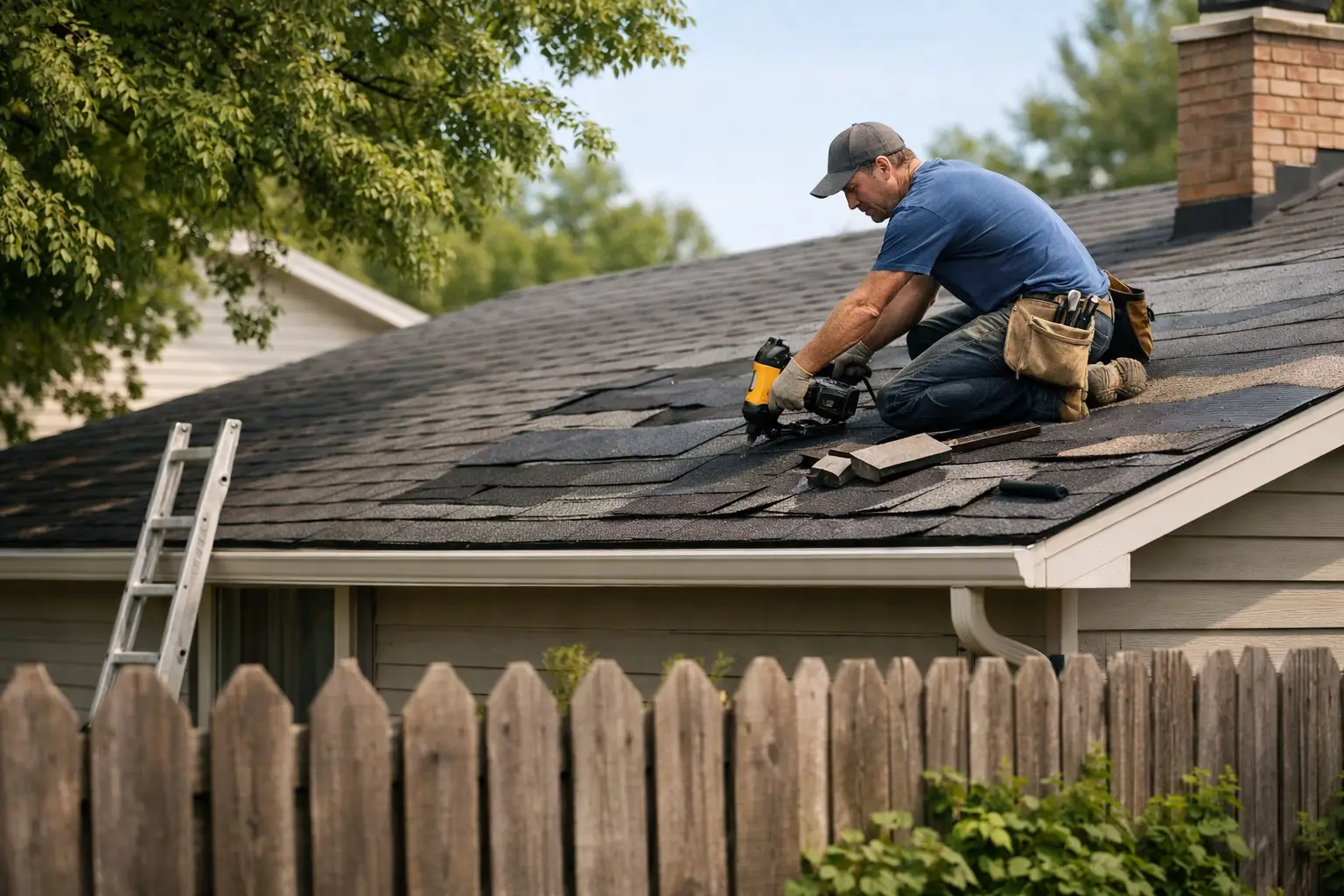
Replace a Small Section of Damaged Shingles
Wind can tear off shingles, crease them, or break their seal. Sun exposure can also make older shingles brittle enough to crack. If the surrounding materials are sound, replacing the affected section can restore protection without the expense of a full replacement.
Matching color and texture can be difficult on older surfaces because weather changes the appearance of existing shingles. Still, a close match and proper installation are far better than leaving exposed underlayment or attempting a patch with materials that do not belong there. The repair should include checking the underlayment and fasteners, not just placing a new shingle on top.
Repair Flashing Around Penetrations and Walls
Flashing directs water away from vulnerable joints. When it rusts, bends, pulls loose, or was installed incorrectly, leaks often follow. Repairing or replacing flashing around chimneys, vents, skylights, and wall intersections is frequently one of the most cost-effective solutions because it addresses the precise entry point.
This is not a place for a quick smear of caulk and a promise. Sealant has a role, but it cannot replace correctly layered flashing. A lasting repair needs materials installed so water sheds away naturally, even during heavy rain.
Replace Cracked Pipe Boots
Rubber or neoprene pipe boots around plumbing vents can dry out and split under Texas heat. The opening may be small, but it can allow enough water through to stain a ceiling or damage insulation. Replacing the boot is typically a straightforward repair when caught before the surrounding decking deteriorates.
If a contractor finds this issue, ask whether the nearby shingles and flashing will be carefully lifted and resecured. The detail work matters as much as the new boot itself.
Seal Minor Openings Only When the Materials Are Sound
Sealant can be an affordable short-term or supplemental repair for small gaps around properly installed flashing, exposed nail heads, or minor separations. It works best when it supports otherwise sound materials. It is not a cure for widespread cracking, missing shingles, rotten decking, or failing flashing.
Be cautious of anyone who recommends coating every problem with sealant without explaining why water is getting in. Cheap repairs become expensive when they hide damage long enough for rot to spread.
Repair Damaged Decking Beneath the Surface
Sometimes a small leak has softened a limited section of wood decking. Repairing that section while replacing the damaged exterior materials can prevent sagging and restore a solid base for the repair. This costs more than replacing shingles alone, but it is far less costly than ignoring a soft area until it expands.
The trade-off is simple: if the wood is compromised, skipping that step saves money only for the moment. The finished repair needs a solid surface underneath to hold fasteners and keep water out.
When a Repair Is Better Than Replacement
Repair is usually the smart option when damage is contained, the surface is not near the end of its expected life, and there are no widespread leaks or structural issues. One missing shingle, a failed vent boot, or loose flashing after a storm should not automatically lead to a full replacement recommendation.
Replacement becomes more reasonable when repairs are becoming frequent, shingles are curling or losing granules across large areas, multiple leaks appear, or the decking has extensive moisture damage. Property owners should weigh the immediate repair cost against the likelihood of another service call soon. An honest assessment should make that choice clear instead of pushing a one-size-fits-all answer.
For real estate professionals and property managers, timing matters too. A clean, documented repair can help protect a sale, tenant space, or insurance claim. Waiting for visible interior damage usually creates more scheduling pressure and a bigger bill.
Ways to Keep Repair Costs Under Control
The best savings usually happen before the leak grows. Check the attic after major storms for damp insulation, daylight near penetrations, or new staining. From the ground, watch for missing shingles, debris buildup, sagging areas, and branches rubbing against the structure. Do not climb onto a wet or steep surface yourself.
Keep gutters and drainage paths clear so water does not back up at the edges. Trim branches that drop limbs, scrape materials, or keep parts of the home shaded and damp. If a storm knocks down a fence, damages siding, or leaves branches on the property, addressing those issues together can reduce the hassle of coordinating several contractors.
When requesting estimates, describe when the leak appears, where you see staining, and whether the issue began after a specific storm. Ask for photos of the damaged area and a written explanation of the recommended repair. You should know what is being replaced, why it failed, and whether there is hidden wood damage before work begins.
Price comparisons are useful, but compare the scope, not just the total. One estimate may include flashing, underlayment, cleanup, and a workmanship warranty while another only covers a visible patch. The lower number is only a bargain if it solves the problem correctly.
Do Not Wait on Active Water Damage
Water does not stay in one place. It can travel through insulation, behind walls, and into framing before you notice a stain or drip. If you see active leaking, place a container under the drip, move belongings away from the area, and contact a qualified contractor promptly. If the ceiling is bulging with water, keep clear of it because the material can fail suddenly.
Gotta Call Mac provides practical property repairs for homeowners and commercial clients who need straightforward answers, fair pricing, and dependable workmanship. A free estimate gives you a chance to understand the condition of the home, compare your options, and fix the problem before the next storm makes it worse.
A small repair handled now can protect far more than the surface above your head. It can save your ceilings, walls, insulation, and peace of mind when the weather turns.
