
 Roofing Services
A stain spreading across the ceiling after a hard Texas storm will get your attention fast. When that happens, the question usually is not whether you need work done – it is roof repair versus replacement, and how to make the right call before damage gets worse and costs climb.
For most property owners, this decision comes down to three things: how much of the system is damaged, how old it is, and whether a repair will actually solve the problem for more than a short stretch. A quick patch can be the right move. It can also turn into throwing money at a system that is already near the end.
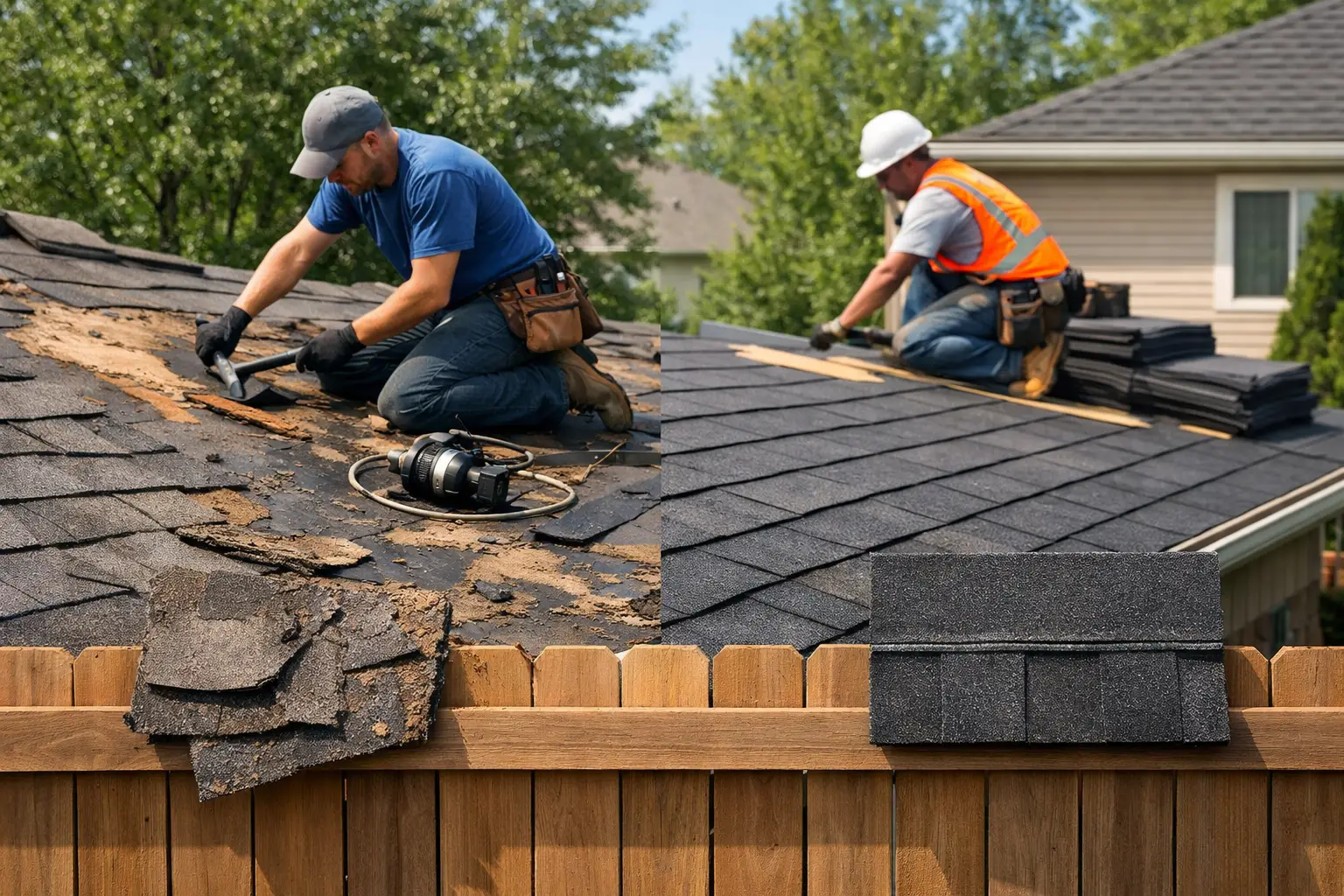
Roof repair versus replacement starts with the damage
Not all damage means you need a full replacement. A localized leak, a few missing shingles, lifted flashing, or damage around vents may be repairable if the rest of the system is still in solid condition. In those cases, a targeted repair can stop water intrusion, protect decking and insulation, and buy you more useful years.
The key word is localized. If the issue is limited to one section and the materials around it are still holding up, repair is often the more affordable and practical choice. That is especially true if the damage came from a recent storm event and the rest of the surface is still aging evenly.
Replacement becomes more likely when the problems are widespread. If shingles are curling across multiple slopes, granule loss is heavy, soft spots are showing up, or leaks are appearing in more than one area, you are usually dealing with a bigger failure pattern. At that point, fixing one section may not stop the next section from failing a few months later.
Age matters more than most people think
A newer system with one problem deserves a different recommendation than an older one with the same symptom. If your roof is relatively young and was installed correctly, a repair often makes financial sense. You are preserving a system that still has life left in it.
If it is already pushing the later years of its expected lifespan, the math changes. Even a well-done repair may only delay a larger project that is coming soon anyway. That does not mean every older roof must be replaced immediately, but it does mean repairs should be weighed against how much life you are realistically buying.
This is where many owners get frustrated. They pay for one leak repair, then another, then another, and before long they have spent a significant amount without solving the larger issue. A good contractor should be honest about that trade-off instead of selling the cheapest short-term fix just to win the job.
When repair is the smarter move
Repair is usually the better option when the damage is isolated, the underlying structure is dry and sound, and the remaining materials are still in decent shape. It is also a strong option after storm damage when a section took the hit but the full system did not.
For homeowners getting ready to sell, a repair can also make sense if the goal is to correct a documented issue without taking on a larger capital project. The same can be true for property managers trying to address a tenant complaint quickly while keeping maintenance costs under control.
That said, the repair has to be meaningful. A real repair addresses the source of the leak or failure, not just the visible symptom inside the house. If someone only seals over a problem area without fixing flashing, underlayment, or damaged decking underneath, the leak may pause for a while and then come right back.
When replacement is the better investment
Replacement makes more sense when damage is extensive, moisture has gotten below the surface, or the system is failing in multiple places. It is also the better move when repeated repairs are starting to cost more than they are worth.
There is a budget side to this that matters. A full replacement costs more upfront, but it can reduce repeat service calls, interior damage, and the stress of wondering where the next leak will show up. For many owners, that predictability is worth a lot.
Replacement also gives you the chance to correct installation issues that repairs cannot fully solve. Poor ventilation, bad flashing details, and hidden deck damage can keep causing trouble if only the top layer gets attention. Starting fresh allows those problems to be addressed the right way.
In places like Houston, Spring, and The Woodlands, weather can be especially hard on exterior systems. Heat, humidity, wind, and storm activity can accelerate wear. If an older roof has already been through several rough seasons, replacement may end up being the more cost-effective path.
Cost is important, but value is the real issue
Most people begin with price, and that is understandable. A repair is usually less expensive than a replacement in the short term. But short-term savings are not always the same as long-term value.
If a repair costs a fraction of replacement and gives you several dependable years, that is money well spent. If it only buys you a few months before another leak appears, it may not have saved you anything at all. The right question is not just, “What costs less today?” It is, “What solves the problem at the best value over time?”
This is why free estimates matter. You need a clear look at the current condition, the likely remaining lifespan, and the cost difference between patching the issue and replacing the system. Without that comparison, it is easy to make a choice based on sticker price alone.
Signs you should not ignore
Some warning signs point more strongly toward replacement than repair. If you notice sagging areas, recurring interior water stains, moldy attic smells, visible daylight in the attic, or shingles shedding granules heavily into gutters, you may be beyond the stage where a simple repair makes sense.
Another red flag is repair history. If you have already fixed the same area once or twice and the issue keeps returning, there is likely a larger failure behind it. Repeating the same repair rarely produces a different outcome.
Business owners and property managers should also pay attention to tenant complaints, ceiling discoloration, and moisture around vents or HVAC penetrations. Small signs can turn into expensive interior damage, downtime, or insurance headaches if they are left alone.
Roof repair versus replacement for storm damage
After hail or wind, the answer is not always obvious from the ground. Some storm damage is dramatic, like torn-off shingles or tree impact. Other damage is subtle and still serious, especially when seals are broken or flashing is bent just enough to let water in later.
This is one reason inspections matter after major weather events. You want to know whether the damage is cosmetic, repairable, or severe enough to justify replacement. Waiting too long can allow water intrusion to spread into decking, insulation, drywall, and paint, turning one exterior problem into multiple interior repairs.
If storm damage affects more than one part of your property, working with one dependable contractor can make life easier. Many owners prefer a team that can handle exterior damage, cleanup, repairs, and related restoration work without sending them chasing several companies at once.
What a good contractor should tell you
You should expect a straight answer, not a sales pitch built on fear. A trustworthy contractor should explain what is damaged, what can be repaired, what cannot, and how long each option is likely to last. They should also be clear about pricing, timelines, and whether a repair is a real solution or just a temporary measure.
That practical approach matters when you are balancing budget, timing, and property protection. At GottaCallMAC, that is the kind of conversation property owners want – clear recommendations, fair pricing, and work that is built to hold up.
If you are deciding between repair and replacement, do not wait until the next storm makes the decision for you. A prompt inspection gives you room to choose the option that fits your property, your timeline, and your budget with a lot less stress.
