
 Roofing Services
A Texas backyard can look perfect at 9 a.m. and feel unusable by lunchtime. When homeowners weigh a patio cover versus pergola, the real question is not just appearance. It is whether the space will stay comfortable enough for family dinners, weekend cookouts, and quiet evenings when the heat, glare, and sudden rain move in.
Both options can improve curb appeal and make a backyard feel more finished. But they work very differently. The best choice depends on how you use the patio, how much shade you expect, your budget, and how much maintenance you are willing to take on.
Patio Cover Versus Pergola: The Main Difference
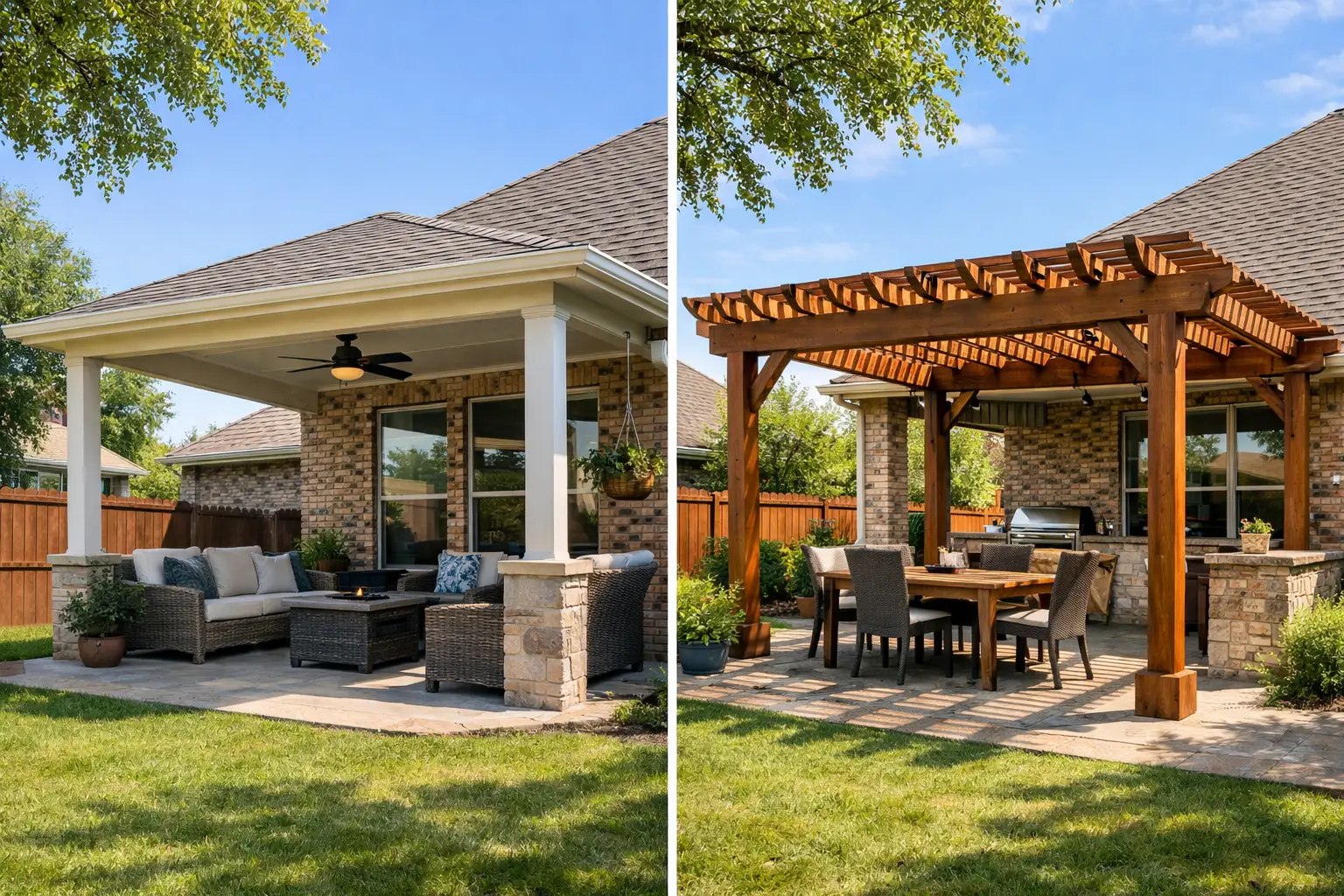
A patio cover is a solid overhead structure built to provide dependable coverage over an outdoor living area. It is usually attached to the home or designed as a freestanding structure. Its job is simple: create a protected space that blocks direct sun and keeps light rain from ending the gathering early.
A pergola is an open-framed structure with vertical posts and overhead beams or slats. It creates definition, character, and filtered shade, but it does not fully block the sun or weather. The open top is part of the appeal. You get a more airy, architectural look while still enjoying the sky, trees, and breeze.
That distinction matters in the Houston area. A pergola can make a patio more inviting, but it will not deliver the same relief during the hottest part of a humid summer day. A patio cover is built for homeowners who want consistent shade and more usable outdoor square footage.
Choose a Patio Cover When Comfort Comes First
A patio cover is often the practical choice for households that spend a lot of time outside. If your patio holds a dining table, outdoor kitchen, seating area, or play space, solid coverage can turn it into a place people actually use more often.
The biggest advantage is dependable shade. Direct afternoon sun can make patio furniture hot to the touch and force everyone indoors. A well-planned patio cover reduces that exposure, helping the area feel noticeably more comfortable. It can also help protect outdoor furniture, cushions, grills, and finishes from constant sun exposure.
Coverage matters when the weather changes, too. Texas storms do not always give much warning. A covered patio gives you more flexibility when a light shower passes through during a get-together. It can also keep the area cleaner by reducing the leaves, pollen, and debris that land directly on your seating area.
A patio cover generally makes sense if you want to:
- Use the patio for meals, entertaining, or relaxing through more of the year
- Create a shaded spot for children, pets, or older family members
- Protect outdoor furniture and finishes from heavy sun exposure
- Add a more permanent extension of your living space
There are trade-offs. Because a patio cover is more substantial, it usually costs more than a basic pergola. It also needs thoughtful design so the size, post placement, materials, and connection points fit your home and yard. A cover that is too low, too dark, or poorly positioned can make nearby indoor rooms feel closed in.
Choose a Pergola When Style and Openness Matter Most
A pergola is a strong choice when your main goal is to give an open patio more personality. It can frame a seating area, define an outdoor dining space, or create a natural transition between the house, deck, garden, and fence line.
Many homeowners prefer a pergola because it adds structure without making the backyard feel enclosed. The light that passes through the slats creates visual interest, especially in the morning and late afternoon. It also works well around climbing plants, hanging lights, or outdoor curtains that can be opened and closed as needed.
For a smaller patio or a yard with plenty of existing tree shade, a pergola may provide all the coverage you need. It can also be a smart fit for homeowners who primarily use the space in the evening, when harsh overhead sun is less of a concern.
Still, be realistic about its limitations. A traditional open-top pergola offers partial shade, not full protection. As the sun moves, sunlight comes through at different angles. Rain can pass right through, and adding a fabric canopy may improve comfort but can add upkeep and may need to be taken down before severe weather.
A pergola may be right for you when you want a defined gathering area, prefer an open-air design, already have natural shade, or want a lower-cost way to add visual appeal to a plain concrete patio.
Think About How the Sun Hits Your Yard
The same structure can perform very differently from one property to the next. Before choosing, pay attention to how sunlight moves across the backyard. A west-facing patio often gets the most punishing afternoon heat, which is where a solid patio cover can earn its value quickly.
A north-facing patio may stay relatively shaded already, making a pergola more than enough. Mature trees can also change the equation. If large trees provide dependable afternoon shade, a pergola may add the finished look you want without blocking too much natural light.
The height and direction of the structure matter as much as the material. A professional contractor can help plan the footprint so it provides shade where you need it most rather than covering space that already stays cool. This is especially useful on properties in Spring, The Woodlands, Conroe, and nearby communities where lot layouts, tree cover, and backyard exposure vary widely.
Materials Affect Price, Maintenance, and Appearance
Wood is a popular choice for pergolas because it has a warm, classic look and can match a cedar fence, deck, or other outdoor features. Cedar stands up well outdoors, but all wood structures need periodic inspection, cleaning, and protective finishing to help them last.
Painted or finished wood can coordinate beautifully with a home, though it will need touch-ups over time. Metal and aluminum options can offer a cleaner, more modern appearance with less routine maintenance. The right material depends on your budget, preferred style, and how much ongoing care you want to handle.
For either structure, quality installation matters more than homeowners sometimes expect. Posts need secure footings. Hardware needs to hold up under wind and changing weather. Materials should be selected and finished for local conditions. Saving money on a poorly built structure can lead to shifting posts, loose connections, premature wear, and a backyard project that does not last.
Budget for the Full Project, Not Just the Structure
A simple pergola is generally the less expensive starting point because it uses less material and offers less complete coverage. But pricing can rise with larger dimensions, custom stain or paint, decorative details, lighting, privacy panels, upgraded materials, and site preparation.
A patio cover usually requires a larger investment, yet it can deliver more daily value because it makes the patio usable in more conditions. If you are already considering new concrete, a deck extension, fencing, lighting, drainage improvements, or landscaping cleanup, it may be more cost-effective to coordinate the work at the same time instead of disrupting the yard repeatedly.
Ask for an estimate that clearly outlines the scope of work, materials, dimensions, finish, and any needed prep. The lowest number is not always the best value if it leaves out important details or relies on shortcuts. A fair quote should make it easy to understand what you are getting and what will be built.
Which Option Adds More Value?
Both a patio cover and a pergola can make a property more attractive to future buyers because they show that the outdoor space has been cared for and intentionally designed. The value is often less about choosing one universally better structure and more about choosing the right one for the home.
A patio cover can have the edge for buyers who want a functional outdoor room with reliable shade. A pergola can stand out when it complements the home’s style, frames a well-kept garden, or turns a basic patio into a memorable entertaining area.
Avoid building only for a trend. Choose a structure that fits the scale of your house, leaves room for comfortable movement around the patio, and works with other exterior features such as fencing, gates, decks, and trees. A backyard feels more valuable when the pieces look planned together.
Get the Outdoor Space You Will Actually Use
If you want dependable relief from Texas sun and a patio that works for more family time, a patio cover is usually the better investment. If you want an open, attractive focal point with dappled shade and architectural character, a pergola may be the better fit.
The right answer comes from your yard, your daily routine, and the way you want the space to feel. Gotta Call Mac can help property owners plan outdoor improvements with practical craftsmanship, clear pricing, and a finished result built around how the space will actually be used. Start with the shade you need, then build the backyard you will look forward to using.
