
 Roofing Services
A fence can look great the day it goes up and still become a headache after the first hard Houston storm. Soil movement, heavy rain, strong wind, humidity, and intense sun all put pressure on posts, panels, gates, and hardware. That is why fence installation Houston Texas property owners can rely on starts with more than picking a style. It starts with a plan built for the property, the purpose of the fence, and the conditions it will face year after year.
Whether you need privacy around a backyard, a secure enclosure for pets, a defined boundary for a commercial site, or a better first impression before listing a home, the right installation makes the difference. Good materials matter, but careful layout, solid posts, drainage awareness, and a properly hung gate matter just as much.
Start With What Your Fence Needs to Do
The best fence is not always the tallest one or the most expensive one. It is the one that solves the problem on your property without creating a new one. A family with two active dogs may need a durable, tightly enclosed yard and a gate that latches reliably. A homeowner near a busy street may prioritize visual privacy and noise reduction. A commercial property may need a stronger metal fence, controlled access, and clear separation between public and private areas.
Before choosing a material, think through how the space is used. Ask where people enter, where vehicles need access, whether landscaping or trees affect the line, and where water collects during a downpour. If there is an existing fence, determine whether only a damaged section needs repair or whether mismatched, failing sections make a full replacement the smarter value.
Property lines deserve special attention. Do not assume an old fence marks the legal boundary. A survey, plat, or clear confirmation from the appropriate source can prevent a costly dispute with a neighbor. If a fence will be shared, a straightforward conversation before work begins often saves time and frustration later.
Fence Installation Houston Texas: Materials That Fit the Climate
Houston-area weather is demanding, so materials should be selected for both appearance and maintenance expectations. There is no single right answer. The best choice depends on budget, privacy needs, exposure to moisture, and how much upkeep you are willing to take on.
Cedar for Natural Privacy
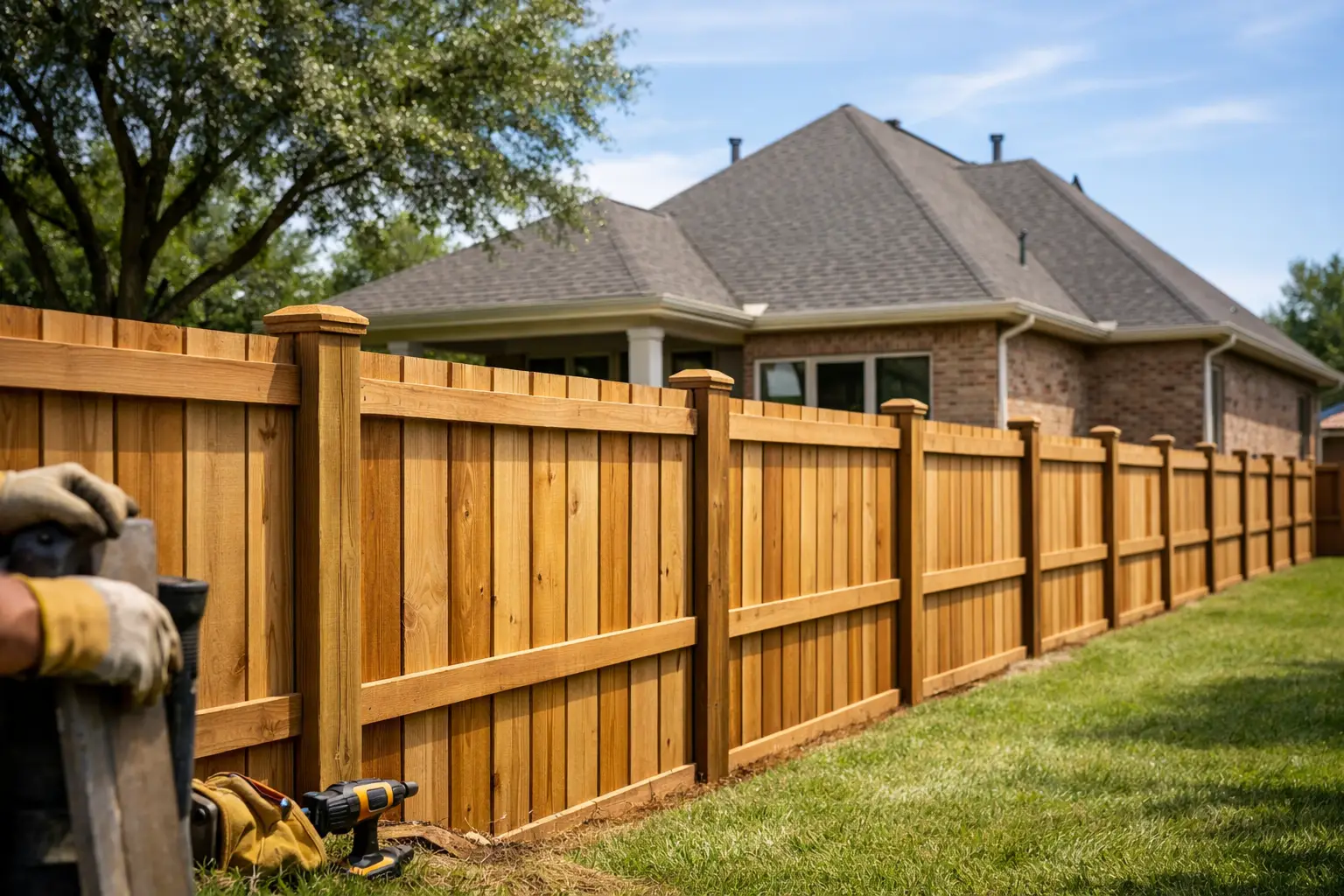
Cedar remains a popular choice for backyard privacy because it has a clean, natural appearance and holds up well when installed correctly. It can be built in traditional privacy styles, horizontal layouts, capped designs, and custom configurations that give a property a more finished look.
Wood does require maintenance. Sun can fade it, moisture can encourage wear, and ground contact is never a friend to untreated materials. Staining or sealing on an appropriate schedule helps preserve the color and reduce weather damage. Cedar generally costs more than basic pine, but many property owners consider the appearance and durability worth the difference.
Treated Pine for Value-Focused Projects
Pressure-treated pine can be a practical option when budget is a leading concern. It provides the privacy many homeowners want while keeping the initial project cost manageable. The trade-off is that pine may be more likely to move, check, or change appearance over time, especially through hot and wet weather cycles.
A quality installation helps it perform better. Proper post depth, spacing, fasteners, and clearance from standing water are not optional details. They are what keep an affordable fence from turning into an early repair project.
Aluminum and Metal for Open Sightlines
Aluminum fencing is a strong fit around pools, landscaped areas, front yards, and properties where visibility matters. It offers a clean, low-maintenance look without blocking the view. Metal fencing can also provide additional strength and security for commercial sites, side yards, and access-controlled areas.
These options do not deliver full visual privacy on their own. Homeowners who want both an open-style fence and privacy may use landscaping strategically or choose privacy panels in selected areas. Gate design is especially important with metal systems because the gate needs to operate smoothly while matching the fence’s strength and appearance.
Split Rail and Dog Fences for Defined Spaces
Split rail fencing gives larger lots, rural-style properties, and decorative boundaries an open, traditional look. It is not intended for every privacy or containment need, but it can be an excellent choice where the goal is defining a space without closing it off.
For dog fences, the details depend on the dog. Small dogs may need tighter spacing; larger, athletic dogs may need more height, stronger construction, or protection against digging. A fence that looks secure from the patio may still have a gap at the bottom, a weak gate latch, or an easy escape route at a corner. Planning around the animal’s behavior is part of doing the job right.
The Parts of Installation You Should Not Overlook
Most fence problems begin below ground or at a moving part. Leaning posts, sagging gates, warped panels, and premature rot are rarely random. They often trace back to shallow posts, poor drainage, improper spacing, or rushed installation.
Post depth should reflect fence height, soil conditions, and the load the fence will carry. A tall privacy fence catches wind like a sail, so it needs a foundation that can resist movement. On properties with soft or wet areas, the installation plan may need additional consideration to keep the fence stable.
Drainage matters across the greater Houston area. If water regularly moves through a section of the yard, a solid fence can interrupt that path and create pooling on one side. The solution may involve thoughtful clearance, a different fence style in that location, or coordination with other property improvements. Ignoring the issue can lead to water damage, soil washout, and a fence that shifts before it should.
Gates deserve the same attention as the fence line. A gate should swing or slide as intended, latch securely, and have enough support to avoid sagging. Drive gates need adequate clearance and reliable hardware. Pedestrian gates should be convenient enough that people actually use them instead of squeezing through a weak section of fence.
Check Rules Before Materials Arrive
Permits and neighborhood rules can affect fence height, location, material, and placement, especially near streets, corners, easements, drainage areas, and utility corridors. Requirements vary by municipality, master-planned community, and homeowners association. A fence that is acceptable in one neighborhood may require approval or different placement in another.
Utility locating is another essential step. Buried lines are not always where homeowners expect them to be, and striking one can delay the work and create an expensive safety issue. A professional contractor should account for these conditions before post holes are dug.
For commercial properties, access needs and local requirements may be more involved. Consider delivery routes, employee entry points, parking areas, service access, and the need to keep operations moving while work is underway. A good project plan protects the property without making daily business harder.
When Repair Makes Sense and When Replacement Is Smarter
A broken picket, loose hinge, or storm-damaged section does not automatically mean the whole fence needs replacement. Targeted repairs can be the right call when the rest of the structure is stable, posts are sound, and matching materials are available.
Replacement becomes more practical when failures are widespread. If several posts lean, panels are repeatedly coming loose, rot is visible across the fence line, or the gate has been patched more than once, putting money into another repair may only postpone the larger project. A clear assessment should explain what can reasonably be repaired and what will likely fail next.
This is also a good time to consider related work. Tree limbs rubbing against a fence, brush along a property line, uneven ground, or storm debris can shorten the life of a new installation. Handling those issues before or alongside the fence project can protect the investment and save a second round of scheduling.
Choose a Contractor Who Plans for the Whole Property
Price matters, and homeowners should compare estimates. But the lowest number only has value if it covers the right materials, proper installation, cleanup, and the details needed for a fence that will hold up. Ask what material is being used, how posts will be set, whether gates and haul-off are included, and how site conditions will be handled.
Gotta Call Mac provides custom fence installation and repair for homeowners, property managers, and commercial property owners throughout Houston and nearby communities. With free estimates, competitive pricing, and a licensed, bonded, and insured team, the focus stays on dependable work that fits the property and the budget.
A well-built fence gives you more than a clearer boundary. It gives pets a safer place to run, families more privacy, businesses better control of their space, and property owners one less thing to worry about when the weather turns. Start with an honest assessment of your yard, choose materials for the conditions, and make sure the work is built to stay standing.
