
 Roofing Services
A new fence has to do more than look good on installation day. It has to hold up through Humble heat, heavy rain, shifting soil, active kids, dogs at the gate, and the everyday wear that comes with a lived-in property. That is why fence installation in Humble Texas should start with a clear plan for how you use your yard, not just a quick choice based on the lowest material price.
For homeowners, a well-built fence can create privacy, define a property line, improve curb appeal, and make outdoor space more usable. For property managers and commercial owners, it can help control access, protect equipment, and keep the property looking maintained. The right material and installation method depend on the job, but dependable craftsmanship matters on every fence.
Start With What Your Fence Needs to Do
Before choosing a style, decide what problem the fence needs to solve. A backyard privacy fence has different requirements than a decorative front-yard boundary or a secure enclosure for a commercial lot. The best-looking fence is not always the best fit if it does not provide the height, strength, visibility, or access your property needs.
Privacy is often the main priority for Humble homeowners. A solid cedar or pine fence can block views from nearby homes and create a more comfortable space for patios, pools, and family gatherings. If pets are the concern, the focus should shift to secure gate latches, tight spacing near the ground, and a fence height that matches the size and energy of the dog.
For open lots, ranch-style properties, or areas where you want to preserve sightlines, split rail or metal fencing may make more sense. Aluminum fencing is another strong option around pools, landscaped areas, and upscale residential properties because it offers a clean appearance without closing off the view.
Choosing Fence Materials for Humble Weather
Texas weather asks a lot of exterior materials. Heat can dry and age wood, moisture can speed up rot where posts are poorly installed, and strong storms can expose weak sections fast. There is no single material that works best for every property, but there are practical trade-offs to consider.
Cedar for Natural Privacy and Curb Appeal
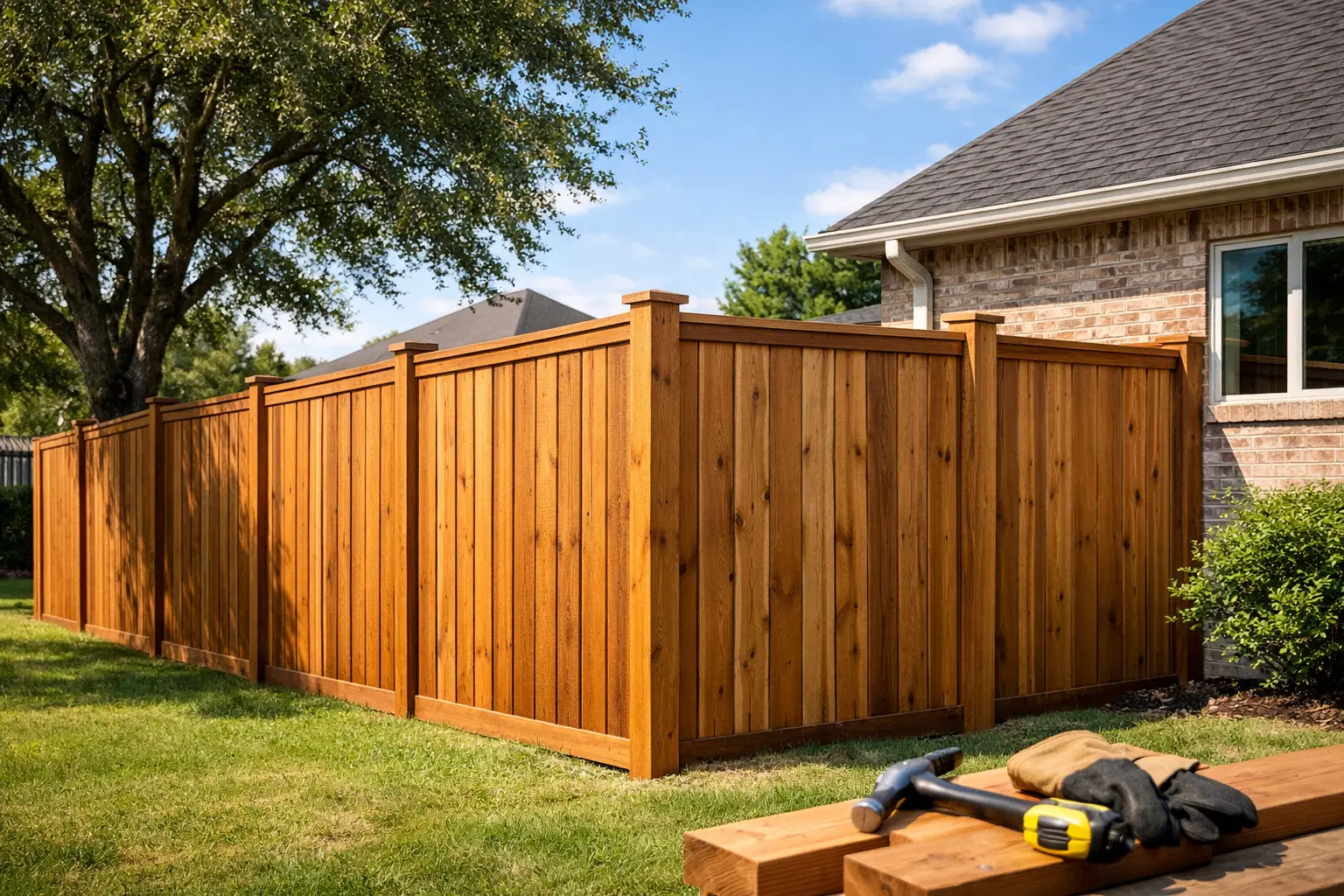
Cedar is a popular choice for residential privacy fences because it has a natural, finished appearance and performs well when properly installed and maintained. It can be built in a range of styles, from traditional side-by-side pickets to board-on-board designs that provide stronger visual coverage.
Cedar usually costs more than basic pine, but many owners see value in its appearance and durability. Like all wood fences, it benefits from periodic inspection, cleaning, and sealing or staining when appropriate. Catching small issues early can help prevent a loose picket or leaning post from becoming a larger repair.
Treated Pine for Practical Value
Treated pine is often a smart fit when budget is a major factor. It provides dependable privacy and can be customized with different picket styles, gates, and heights. The quality of installation matters greatly with pine. Posts need to be set correctly, rails should be securely fastened, and the fence should be built with room for normal expansion and movement.
A lower upfront cost can be appealing, especially for a large yard or rental property. The trade-off is that pine may need more regular upkeep over time than cedar. A fair estimate should explain what materials are included so you can compare options honestly.
Aluminum and Metal for Low-Maintenance Strength
Aluminum and metal fencing are often chosen for their clean lines, long service life, and lower maintenance needs. They work especially well around pools, entryways, commercial properties, and areas where security matters but full privacy does not.
These fences do not create the same visual barrier as wood. If privacy is essential, a solid wood fence may be the better answer. If visibility, durability, and an open feel are higher priorities, aluminum or metal can be a worthwhile investment.
The Installation Details That Make a Difference
A fence is only as strong as the structure below and behind what you see. Straight pickets are important, but properly placed posts, solid rails, accurate layout, and functional gates are what help a fence stay dependable through changing weather.
The first step is confirming the intended fence line. Property owners should know where their boundary is before construction begins, especially when replacing an older fence that may not sit precisely on the line. Easements, neighborhood requirements, drainage routes, and utility locations can also affect the layout. Taking time to address these details before work starts can prevent expensive changes later.
Post depth and installation method should suit the fence type, soil conditions, and expected load. Gates deserve special attention because they get used more than any other section of the fence. A gate that is undersized, poorly supported, or installed without proper clearance can sag, drag, or stop latching correctly. A well-built gate should open smoothly, close securely, and be sized for how you actually need to use the space.
Drainage is another issue worth discussing. Water should not be trapped against the bottom of a wood fence or redirected toward the home. On some properties, grading, vegetation, or damaged sections of an existing fence may need attention before the new work begins.
Planning a Fence Installation in Humble Texas
The best time to plan a fence is before an emergency forces the decision. A storm-damaged fence, a broken gate, or an exposed backyard can require fast action, but a quick response should still include a practical review of the full project. Replacing only the visible damaged section may be enough in some cases. In others, old posts, mismatched panels, or failing adjacent sections make a larger repair or replacement the more cost-effective choice.
When requesting an estimate, be ready to discuss the approximate length of the fence, desired height, material preference, gate locations, and any special concerns such as pets, slopes, trees, or access restrictions. Photos can help for an initial conversation, but an on-site assessment provides the clearest picture of what the work requires.
It also helps to ask what is included in the price. Material type, removal of old fencing, haul-away, gate hardware, staining, and repairs to nearby areas can all affect the final scope. The lowest quote is not always the best value if important steps are left out. Look for a contractor who gives straightforward answers, respects your schedule, and can explain the work in plain language.
One Local Team for Fences and More
A fence project often reveals other outdoor needs: overgrown trees along the fence line, brush that needs clearing, damaged siding near a gate, or a deck that needs attention before the yard is ready to enjoy. Working with one dependable contractor can reduce the hassle of coordinating multiple crews.
Gotta Call Mac serves Humble and surrounding communities with custom fence installation, fence repair, gates, tree services, land clearing, decks, and property improvement work. Our team is licensed, bonded, and insured, with free estimates, fast turnaround, and pricing built to compete. Whether you need a straightforward backyard fence or a larger property upgrade, we focus on work that is done right and built to last.
A fence should make your property feel more secure, more private, and easier to enjoy. Start with a clear purpose, choose materials that fit your budget and maintenance expectations, and hire a team that treats the posts, gates, and details with the same care as the finished view.
