
 Roofing Services
A fence can look finished on installation day and still begin leaning, warping, or sagging long before it should. In our heat, heavy rain, shifting soil, and fast-moving storms, the details behind the fence matter just as much as the material in front of it. If you are searching for “fence installation spring texas,” the goal should be more than closing off a yard. It should be a fence that fits your property, your budget, and the way you use the space.
For homeowners, property managers, and commercial property owners, a well-planned fence adds privacy, security, curb appeal, and a clear boundary. It can create a safer place for dogs and children, protect equipment, or give a backyard the finished feel it has been missing. The right choice depends on what the fence needs to do every day.
Start With the Job Your Fence Needs to Do
The best fence is not always the tallest or most expensive option. A family that wants backyard privacy has different needs than a commercial property securing a service area. A homeowner with an active dog may care most about eliminating escape points at gates and along uneven ground. A property manager may need a durable perimeter that is easy to maintain across a larger site.
Before choosing a style, think through privacy, security, appearance, maintenance, and budget. Also consider whether the fence is meant to solve one problem or several. A cedar privacy fence can block views and define a yard, while an aluminum fence may preserve sightlines around a pool, garden, or landscaped area. Split rail can give a larger property a clean, open look, but it will not contain a small dog without added wire mesh.
A good contractor asks these questions early because they affect the layout, materials, post depth, gate placement, and final cost. Making those decisions before work begins is much less expensive than changing them after posts are set.
Choosing a Fence Material for Texas Conditions
Material selection comes down to the look you want, the upkeep you are comfortable with, and how much wear the fence will take. There is no one-size-fits-all answer, especially across properties in Spring, The Woodlands, Tomball, and the surrounding area.
Cedar for privacy and natural curb appeal
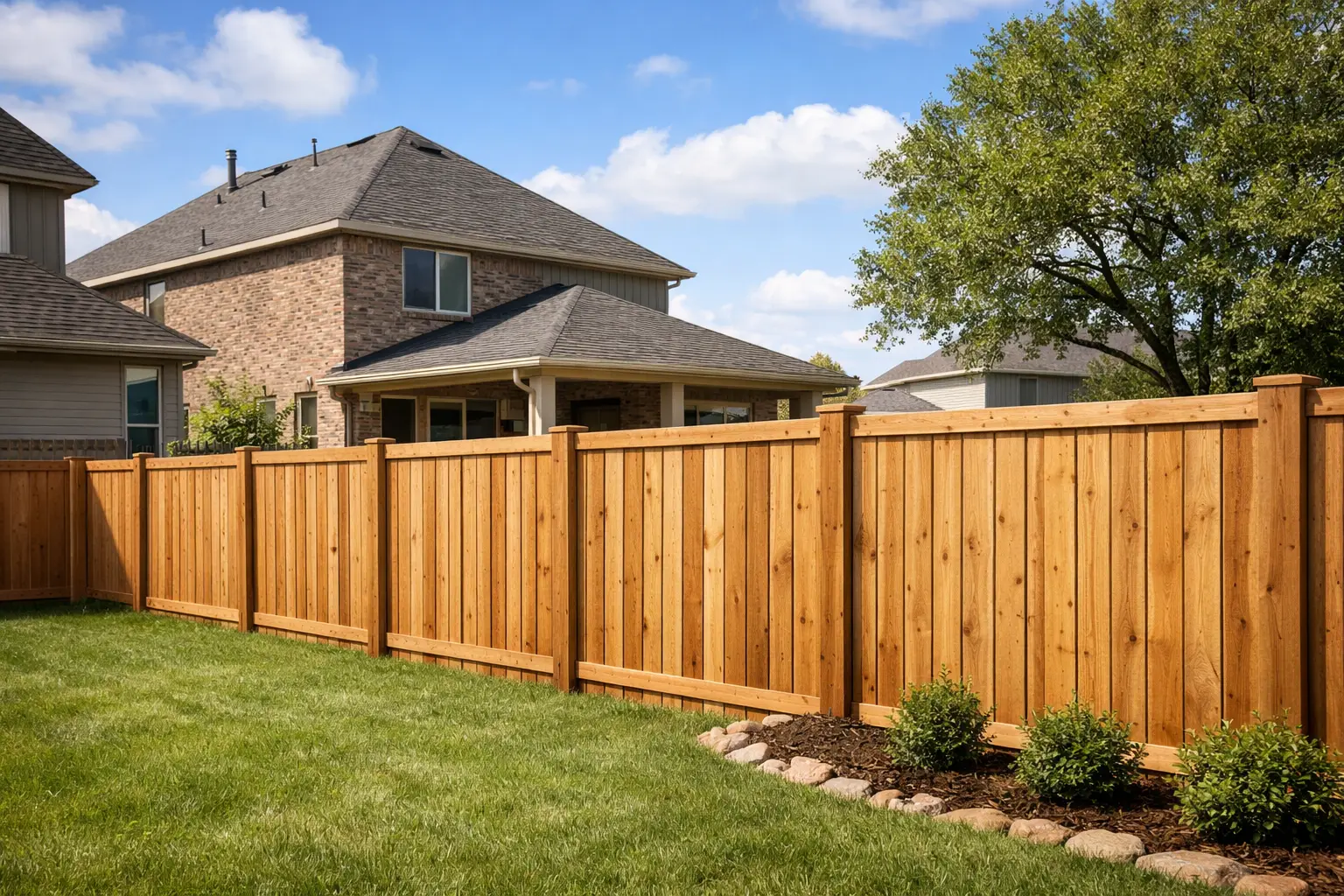
Cedar remains a popular choice for residential privacy fencing because it has a warm, natural appearance and holds up well when installed correctly. It works well for full-height backyard enclosures, neighbor-facing boundaries, and homes where curb appeal matters. Cedar can be stained or sealed to help maintain its color and add protection from the elements.
The trade-off is maintenance. Wood fences are exposed to sun, moisture, and temperature swings, so periodic inspection, cleaning, and sealing can help extend their service life. Choosing quality boards and properly installed posts makes a major difference from the start.
Pine for practical value
Pressure-treated pine is often a cost-conscious choice for privacy fencing. It can deliver the coverage many homeowners want at a lower upfront price than cedar. It is a practical option when a large yard needs fencing and budget is a major factor.
Pine may show weathering differently over time, and it benefits from consistent care. If your main priority is a dependable enclosed yard without paying for premium wood, it may be the right fit.
Aluminum and metal for visibility and strength
Aluminum fencing offers a clean, polished look with low maintenance requirements. It is especially useful when you want a secure boundary without blocking a view. Metal fencing can also be a smart choice for commercial areas, side yards, equipment enclosures, and properties that need added strength.
These options generally cost more upfront than basic wood fencing, but they can reduce the need for ongoing maintenance. The best choice depends on the terrain, the level of security needed, and whether privacy is part of the plan.
Fence Installation in Spring, Texas Starts Below Ground
A straight fence line depends on what happens beneath it. Posts need to be set at an appropriate depth and secured for the fence height, material weight, wind exposure, and soil conditions. A fence that is rushed at the post stage may look fine initially but can shift when the ground gets saturated or dry conditions cause soil movement.
Drainage deserves attention, too. Water that pools along a fence line can speed up wear on wood, affect post stability, and create muddy gaps where pets can dig or slip through. On sloped lots, the installer should decide whether the fence should follow the ground or step down in sections. Both methods can work, but the right approach depends on the grade and the look you want.
Never assume a clear-looking yard is free of buried utilities, irrigation lines, or old obstacles. Planning the layout and confirming what is below ground helps prevent delays, repair costs, and dangerous mistakes. This matters even more when gates, trees, retaining areas, or drainage paths are involved.
Gates Are Where Good Fences Get Tested
Most homeowners use a gate more often than any other part of the fence. That makes gate design a practical priority, not an afterthought. A gate that is too narrow can make lawn equipment difficult to move. A gate that is too wide without proper support can sag over time. A latch that is hard to operate becomes frustrating every day.
Think about how the gate will be used. A walk gate for taking out the trash has different needs than a double gate for trailers, mowers, or service access. If dogs are part of the household, pay close attention to the bottom clearance, latch placement, and areas where a determined pet could push through.
For commercial properties, access control and traffic flow may matter more than appearance alone. The fence and gate should support the way employees, tenants, deliveries, and maintenance crews move through the property.
Do Not Skip Property Lines, HOA Rules, or Neighbor Conversations
Fence projects often run into trouble because someone assumes the boundary line is obvious. Existing fences, landscaping, and informal agreements are not always accurate indicators of a legal property line. When there is any doubt, verify the boundary before construction begins.
Many neighborhoods also have HOA requirements related to fence height, style, stain color, placement, or visibility from the street. Getting approval before materials are ordered can prevent an expensive redo. Local requirements may also apply depending on the location and type of property.
A quick conversation with a neighbor can be worthwhile when the fence will sit near a shared line. It does not replace proper planning, but it can avoid unnecessary tension and help everyone understand the schedule and access needs during installation.
Repair or Replace: Make the Call Based on Structure
Not every damaged fence needs to be replaced. A few broken pickets, a worn latch, or a single loose section can often be repaired if the posts and framing remain solid. Repairs can be a smart, affordable way to restore privacy or secure a yard quickly.
Replacement becomes the better value when multiple posts are leaning, rails are failing in several areas, or rot and storm damage have spread across the fence. Patching one section after another can add up without solving the structural issue. An honest assessment should focus on the condition of the full fence, not just the most visible damage.
If a storm has taken down trees or branches along the fence line, clear the hazards first and assess the ground condition before rebuilding. Combining tree cleanup, fence removal, and new installation through one dependable contractor can keep the project moving without coordinating several separate crews.
Get a Clear Scope Before Work Begins
A fence estimate should explain the material, height, approximate layout, gate count, removal needs, and any site conditions that may affect the work. This is how you compare quotes fairly. A lower number may leave out demolition, haul-away, stronger gate hardware, or other details that matter once the job is underway.
Gotta Call Mac provides free estimates for residential and commercial fencing projects, with dependable craftsmanship and pricing built to compete. Whether you need a cedar privacy fence, a dog fence, a metal perimeter, or a repair after damage, the focus should stay on a solution that works for your property and holds up to real use.
A well-built fence should make the property easier to enjoy, protect, and maintain. Start with a clear purpose, choose materials that fit your priorities, and make sure the work below ground receives the same attention as the finished fence you will see every day.
