
 Roofing Services
A fence has to do more than look good on installation day. Around Houston, it has to stand up to hard sun, heavy rain, humidity, shifting soil, pets, kids, and the occasional rough weather season. The wood fence versus vinyl decision comes down to what you want from your property over the next several years: natural character and repair flexibility, or a cleaner, lower-maintenance finish.
Neither material is the right answer for every yard. A backyard privacy fence, a front accent fence, a rental property boundary, and a commercial enclosure all have different priorities. Knowing where each option performs best can help you spend wisely from the start.
Wood Fence Versus Vinyl: The Biggest Differences
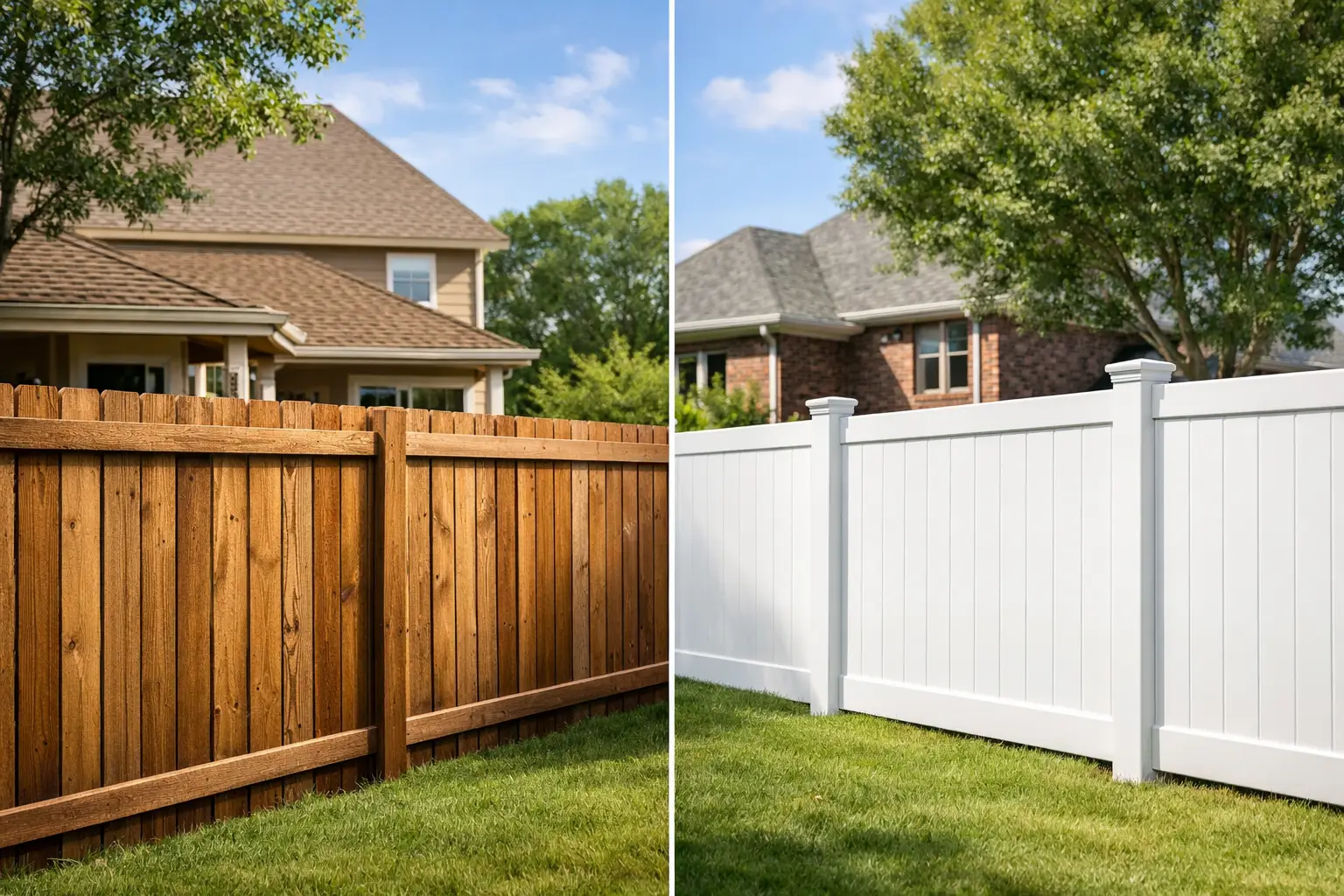
Wood fencing is the traditional choice for a reason. It offers a warm, natural appearance that fits everything from modest neighborhood homes to larger properties in The Woodlands, Tomball, and Conroe. Cedar is a popular premium option because it has natural resistance to insects and decay, while pressure-treated pine is often selected for dependable performance at a more budget-friendly price.
Vinyl fencing is manufactured from PVC and is valued for its uniform color and smooth finish. It does not need painting, staining, or sealing, and it will not rot the way neglected wood can. For homeowners who want a bright, consistent look without a regular refinishing schedule, that can be a major advantage.
The trade-off is personality and repairability. Wood develops character, can be customized easily, and can often be repaired one board or rail at a time. Vinyl has a more polished, consistent appearance, but matching an older fence after a manufacturer changes a product line can sometimes be difficult. A hard impact may also crack a vinyl panel instead of merely damaging one picket.
Upfront Cost Is Only Part of the Price
Vinyl commonly costs more up front than a standard pressure-treated wood fence. The material itself is more expensive, and quality installation matters because posts, rails, and panels need to be aligned correctly for the fence to perform well. Decorative vinyl styles, privacy panels, gates, and taller sections can add to the final investment.
Wood can be the more affordable option at installation, especially with pressure-treated pine. It also gives property owners more freedom to choose board style, picket spacing, cap details, and custom gate designs. Cedar carries a higher initial price than pine, but many homeowners feel its appearance and durability are worth the difference.
Still, no honest fence quote should be based on material alone. Fence height, linear footage, slopes, tree roots, access to the yard, old fence removal, gate size, and post conditions all affect the job. A narrow side yard or a fence line with heavy brush can change labor needs significantly. The best way to compare costs is to request estimates for the same height, style, gate count, and demolition scope.
How Texas Heat and Humidity Affect Each Material
Houston-area weather is a real test for any outdoor material. Wood expands and contracts as moisture levels change. Without proper installation and routine care, boards can warp, split, cup, or fade. Water sitting at the base of posts can shorten the life of the fence, particularly if drainage is poor.
A properly built wood fence addresses many of those concerns before they become expensive problems. Posts need secure installation, boards need appropriate spacing, and the fence should not trap moisture against the ground. Staining or sealing on a regular schedule helps protect the wood from sun exposure and water intrusion.
Vinyl does not absorb moisture, so humidity and rain do not cause rot. It is also not a meal for termites. However, vinyl can expand during intense heat and become more brittle during colder stretches. Quality components and correct installation allow for normal movement. Cheap panels, undersized posts, or weak gate framing can create trouble regardless of how low-maintenance the material is supposed to be.
Wind deserves attention, too. A solid privacy fence catches more wind than an open picket design, whether it is made from wood or vinyl. Post depth, concrete work, rail support, and gate construction matter more than the material label when a fence is facing strong gusts.
Maintenance: Less Work or More Control?
Vinyl wins the low-maintenance category. Most of the time, it only needs an occasional rinse with a garden hose and mild soap to remove dirt, pollen, mildew buildup, or grass clippings. It does not need to be painted, stained, or sealed. For a busy homeowner, property manager, or landlord with several units to maintain, that simplicity has real value.
Wood asks more of its owner, but the maintenance is not wasted effort. Cleaning, staining, or sealing a wood fence can preserve the color you like and extend its useful life. It also gives you options. Want a darker stain, a transparent cedar finish, or a fresh painted color that matches the house? Wood makes those changes possible.
The key is being realistic about the maintenance schedule. If a fence will be ignored for years in a shaded, damp area, vinyl may be the safer choice. If you do not mind scheduling periodic care and want the freedom to refresh the fence over time, wood can be a great long-term fit.
Privacy, Curb Appeal, and Neighborhood Fit
Both materials can create excellent privacy. A six-foot board-on-board wood fence provides a substantial barrier while allowing an attractive layered look from either side. Standard vertical wood pickets, horizontal boards, lattice tops, and decorative caps offer plenty of ways to make the fence feel like part of the property rather than a plain boundary line.
Vinyl privacy fencing creates a clean, solid wall with a consistent finish. White remains the most familiar option, though tan, gray, and wood-look choices are available in some product lines. It often works especially well around pools, patios, and newer homes where a crisp, orderly appearance is the goal.
Before choosing, check any HOA or neighborhood guidelines. Some communities specify approved materials, colors, heights, or fence placement. For homes on corner lots, drainage easements, or lots with utility access requirements, placement should be considered before materials are ordered. A beautiful fence in the wrong location can become an avoidable headache.
Repairs Are Where Wood Often Has an Advantage
Every fence can be damaged. A loose gate, a falling limb, a lawn equipment accident, or a determined large dog can test even a well-built section. When one or two wood pickets break, the repair is usually straightforward. Damaged boards, rails, or sections can often be replaced without rebuilding the entire fence line.
Vinyl repairs can be simple when a matching part is available and the damage is limited. But a cracked panel or broken rail may require sourcing the exact manufacturer, style, color, and size. If the original product is discontinued, a repair can be more noticeable. Gates need particular attention because vinyl gates often require reinforced framing to prevent sagging over time.
For properties with active dogs, children playing outside, or equipment moving through a side gate, talk through how the fence will actually be used. The strongest choice is not always the one with the lowest maintenance label. It is the one built to handle your daily routine.
Which Fence Is Right for Your Property?
Choose wood if you want a natural look, design flexibility, easier spot repairs, and a more accessible starting price. Cedar is worth considering when appearance and durability are top priorities, while pressure-treated pine can deliver dependable privacy on a tighter budget. Wood is also a smart fit when you want custom dimensions or a style that complements mature landscaping.
Choose vinyl if you want a uniform finish and minimal ongoing upkeep. It can be a strong option for homeowners who do not want to stain or paint, as well as rental or commercial properties where routine maintenance time needs to stay low. It is especially appealing when clean, consistent curb appeal matters more than the natural variation of wood.
The right installation makes either choice perform better. Quality posts, correct spacing, stable gates, thoughtful drainage, and a straight fence line are not extras. They are the foundation of a fence built to last.
A fence estimate should leave you with clear answers, not pressure. Have a local contractor walk the property, explain the material options for your specific yard, and price the work fairly. Gotta Call Mac can help homeowners and property managers compare practical fencing options and build a solution that fits the property, the budget, and the way the space is used.
