
 Roofing Services
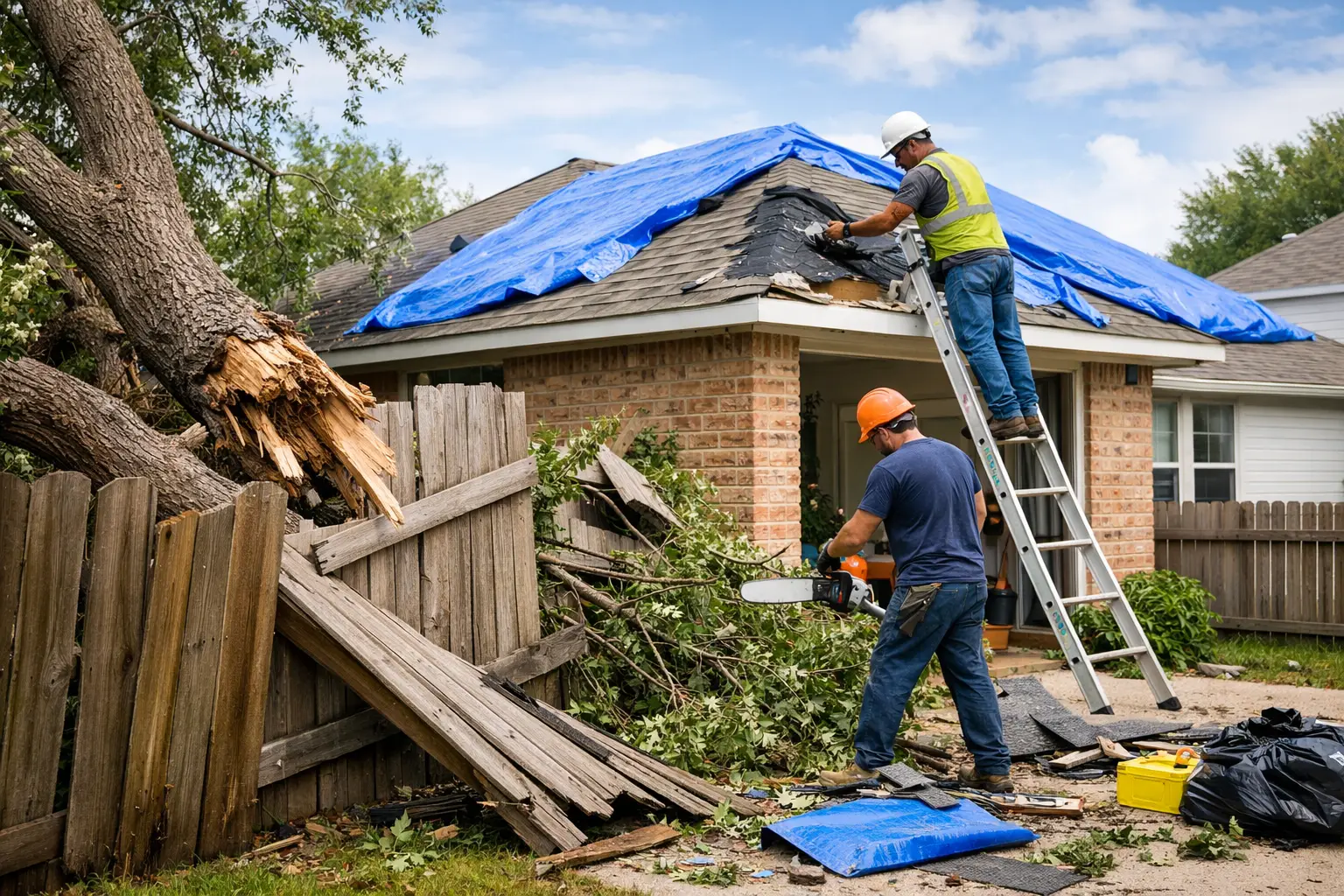
A hard Texas storm can leave a property looking different in a matter of minutes. A fallen limb, standing water, scattered fence panels, and damaged siding can all demand attention at once. This storm damage cleanup guide helps homeowners and property managers make smart decisions in the first hours, protect people first, and avoid turning a manageable repair into a bigger problem.
Start With Safety, Not Cleanup
Do not rush outside simply because the rain has stopped. Wind can leave branches hanging overhead, fence sections leaning into walkways, and power lines hidden in debris. Look through windows first, then walk the property carefully once conditions are safe.
Stay away from downed or sagging utility lines, even if they appear inactive. Keep children, pets, tenants, and visitors out of affected areas. If a tree has landed on a structure, a large limb is suspended above a driveway, or flooding has created an immediate hazard, call the appropriate emergency or utility service before attempting any cleanup.
Water creates its own set of risks. Avoid standing water near electrical equipment, outlets, extension cords, or detached structures with unknown electrical conditions. Wear sturdy boots, work gloves, long sleeves, and eye protection before handling debris. In the Houston area, heat and humidity can make cleanup exhausting, so work in short stretches, hydrate, and do not take on a heavy lifting job alone.
Document Damage Before Moving Anything
Cleanup feels urgent, but clear documentation can save time and confusion later. Before moving limbs, broken gates, damaged fencing, or soaked personal property, take wide photos of each affected area. Then take closer photos that show the damaged materials, the source of the damage when visible, and any standing water or fallen trees.
Use your phone to record short videos while walking the property. Narrate the date and point out hazards, access issues, and damage to landscaping, fences, exterior walls, sheds, decks, or interior finishes. Keep a simple written list of what you find, including damaged items, measurements when useful, and the approximate time the storm passed through.
If you plan to file an insurance claim, contact your carrier early and follow its instructions. Save receipts for emergency supplies, temporary protective materials, debris hauling, and professional services. Do not throw away damaged materials until your carrier says it is okay, unless they create a health or safety concern. In that case, photograph them thoroughly first.
Stop Damage From Spreading
Once the property is safe and documented, focus on temporary measures that prevent further loss. The goal is not to perform a permanent repair in a hurry. It is to keep water, pests, and unauthorized access from making conditions worse.
Move dry belongings away from wet walls and floors. Place aluminum foil, wood blocks, or plastic barriers beneath furniture legs if the floor is damp. Open windows only when outdoor humidity and weather conditions allow it, and use fans or dehumidifiers in affected rooms. Wet carpet, drywall, insulation, and wood materials can develop mold quickly in Texas heat, so drying should begin as soon as it can be done safely.
For exterior damage, block off unsafe areas and secure loose materials that could blow or fall. A broken fence may leave a pool area, backyard, construction site, or commercial lot exposed. Temporary bracing can help in some cases, but a severely leaning fence or gate can fail without warning. It depends on the damage, the soil condition, and whether the structure is still anchored securely.
Handle Trees and Debris With Caution
Tree cleanup is one of the most dangerous parts of storm recovery. A limb may be under tension, wedged against another branch, or resting on a fence that is barely holding it in place. Cutting without the right equipment and experience can cause the branch to shift suddenly.
Small, loose twigs and light yard debris are usually reasonable for a property owner to collect. Larger branches, split trunks, uprooted trees, and limbs near structures should be evaluated by a qualified tree service. The same rule applies when a tree has damaged a fence, driveway, shed, or utility connection. Removing the tree without a plan can cause additional damage.
Separate debris when practical. Keep green waste away from construction debris, and place sharp materials such as broken metal, glass, and hardware in sturdy containers. Check local pickup rules before moving debris to the curb. Many neighborhoods and municipalities have specific requirements following major storms.
Inspect Fences, Gates, and Outdoor Structures
Storm winds often reveal weak points that were easy to miss before. Walk the fence line and check for leaning posts, cracked rails, loose pickets, pulled hardware, and gates that no longer latch correctly. A fence can look mostly intact while its footings have shifted in saturated ground.
Do not force a damaged gate closed or open. If hinges are bent, posts are leaning, or the frame is twisted, forcing it can break hardware or injure someone. Secure the area and arrange a professional assessment, especially if the gate protects pets, children, equipment, or a commercial property.
Also inspect decks, patios, sheds, pergolas, and outdoor stairs. Look for loose boards, exposed fasteners, shifting supports, and soft spots in wood. Water can weaken materials gradually, which is why a second inspection a few days after the storm is often worthwhile. Some damage becomes more obvious once the ground dries and debris is removed.
Know When to Bring in a Professional
There is a difference between cleaning up and restoring a property correctly. Raking leaves, bagging small debris, and moving undamaged belongings may be a good homeowner project. Tree removal, structural fence repairs, water-damaged drywall, flooring replacement, siding repairs, and major debris removal are jobs where professional help can protect your safety, schedule, and budget.
A full-service contractor is especially useful when the damage involves several parts of the property. Instead of coordinating separate crews for trees, fencing, cleanup, interior repairs, and exterior repairs, you can get one clear scope of work and a more organized plan. This reduces gaps between jobs and helps prevent a temporary fix from becoming the final result.
For property managers and commercial owners, quick action also protects tenants, customers, and operations. Secure entrances, damaged fencing, parking areas, and common spaces first. Then document the work completed and communicate realistic timelines. Fast cleanup matters, but quality repairs matter just as much.
Avoid Common Storm Cleanup Mistakes
The biggest mistake is treating every problem as urgent do-it-yourself work. Another is hiring the first person who knocks on the door after a storm without checking credentials, insurance, scope of work, and pricing. Storm recovery can attract unreliable operators who offer quick promises but leave incomplete repairs behind.
Be cautious with unusually low verbal estimates that do not explain materials, labor, debris removal, or the repair plan. Ask for details in writing and make sure you understand what is temporary versus permanent. Price matters, but the least expensive option can cost more if the work has to be redone.
It is also easy to overlook moisture after visible debris is gone. Check closets, baseboards, flooring edges, cabinets, and low areas of the property over the next several days. A musty smell, discoloration, bubbling paint, warped flooring, or soft drywall can signal hidden water damage that needs attention.
Plan Repairs That Hold Up
After cleanup, take the opportunity to address the cause of repeated damage where possible. If drainage sends water toward a fence line, grading or drainage improvements may help. If trees consistently drop limbs over a driveway or structure, selective trimming can reduce risk. If an older gate has failed more than once, a stronger frame, better hardware, or new posts may be the smarter long-term choice.
This is where a careful assessment pays off. Not every storm-damaged item needs complete replacement, but patching a system that is already worn out may only delay the next repair. Compare the cost of a targeted fix with the value of rebuilding the damaged section correctly.
Gotta Call Mac helps property owners across the greater Houston area handle storm cleanup, tree work, fence and gate repairs, debris removal, and restoration projects with dependable craftsmanship and clear, competitive estimates. One reliable team can make a difficult recovery feel far more manageable.
When the storm passes, give yourself permission to slow down long enough to make safe, informed choices. Protect the people on the property, document what happened, prevent additional damage, and bring in qualified help for work that should not be left to chance.
