
 Roofing Services
How to Repair a Leaning Fence That Stays Put
A fence rarely starts leaning all at once. One post shifts after heavy rain, a gate begins dragging, or a section that once looked straight develops a noticeable tilt. Knowing how to repair a leaning fence early can save you from replacing an entire run later, while restoring privacy, security, and curb appeal around your property.
For many Texas homes and commercial properties, the real problem is below ground. Saturated soil, clay movement, wind, age, poor drainage, and undersized post holes can all cause fence posts to move. The right repair depends on whether the post is sound, the concrete footing is still stable, and the damage is limited to one section or has spread down the fence line.
Start by Finding What Made the Fence Lean
Before pulling the fence straight or adding braces, inspect it carefully. A temporary straightening job will not last if the original cause remains in place.
Walk along both sides of the fence and look at each post. Check whether one post is visibly crooked, loose in the ground, cracked near the soil line, or rotted below the surface. Wood posts often decay where air, moisture, and soil meet, even when the visible portion of the post still appears solid.
Then check the rails, pickets, and fasteners. A fence can lean because its rails have broken or detached, but that is less common than a failing post. If several posts are leaning in the same direction, the issue may be poor drainage, shifting ground, or a fence line that was not installed with adequate footing depth.
Pay close attention to gates. A sagging or dragging gate places constant pulling force on its hinge post. Over time, that load can pull the post out of plumb and make the nearby fence section lean with it. The gate may need adjustment after the post repair is complete.
Decide Whether to Repair or Replace the Post
A loose but healthy post may be reset. A rotted, split, severely warped, or termite-damaged post should generally be replaced. Trying to reinforce a post that is structurally compromised can cost more in the long run because the fence will likely shift again.
You can test a wood post by pushing it firmly from side to side. Movement at the base usually points to a loose footing or decayed wood below grade. Probe the post near the ground with a screwdriver. If the tip sinks easily into soft wood, replacement is the better choice.
Metal posts are less likely to rot, but they can bend, rust through at the base, or loosen when concrete cracks. A slightly loose metal post can often be reset. A bent post may need replacement so the rails and panels line up correctly.
If the fence is older and multiple posts are failing, replacing one post at a time may only delay a larger project. In that situation, a partial fence replacement can be the more affordable and dependable option.
Tools and Materials for a Leaning Fence Repair
The exact materials depend on the fence style, but most wood fence repairs require a shovel or post-hole digger, level, pry bar, drill or impact driver, exterior-rated screws, temporary bracing lumber, gravel, and fast-setting concrete. You may also need a replacement post, rails, pickets, post caps, or new gate hardware.
Use pressure-treated lumber for posts that will be in contact with soil. For a cedar fence, many property owners choose pressure-treated structural posts with cedar pickets and trim. This helps protect the part of the fence most exposed to ground moisture while maintaining the natural cedar appearance above ground.
Call before digging if there is any chance of buried utilities near the fence line. This is especially important near service meters, irrigation lines, outdoor lighting, pool equipment, or commercial buildings. A fence repair should not turn into a utility repair.
How to Repair a Leaning Fence With a Loose Post
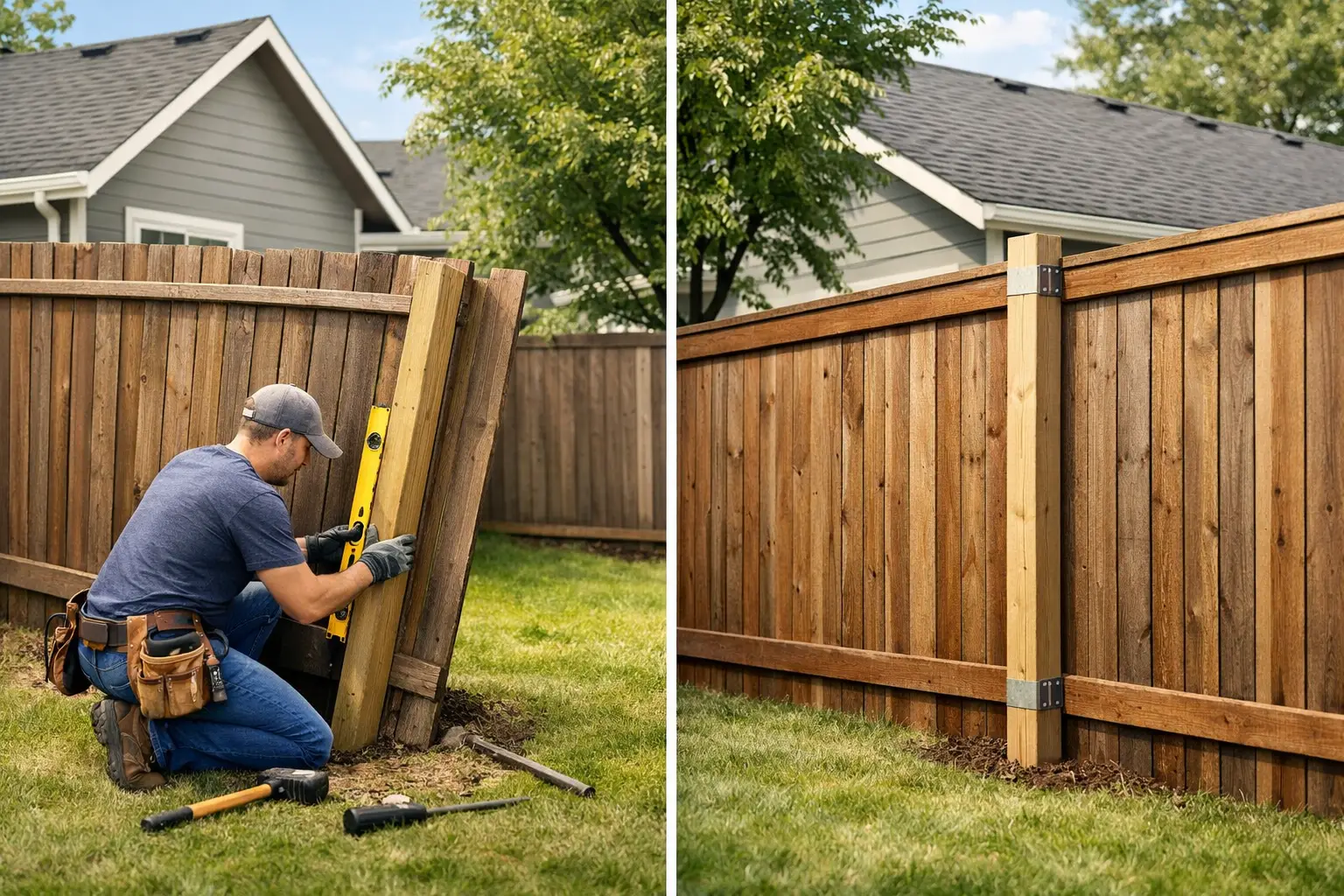
If the post itself is solid and the damage is limited to a loose footing, resetting it may solve the problem. Start by removing the fence panels, rails, or pickets connected to that post as needed. This reduces weight and makes it possible to position the post accurately.
Dig around the existing footing until you can determine why it moved. In some cases, the original concrete is too small or shallow. In others, water has washed out surrounding soil, leaving the footing with little support. Remove loose material and excavate enough space to create a wider, stable hole.
Set the post back into position and use a level on two adjacent sides to make sure it is plumb. Do not rely on the neighboring fence section as your guide, since it may have shifted too. Secure temporary diagonal braces from the post to stakes in the ground so it cannot move while the new footing cures.
Add several inches of gravel at the bottom of the hole for drainage, then place concrete around the post according to the product directions. Shape the top of the concrete so it slopes away from the post. This small detail helps water run off rather than pool against the wood.
Allow the footing to set before reinstalling rails, pickets, or fence panels. Fast-setting mixes can firm up quickly, but the fence should not be put under full load until the concrete has had adequate time to cure. Recheck the post with a level before reconnecting everything.
Replacing a Rotten or Broken Fence Post
A failed post needs a more complete repair, but the surrounding fence can often be saved. First, support the adjacent fence sections with temporary braces. This keeps rails and panels from dropping or pulling other posts out of alignment once the damaged post is removed.
Disconnect the rails from the old post, or remove enough pickets to access the fasteners. Cut or pull out damaged hardware rather than forcing rails free, which can split otherwise reusable lumber. Remove the old post and footing if possible, then dig a properly sized hole for the replacement.
For most residential privacy fences, the post should extend deep enough to resist wind and soil movement. The appropriate depth depends on fence height, soil conditions, and local requirements, but shallow post holes are a common reason fences lean. A contractor can assess the right footing size when conditions are complicated by expansive clay, standing water, slopes, or unusually tall fencing.
Install the replacement post plumb, brace it securely, and set it in gravel and concrete. Once stable, reconnect the rails with exterior-rated screws or approved fasteners. Screws are often easier to service later than nails and can provide a stronger connection when used correctly.
Replace any cracked rails and reinstall pickets with even spacing. Step back frequently while working. A fence can be structurally sound but still look crooked if pickets do not follow a consistent top line.
Do Not Ignore Drainage and Gate Pressure
A new post will not stay straight if water continues collecting around it. Look for downspout discharge, low spots in the yard, leaking irrigation, or soil that has eroded along the fence line. Redirecting water, improving grading, or adding drainage can protect the repair and the rest of the fence.
For gates, inspect the hinges, latch, frame, and posts after the repair. A gate should open and close without rubbing the ground, dragging on the latch side, or needing to be lifted. If the opening is out of square, adjust the gate hardware or rebuild the gate frame before it puts new pressure on the repaired post.
When a Professional Fence Repair Makes More Sense
A single loose post is a manageable project for an experienced homeowner with the right tools. But professional help is usually the smarter call when the fence is tall, multiple posts have failed, the property has a slope, the gate is involved, or the fence borders a pool, business, or neighboring property.
Storm damage can also hide problems that are not obvious from one side of the fence. A professional can identify weakened posts, damaged rails, shifting footings, and sections that need reinforcement before they become a larger safety or liability issue. For homeowners and property managers in the greater Houston area, GottaCallMAC provides dependable fence repair and replacement work with free estimates and straightforward pricing.
A leaning fence is your property telling you something has moved, weakened, or started to fail. Address the cause below ground, not just the visible tilt, and you will have a straighter fence that is better prepared for the next round of rain, wind, and everyday use.
