
 Commercial Remodeling
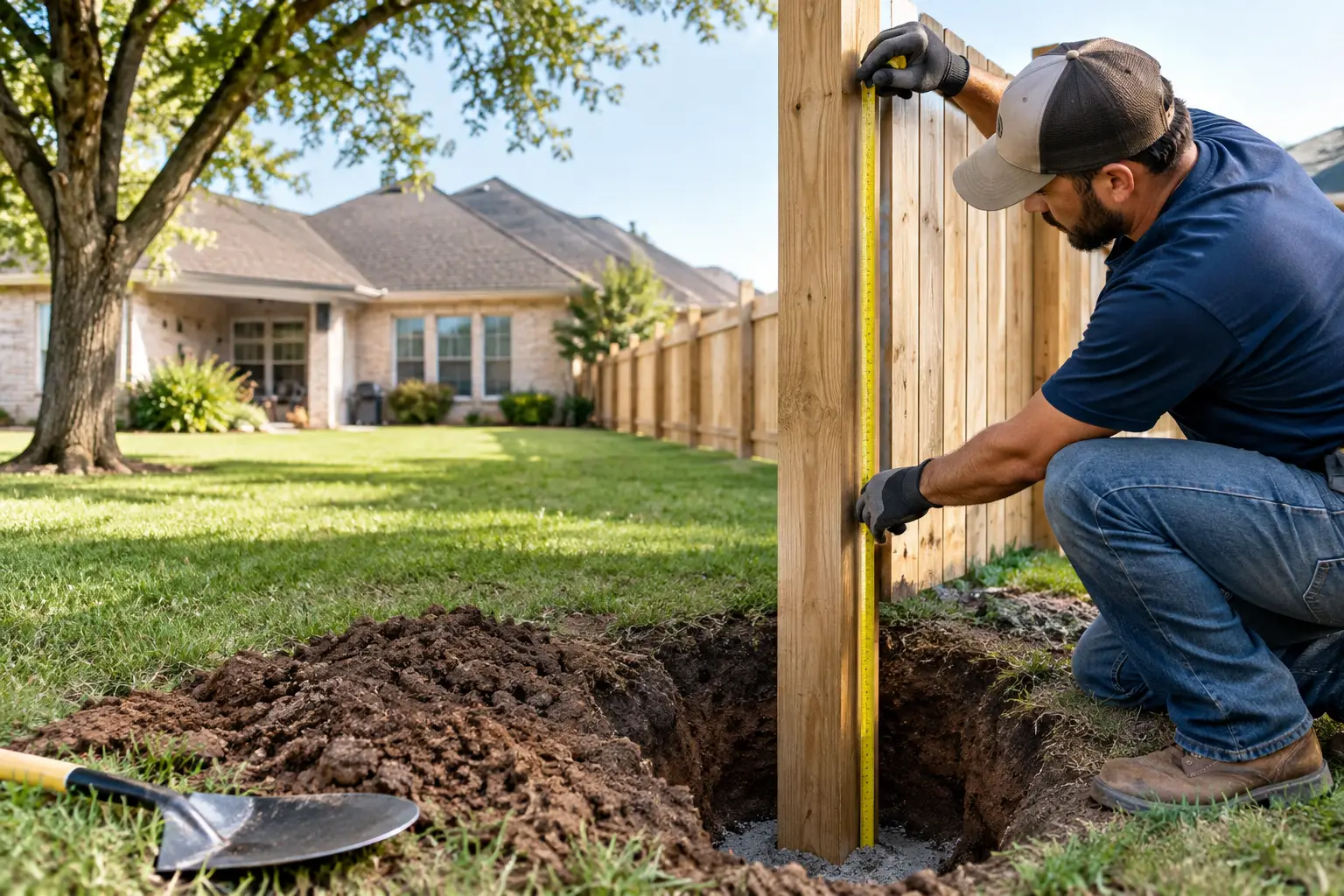
A fence can look great on installation day and still start leaning, sagging, or lifting within a few wet seasons if the posts were set too shallow. So, how deep should fence posts be in Houston soil? For most residential privacy fences, a practical starting point is 24 to 30 inches deep, but Houston-area clay, drainage, fence height, and gate weight can all call for a deeper or wider footing. At GottaCallMAC, we look at the actual property conditions before recommending a fence installation plan, because one depth does not fit every yard.
How Deep Should Fence Posts Be in Houston Soil?
A common fence-installation guideline is to bury about one-third of the total post length. For a standard 6-foot privacy fence using an 8-foot post, that often means setting the post approximately 2 feet deep. In much of the Greater Houston area, however, 30 inches is often the more dependable target for wood privacy fencing, particularly where soil stays wet, the yard has poor drainage, or the fence will catch strong wind.
That does not mean every post needs the same hole. A shorter decorative fence may need less depth than a tall board-on-board privacy fence. A gate post, corner post, or end post carries more load than a line post and should generally be set deeper and with a larger footing. If a fence is built on a slope, near a drainage path, or in loose fill soil, the installation approach needs to account for those conditions too.
For a typical 6-foot cedar or treated pine fence, many local installations fall in this range:
- Line posts: about 24 to 30 inches deep
- Corner, end, and gate posts: often 30 to 36 inches deep, depending on the gate and soil conditions
- Taller fences or heavy ornamental and aluminum systems: depth should be based on the manufacturer requirements, post type, wind exposure, and layout
The goal is not simply to get the post underground. The goal is to create a stable base that keeps the fence plumb when Houston weather brings soaking rain, high humidity, shifting clay, and sudden wind.
Why Houston Soil Changes the Answer
Houston-area soil is not uniform. A property in The Woodlands may have different ground conditions than a yard in Cypress, Pearland, Humble, or Katy. Still, expansive clay and moisture movement are common challenges throughout the region.
Clay soil can be firm when dry and soft when saturated. As moisture levels change, the soil can expand and contract around the post. If the hole is too shallow or narrow, that movement has more influence on the fence. The result may be a post that gradually twists, rises, or leans out of line.
Drainage matters just as much. Water that repeatedly sits at the base of a fence shortens the life of wood, even when the post is rated for ground contact. Low spots, downspout discharge, blocked swales, and areas near dense tree roots deserve extra attention before a new fence goes in. Sometimes the best fix is a deeper setting. Other times, the real solution is adjusting drainage, clearing roots, or changing the fence layout so the structure is not fighting the yard year after year.
This is why a quick measurement without a site review can lead to trouble. GottaCallMAC considers soil feel, grade changes, existing drainage, fence design, and the condition of surrounding trees and landscaping before work begins.
Post Depth Depends on the Fence You Are Building
A standard wood privacy fence is usually the project homeowners have in mind when they ask about post depth. Cedar and treated pine both make attractive, practical fences, but the post foundation needs to support the rails, pickets, trim, and wind load of the entire section.
Six-foot privacy and board-on-board fences
A 6-foot privacy fence generally needs more than a shallow 18-inch hole, especially in Houston clay. Setting wood line posts 24 to 30 inches deep gives the fence a better chance of staying aligned. Board-on-board fencing, top caps, and rot boards add material and surface area, so a solid post setting becomes even more valuable.
If the fence borders an open yard, backs up to a greenbelt, or receives direct wind across a large area, deeper posts may be the sensible choice. A taller fence is not automatically better if the foundation is not sized to support it.
Gates need deeper, stronger support
Gates put repeated stress on their hinge-side posts. Every opening and closing motion pulls, pushes, and twists the post. Double driveway gates, wider walk gates, and metal-framed gates need especially careful planning.
For most gate locations, 30 to 36 inches deep is a common working range, with a wider hole and a post selected for the gate’s size and weight. The exact setup depends on whether the gate is wood, steel-framed, ornamental metal, or another material. A sagging gate is often blamed on hinges, but the real issue may start below ground at an undersized or shallow gate post.
Aluminum and ornamental metal fencing
Aluminum and ornamental metal fencing can look lighter than wood, but its posts still need to be stable and properly aligned. These systems often have manufacturer-specific installation requirements for post depth, spacing, and concrete use. Following the system requirements is the right move, particularly around slopes, pool areas, commercial properties, and gates.
Depth Alone Will Not Save a Poor Installation
A deep hole is only one part of a durable fence. The post needs enough room around it for the chosen setting material, and the fence layout needs to be straight before panels, rails, and pickets are installed. If posts are set out of plumb, a contractor can sometimes hide the issue at first, but gates and fence lines usually reveal it later.
The post material also matters. Wood posts intended for direct ground contact are the appropriate choice for most wood fence installations. A post that is rated only for above-ground use is not the right material for a buried foundation, no matter how deep the hole is.
Concrete is commonly used to help stabilize fence posts, particularly at corners, ends, and gates. It should be installed with drainage and soil movement in mind, not treated as a cure-all. In certain conditions, moisture trapped around a wood post can contribute to decay over time. Proper material selection, hole preparation, and finish grade all work together.
A well-built fence also benefits from thoughtful rail placement, secure fasteners, proper spacing from the ground, and clean gate hardware installation. If the posts are strong but the rest of the fence is rushed, the finished project can still develop problems.
Signs Your Existing Posts May Be Too Shallow
You do not always need a complete fence replacement when one area starts moving. A repair may be practical if the damage is limited and the remaining fence is in sound condition. Watch for a fence line that begins to wave, posts that visibly lean after heavy rain, or gates that drag despite hinge adjustments.
Other signs include widening gaps between panels, loose concrete at the base of a post, rails pulling away, and pickets sitting closer to the ground in one section than another. These issues can come from age, rot, storm damage, root movement, or inadequate original post depth.
A repair might involve resetting selected posts, rebuilding a gate section, replacing damaged rails and pickets, or correcting drainage near the fence. When several posts are failing across an older fence, replacement may provide a better long-term value than repeated spot repairs. The right choice depends on what is still solid and what has reached the end of its service life.
Plan for the Yard, Not Just the Fence Line
Before setting posts, take a close look at what is happening around the planned fence. Large roots can complicate digging and affect long-term alignment. Overhanging limbs can drop debris or rub against a new fence during wind. Low areas can leave the bottom of the fence constantly exposed to standing water.
This is where a full-service local contractor can be helpful. Tree trimming, brush clearing, drainage-related grading work, old fence removal, and gate planning may all be part of getting the site ready for a durable installation. For landlords, property managers, and commercial owners, addressing those details upfront can reduce return visits and maintenance headaches later.
It is also wise to confirm property boundaries and identify underground utilities before excavation. Fence placement, gate swing direction, and access for equipment should be part of the conversation before posts are in the ground.
Get a Fence Built for Houston Conditions
The dependable answer to how deep fence posts should be in Houston soil is usually 24 to 30 inches for standard privacy fence line posts, with deeper and wider support for gates, corners, heavy sections, and challenging ground. But the best depth is the one that matches your fence design, soil conditions, drainage, and the demands of the property.
If you are planning a new cedar, treated pine, board-on-board, aluminum, or ornamental fence, or need help with leaning posts and a sagging gate, GottaCallMAC has you covered. Call 936-290-3502 or visit www.gottacallmac.com to request a free estimate and get straightforward guidance for your property. A fence built on solid posts is easier to enjoy and easier to maintain for years ahead.
