
 Commercial Remodeling
A fence can look great on paper and still feel too short once the neighbor’s second-story window looks straight into your patio. That is why the question, “6-foot vs. 8-foot privacy fence: which should you choose?” deserves more than a quick price comparison. At GottaCallMAC, we help Greater Houston property owners choose fence heights that match the way they actually use their yards, rentals, businesses, and outdoor spaces.
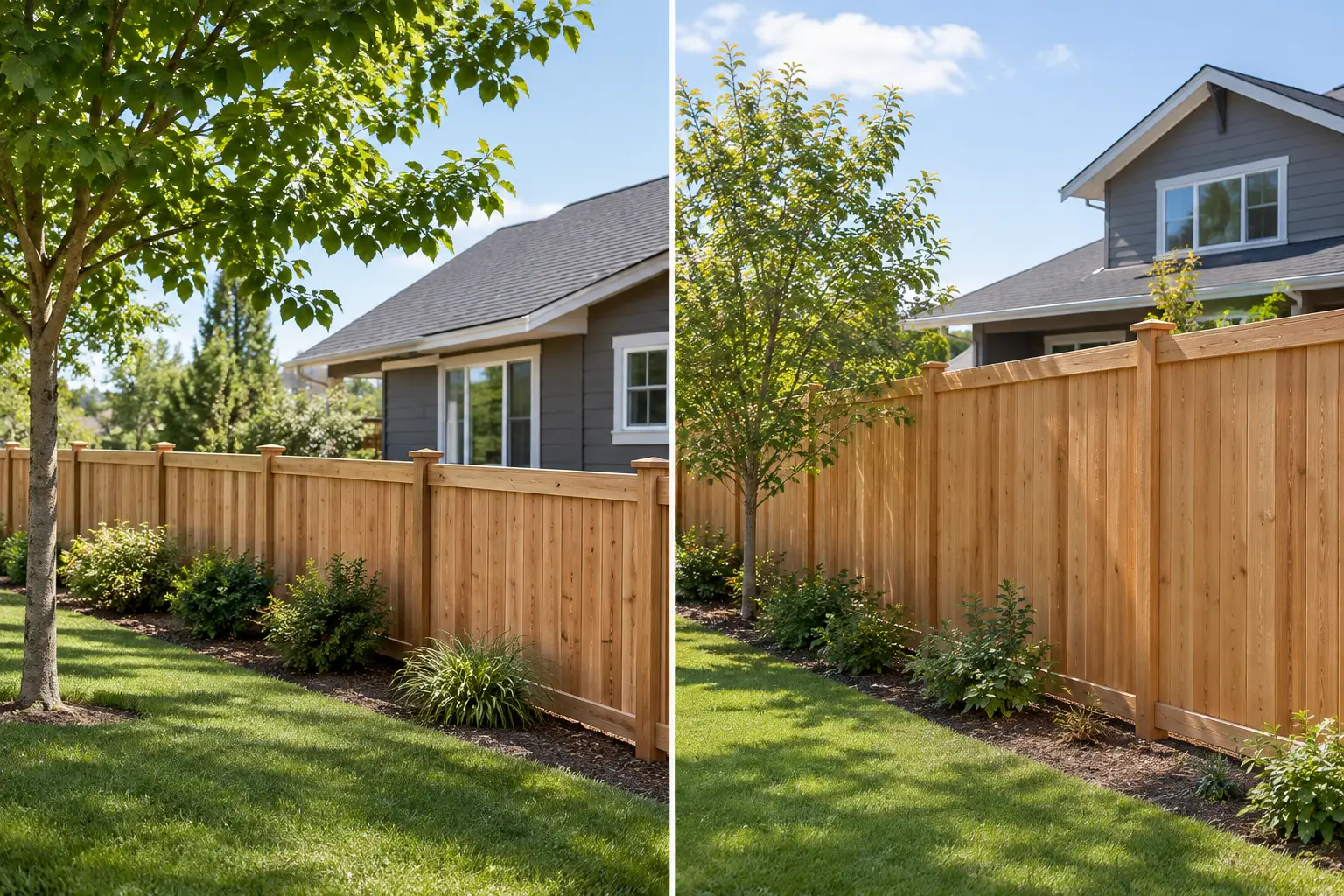
A 6-foot privacy fence is the most common choice for good reason. It creates a clear boundary, blocks most ground-level views, and usually gives homeowners the privacy they want without making the yard feel boxed in. An 8-foot fence adds another level of screening and security, but it also comes with more material, more structural demands, and a stronger visual presence.
The right answer depends on your lot, your neighbors, the fence material, wind exposure, and what you need the fence to solve. Here is how to make a practical decision before installation begins.
6-Foot vs. 8-Foot Privacy Fence: Start With the Problem
Before choosing a height, identify what is bothering you now. If your goal is to keep pets in, define the property line, screen a ground-level patio, or create separation from a neighboring yard, 6 feet is often enough. A well-built cedar or treated pine privacy fence can make a major difference even at this standard height.
An 8-foot fence makes more sense when the privacy concern sits above ground level. Maybe a nearby home has an elevated deck, a commercial property backs up to your lot, or your backyard is next to a busy parking area. It can also be a smart option for dumpsters, equipment areas, service yards, and properties where a taller visual barrier is genuinely useful.
Height alone is not the whole story. A solid side-by-side fence provides more screening than a more open design at the same height. A board-on-board fence can be especially helpful where boards may shrink or shift over time, because its overlapping pattern limits visible gaps. Top caps, trim, and quality gate construction can also improve the finished look without adding unnecessary height.
Why a 6-Foot Fence Works for Most Homes
For many homes in The Woodlands, Spring, Conroe, Tomball, and nearby communities, a 6-foot fence hits the practical middle ground. It provides everyday backyard privacy while keeping the space open enough for sunlight, airflow, and a comfortable neighborhood appearance.
It is also typically more budget-friendly than an 8-foot fence. The difference is not only the extra two feet of pickets. A taller fence may need longer posts, deeper post holes, additional rails, more concrete, and stronger gate framing. Those details matter because a privacy fence is only as dependable as the structure holding it up.
A 6-foot fence can be a strong choice for homeowners preparing a property for sale, landlords improving a rental, or families replacing an aging fence after storm damage. It is familiar, effective, and easier to match with neighboring fence lines in many subdivisions.
There are cases where 6 feet will not solve the issue. If you can still see directly into a neighboring raised deck or commercial lot, a standard-height fence may leave you disappointed. It is better to have that conversation before materials are ordered than after the fence is complete.
When an 8-Foot Privacy Fence Is Worth It
An 8-foot privacy fence is built for situations where standard backyard screening is not enough. The added height can reduce sightlines from nearby windows, busy common areas, adjoining businesses, or high-traffic spaces. For property managers and business owners, it may help screen storage areas, service equipment, or exterior work zones from public view.
That extra height can also make a property feel more enclosed and secure. It is not a replacement for a proper security plan, but it does create a more substantial barrier than a 6-foot fence. If access control matters, the gate deserves just as much attention as the fence itself. A tall fence paired with a weak, sagging gate will not perform the way it should.
The trade-off is that an 8-foot fence is more visible from both sides and can make a smaller yard feel narrower. It may cast more shade on landscaping, gardens, or outdoor living areas. In some cases, a homeowner may get better results with an 8-foot section only where privacy is needed most, while using 6-foot fencing along less exposed runs.
Before committing to a taller fence, confirm any applicable neighborhood, property, or local requirements for your specific location. Rules can vary, particularly around front yards, corners, shared boundaries, and commercial sites.
Greater Houston Weather Changes the Conversation
Fence height matters more in the Greater Houston area because wind and wet ground can put real pressure on a structure. A solid 8-foot fence catches more wind than a 6-foot fence. That does not mean taller fencing is a bad idea. It means the posts, rails, fasteners, and installation approach need to fit the added load.
Heavy rain can also affect fence posts over time, especially when drainage is poor or old posts have begun to rot near ground level. A fence replacement is the right time to look beyond the visible pickets. If posts are leaning, rails are splitting, or rot boards are failing, replacing only a few boards may not be the most cost-effective long-term fix.
Material selection matters here, too. Cedar is valued for its appearance and natural durability, while treated pine is a practical, widely used option for many privacy fence projects. Both can work well when the fence is built correctly and maintained over time. The better choice comes down to the look you want, the condition of the site, and the project budget.
GottaCallMAC looks at the full picture during an estimate, including the fence line, grade changes, existing trees, gate locations, and the condition of nearby fencing. That helps avoid treating every yard like it has the same needs.
Think About Gates Before You Choose Height
A privacy fence is only functional if you can use the gates comfortably. Taller gates are heavier, and wide gates need careful framing and support to stay aligned. This matters for backyard access, drive-through gates, pool equipment access, trailers, lawn equipment, and commercial service areas.
If your property needs a gate, decide early how wide it needs to be and which way it should swing. A narrow walk gate may be simple, but it can become frustrating if you later need to move a mower, furniture, or repair equipment through it. For larger openings, a contractor should plan the gate structure as part of the fence system rather than treating it as an afterthought.
Trees can also affect the layout. Overhanging limbs, exposed roots, and storm-damaged trees may interfere with fence placement or cause future damage. Coordinating tree trimming, removal, stump grinding, or debris cleanup before a fence installation can save time and prevent a new fence from being installed around a problem that should have been addressed first.
A Better Way to Choose Between 6 and 8 Feet
If your property needs normal backyard privacy, a 6-foot fence is usually the sensible place to start. It is effective, easier on the budget, and suits most residential lots. If your biggest concern is elevated sightlines, commercial exposure, a busy neighboring area, or a specific security and screening need, an 8-foot fence may be worth the additional investment.
Do not choose based on height alone. Look at the fence style, material, post depth, gates, drainage, trees, and the amount of wind the fence line receives. A properly planned 6-foot board-on-board fence can outperform a poorly built 8-foot fence every day.
For a clear recommendation and a free estimate, contact GottaCallMAC at 936-290-3502 or visit www.gottacallmac.com. A fence should fit your property, your budget, and your daily life – not just fill a line on a site plan.
