
 Roofing Services
Guide to Fence Installation That Lasts
A fence project usually looks simple from the street. Set a few posts, hang a few panels, and you’re done. Then the first heavy rain hits, a gate starts dragging, or a section leans because the layout was rushed. That is exactly why a solid guide to fence installation matters before the first hole is ever dug.
For homeowners and property managers, a fence is not just a border. It protects pets, adds privacy, improves curb appeal, and helps define how a property works day to day. For commercial spaces, it can also support access control, appearance, and security. When the job is planned right from the start, the fence looks better, lasts longer, and avoids the kind of repairs that show up far too soon.
What a good guide to fence installation should cover
The best fence installations are decided long before materials arrive on site. The real work starts with purpose. A privacy fence has different demands than a decorative front-yard fence. A dog fence needs attention to gaps near the ground. A commercial perimeter fence may call for stronger materials and more durable gate hardware.
That first decision affects almost everything else – height, post spacing, material, gate placement, and budget. If the goal is privacy, cedar or pine panels often make sense. If low maintenance is the priority, aluminum or metal may be a better fit. If the property has a more open, rural look, split rail can work well, but it will not give the same containment or screening as a solid board fence.
There is also the question of timing. Installing a fence during a dry stretch is usually easier on the crew and the site, but in Southeast Texas, weather changes quickly. Soil movement, drainage, and storm exposure all matter here more than many property owners expect.
Start with the property, not the materials
A common mistake is shopping for fence style before understanding the site. The ground conditions tell you a lot about what kind of installation will hold up. Sloped yards, soft spots, standing water, tree roots, and old fence lines can all change the scope of the work.
Property lines need to be clear before anything is measured. If there is any uncertainty, it is better to resolve that before posts are set. Fixing a boundary mistake after installation is far more expensive than checking first. The same goes for utility marking. Underground lines are not something to guess about.
Drainage is another issue that deserves more attention than it usually gets. In parts of the Houston area, water can sit fast and deep after a storm. A fence installed without enough thought for runoff can trap water, wash out soil around posts, or develop uneven settling. Good installation accounts for what happens during bad weather, not just sunny days.
Choosing the right fence material
Material choice is where appearance, maintenance, and cost all meet. There is no single best option for every property. It depends on what matters most to you.
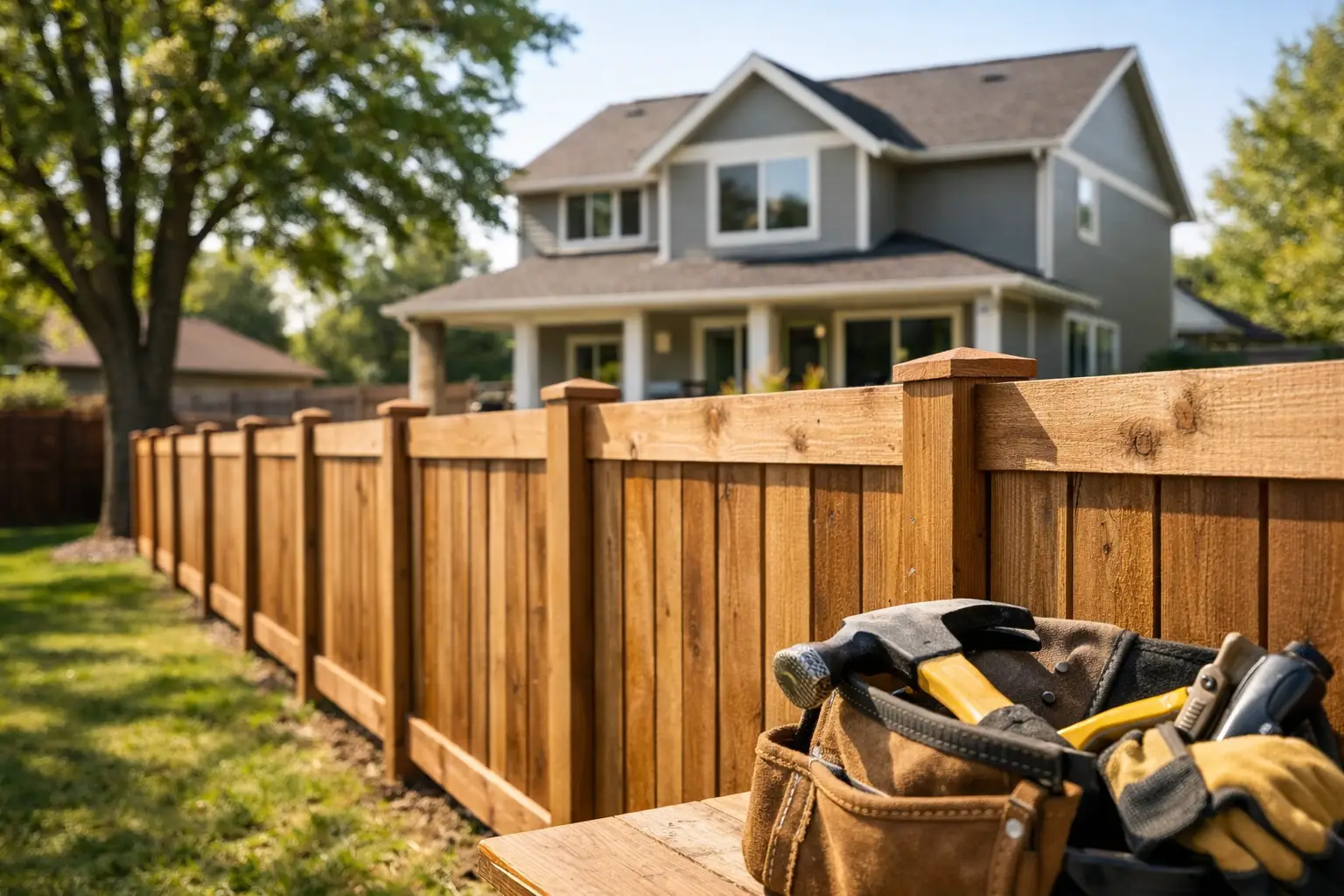
Cedar remains a strong choice for privacy fencing because it has a classic look and performs well when properly installed and maintained. Many property owners like cedar because it brings warmth and curb appeal without feeling too formal. Pine can be a more budget-friendly option and still deliver a solid result, especially when the project needs to balance value and coverage.
Aluminum and metal fencing are often chosen for durability and lower upkeep. They work well for homes that want a cleaner, more open look, and they are also a smart fit for many commercial applications. The trade-off is privacy. These materials create a boundary, but they do not block visibility the way wood does.
Split rail fits larger lots and properties where appearance matters more than screening. It can define space nicely, but it is not ideal where security or pet containment is the main goal. That is where a more enclosed design tends to make more sense.
Posts are the real backbone of the fence
Most fence problems trace back to post installation. People notice boards and gates first, but the posts determine whether the fence stays straight and stable over time.
Post depth, spacing, and footing method all need to match the fence type and site conditions. A tall privacy fence facing wind exposure has different structural demands than a short decorative run. Gates put even more stress on adjoining posts, which is why gate areas need extra care. If those posts shift, the whole entry point starts to fail.
This is also where rushing becomes expensive. When crews try to move too fast or cut corners on depth and alignment, the fence may look fine at first. The problem shows up later in leaning sections, uneven tops, and hardware that stops lining up.
Layout matters more than most people think
A clean layout gives the finished fence its professional look. Straight lines, balanced panel spacing, smooth transitions around corners, and well-placed gates all make a difference. This is especially true on visible frontages, corner lots, and commercial properties where appearance affects how people see the whole site.
Gate placement should match how the property is actually used. That sounds obvious, but it gets missed often. A side gate that opens into a tight walkway or a double gate set in the wrong location can be frustrating every single day. Good planning considers foot traffic, equipment access, trash pickup, pool areas, pets, and maintenance routes.
On uneven ground, layout becomes even more important. Some fences are stepped, while others are racked to follow the slope more closely. Neither approach is automatically right or wrong. It depends on the style of fence, the grade, and how much gap under the fence is acceptable.
The installation phase: where quality shows up
Once planning is done, the actual build should feel organized, not improvised. Old fencing and debris need to be removed cleanly. The line should be established carefully. Posts should be set with consistency, and the framing should create a structure that can handle years of use.
With wood fencing, board placement affects both looks and performance. Uniform spacing, clean cuts, and secure fastening all help the fence age better. With metal and aluminum systems, precision matters even more because alignment issues are easier to spot.
A quality install also respects the property around it. That means minimizing unnecessary yard damage, working safely around landscaping and structures, and leaving the site in good shape when the job is done. Property owners remember that part.
Common mistakes this guide to fence installation can help you avoid
One of the biggest mistakes is choosing based on price alone. Budget matters, and it should. But the cheapest quote is not always the best value if it skips site prep, uses weaker materials, or leaves out details that affect long-term performance.
Another problem is underestimating maintenance. Wood fences need care over time. If a property owner wants the look of wood but not the upkeep, that is worth talking through before the project begins. A fence should fit the owner’s real expectations, not just their initial idea.
It is also easy to overlook how local weather affects longevity. Heat, humidity, heavy rain, and storm exposure all put pressure on fencing systems. In areas like Spring, Conroe, and The Woodlands, that is not a small detail. It should shape the way the fence is built from day one.
When professional installation makes the most sense
Some smaller fence projects are straightforward. Many are not. If the property has drainage issues, grading challenges, tree interference, multiple gates, or a long perimeter, professional installation usually saves time, frustration, and costly corrections.
It also helps when one contractor can look at the whole property, not just the fence line. That broader view matters when access, landscaping, storm cleanup, or other exterior improvements overlap with the project. A company like GottaCallMAC can help property owners think beyond a basic install and plan for a fence that works with the rest of the site.
Good contractors are not just there to build what was requested. They should also flag issues, explain trade-offs, and recommend options that fit the property and budget. That kind of guidance is where long-term value comes from.
What to expect after installation
A new fence should look sharp right away, but the real test is how it performs after weeks, months, and seasons. Gates should swing properly. Lines should stay true. Posts should remain stable. Materials should wear the way they are expected to wear, not fail early.
That is why warranty terms, workmanship standards, and follow-through matter. A fence is an investment in how a property functions and how it presents itself. Whether the goal is privacy, security, pet containment, or curb appeal, the best results come from planning carefully and building with the long view in mind.
If you are thinking about a new fence, start by looking at how your property is used every day, not just how you want it to look from the curb. That one decision tends to lead the rest of the project in the right direction.
