
 Roofing Services
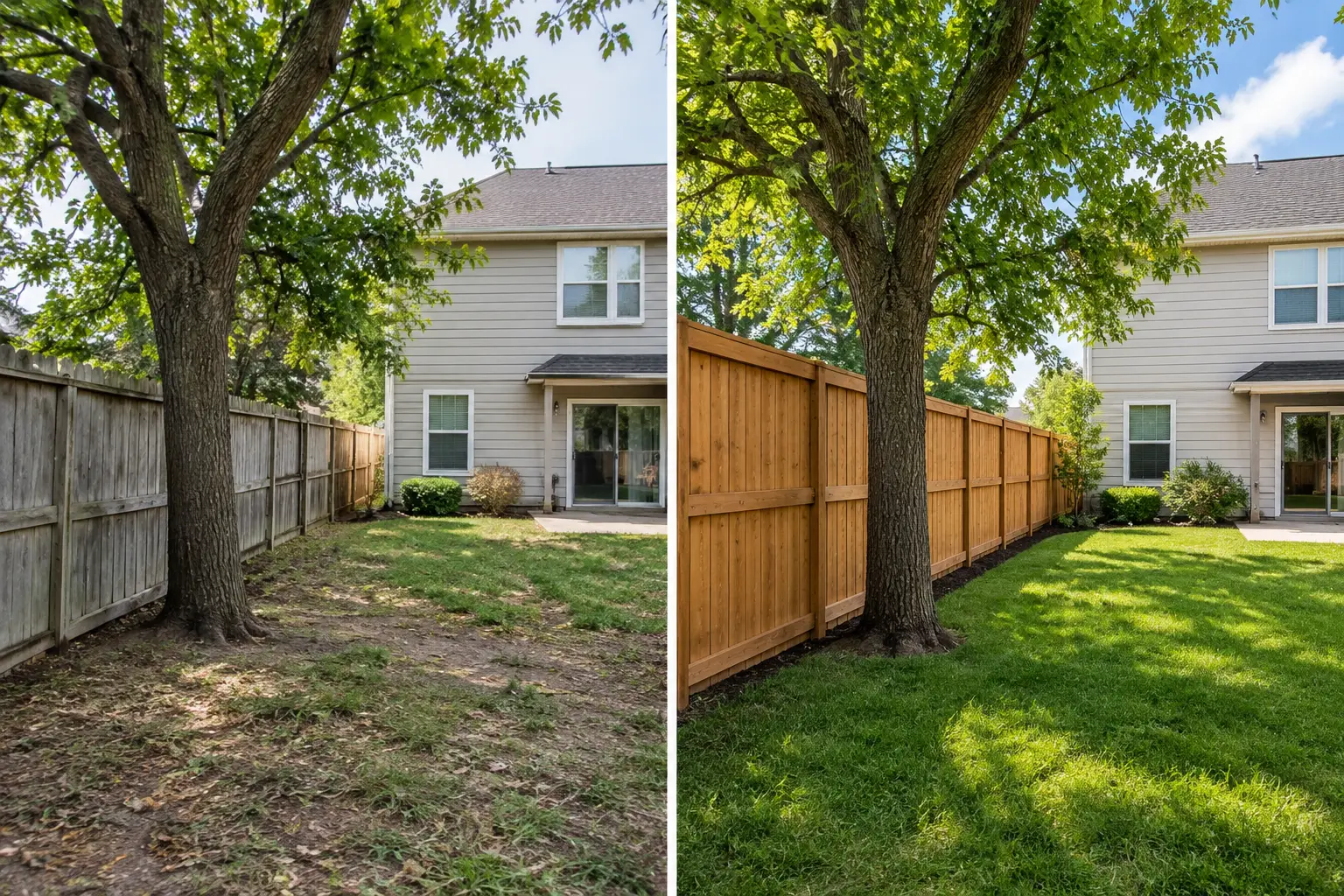
A fence rarely fails all at once. It starts with a gate that drags, a few leaning posts after heavy rain, boards turning gray and loose, or gaps that leave a backyard feeling too exposed. That is what makes GottaCallMAC fence projects: before & after transformations so meaningful: the finished fence does more than look clean in a photo. It makes the property work better every day. GottaCallMAC helps homeowners, landlords, property managers, and businesses turn worn-out boundaries into dependable privacy, security, and curb appeal throughout Greater Houston.
What Changes in a Real Fence Transformation
The “before” side of a fence project often tells the real story. In the Houston area, intense sun, humidity, hard rain, shifting ground, and storm debris can take a steady toll on wood fencing. Treated pine can eventually warp or split. Cedar can weather and loosen if it has not been maintained. Posts can move, rails can sag, and gates can stop lining up with their latches.
The “after” is not just a row of new pickets. A good replacement starts with a straight, stable layout and proper attention to the pieces that carry the load: posts, rails, framing, fasteners, and gate structure. Fresh fencing brings back defined property lines, a more usable outdoor space, and a cleaner first impression from the street or neighboring properties.
For a rental home or commercial property, that change can also simplify day-to-day management. A sound fence helps separate spaces, supports privacy for tenants or customers, and reduces the chance that a small maintenance issue turns into an urgent repair request.
Before-and-After Fence Projects Start With the Right Decision
Not every tired fence needs full replacement. Sometimes the most practical answer is a repair, especially when the damage is limited to a section, a few posts, a gate, or aging rot boards. Replacing a damaged panel can restore function without disturbing the rest of a fence that still has years of service left.
Replacement makes more sense when problems are widespread. If multiple posts are leaning, rails have failed in several areas, pickets are brittle throughout, or the fence has been patched repeatedly, continuing to repair it may only delay a larger project. The right choice depends on the fence’s overall condition, the material, the scope of damage, and how the property needs to function.
GottaCallMAC takes a practical approach to that decision. The goal is not to push a full replacement when a targeted repair will do the job. It is to explain what is causing the problem, identify the options, and help the property owner choose a solution that makes sense for the budget and the property.
The Privacy Fence Reset
A standard privacy fence can make a backyard feel unfinished when boards are uneven, gaps have opened up, or the line has started to wave from post movement. After replacement, the difference is immediate: the yard feels more enclosed, pets and kids have clearer boundaries, and outdoor areas become easier to enjoy.
Treated pine remains a practical choice for many properties because it offers a clean traditional look and dependable value. Cedar is often selected for its natural appearance and can be a strong option when the homeowner wants a more distinctive finish. Material selection should come down to appearance, maintenance expectations, budget, and the conditions around the fence line, not a one-size-fits-all answer.
Board-on-Board Changes the Look and the Coverage
Board-on-board fencing is a popular upgrade when privacy matters and homeowners want a more finished appearance. Its overlapping picket design helps reduce visible gaps as wood naturally expands and contracts. From one side, it creates a fuller, more substantial look than a basic single-row privacy fence.
That added coverage and detail generally require more material and labor than a simple privacy fence. It may not be necessary for every side yard or investment property, but it can be a worthwhile choice for a backyard, pool area, or home where appearance is a top priority. Top caps and rot boards can add another level of protection and visual detail, particularly when the goal is a polished before-and-after result.
Gates Are Often the Biggest Improvement
A new fence can still be frustrating if the gate is poorly built or not properly aligned. Gates carry more movement than any other part of the fence, so they need solid framing, dependable hardware, and enough support to open and close correctly over time.
Before a gate project, owners may be dealing with a latch that will not catch, a gate rubbing the ground, or an opening that is too narrow for lawn equipment or regular access. Afterward, the right gate makes the property easier to use. That might mean a secure walk gate, a wider double gate for equipment access, or a repaired gate that finally closes as it should.
GottaCallMAC Fence Projects: Before & After Planning
The best transformations are planned around how people actually use the property. A homeowner may need better backyard privacy. A landlord may need a durable replacement between rentals. A business may need a defined perimeter, a functional access gate, or aluminum and ornamental metal fencing that provides visibility without giving up a professional appearance.
Before work begins, it helps to look at the entire fence line instead of focusing only on the most obvious broken section. Low tree limbs may be rubbing against the fence. Overgrown brush can trap moisture around the base. An old stump, storm debris, or uneven ground may affect access and layout. Addressing those conditions early can lead to a cleaner result and avoid unnecessary trouble during installation.
This is one reason a local contractor with broader property improvement experience can be helpful. Fence work sometimes connects naturally with tree trimming, debris removal, land clearing, siding repairs, deck work, or exterior touch-ups. The projects remain separate when they need to be, but coordinating the work can make a property feel fully cared for rather than partially patched.
What Makes the After Last Longer
A sharp-looking fence on installation day is only part of the picture. Long-term performance depends on material quality, solid construction, drainage around the fence line, and reasonable upkeep. Wood fences are exposed to the weather every day, and small checks can prevent larger repairs later.
Property owners should periodically walk the fence line and look for loose pickets, soft or damaged boards near the ground, leaning posts, loose hardware, and branches pressing against the structure. After major storms, checking gates and clearing fallen debris is especially worthwhile. If a gate begins dragging or a section starts leaning, handling it early is usually easier than waiting until more framing is affected.
For commercial properties and rentals, a regular exterior review is a smart part of routine maintenance. Small fence repairs can help preserve security, appearance, and tenant or customer confidence without waiting for a full replacement cycle.
A Better Fence Is a Better-Working Property
The most satisfying before-and-after transformations are not based on a trend or a quick cosmetic cover-up. They solve the issue that made the fence a problem in the first place. That could be privacy, access, storm damage, deteriorated wood, an unsafe gate, or simply a property that no longer looks cared for.
Whether you need cedar or treated pine privacy fencing, board-on-board construction, rot boards and top caps, a gate repair, or aluminum and ornamental metal fencing, clear communication matters from the first walkthrough through cleanup. A good result should fit the property, meet the real need, and feel worth the investment each time you step outside.
If your fence is leaning, worn down, damaged, or no longer doing its job, GottaCallMAC is ready to provide a free estimate and a straightforward plan for the work. Call 936-290-3502 or visit www.gottacallmac.com. A well-built fence is not just a border around the property. It is a practical improvement you notice every time you use the space.
