
 Roofing Services
A new fence can solve a very practical problem fast: the dog needs a safe yard, a rear property line has failed, tenants need privacy, or a business needs clearer boundaries. But fence installation near Spring TX is not just a matter of setting posts and hanging panels. Our heavy rain, humid summers, clay soil, active tree roots, and neighborhood requirements can all affect how well a fence performs over time.
The best result starts with a fence that matches the property, the purpose, and the conditions on the ground. A lower bid may look attractive at first, but poor post depth, weak gate framing, or materials that do not fit the job can lead to sagging, leaning, and early repairs. A clear plan before work begins helps protect your budget and your property.
Start With the Job the Fence Needs to Do
Before choosing a material or calling for an estimate, decide what the fence must accomplish. Privacy is different from security. Keeping a large dog contained calls for different spacing and height considerations than marking a lot line or enclosing a commercial storage area.
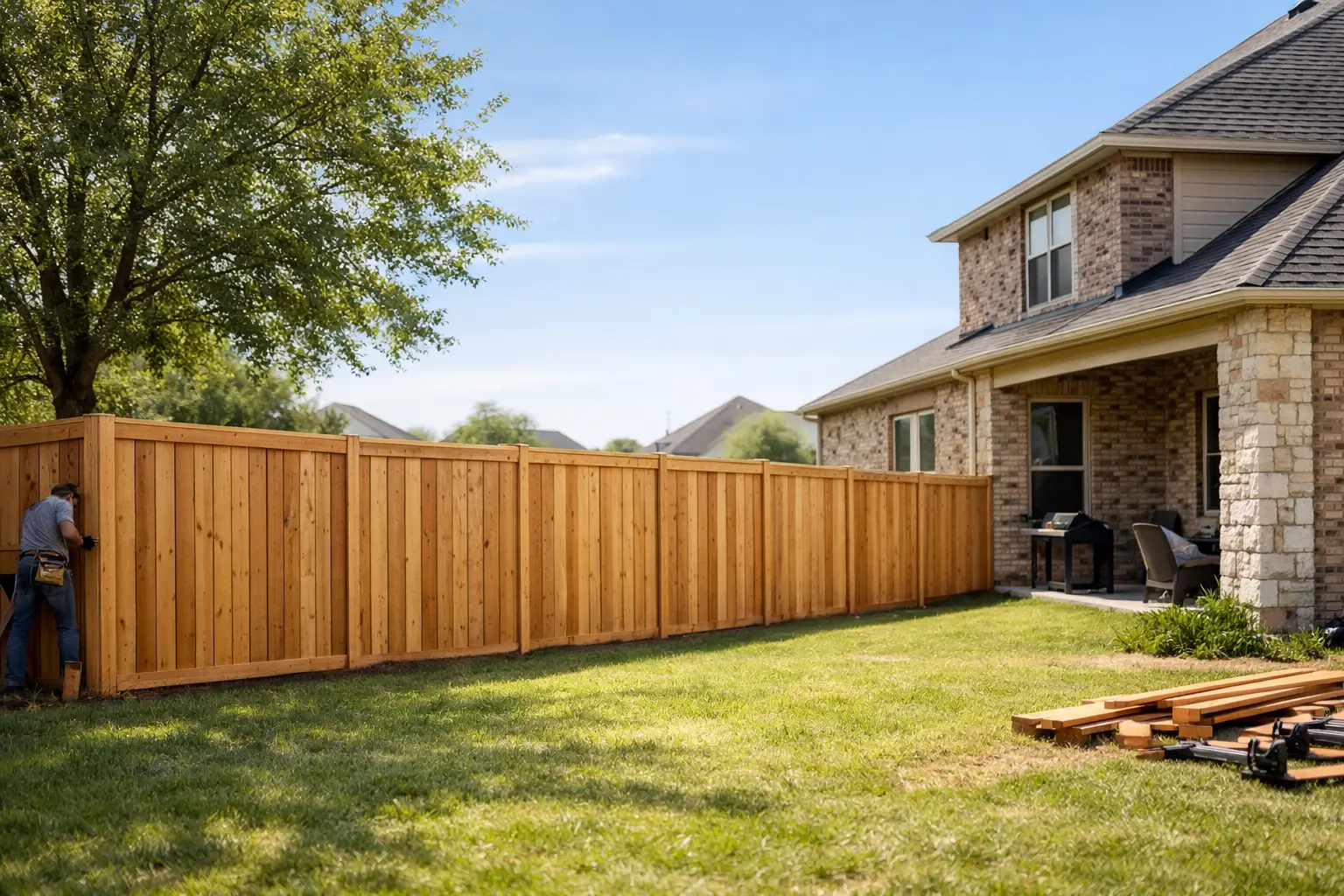
For many Spring homeowners, a wood privacy fence is the natural choice. Cedar offers a clean appearance and strong resistance to decay, while treated pine is often a practical option for owners looking to manage upfront cost. Both can work well when installed correctly and maintained for Houston-area weather.
Aluminum fencing is a good fit around pools, landscaped areas, and properties where visibility matters. It does not create the same privacy as wood, but it offers a clean, open look with less maintenance. Metal fencing may be the better choice for higher-security needs or commercial sites. Split-rail fencing works well for larger lots and a more open appearance, though it usually needs wire backing if pets must stay contained.
The right answer depends on the property. A fence contractor should ask about pets, children, security concerns, drainage, desired privacy, gate access, and the look of nearby structures before recommending a material.
Fence Installation Near Spring TX Means Planning for Water
Spring and nearby communities such as The Woodlands, Tomball, and Conroe can see hard rain in a short period of time. Water changes the ground around fence posts, and standing water can shorten the life of wood components. That makes drainage and site preparation more than small details.
A contractor should look for low spots, erosion, drainage swales, and places where runoff moves across the yard. In some cases, the fence line needs small adjustments to avoid blocking drainage. On sloped ground, panels may need to step with the grade or be custom built to follow it. There is a visual difference between these approaches, but the bigger issue is making sure the finished fence remains secure and does not create a water problem.
Trees also deserve attention. Mature roots are common around Spring properties, and they can affect where posts can safely go. If overgrown limbs are likely to rub the fence or storm-damaged trees need removal before construction, handling that work first can prevent avoidable damage later.
Confirm Boundaries, HOA Rules, and Utility Locations
A fence belongs on your property, not where an old fence happens to stand. Existing fences can be off the line, especially on older lots or after multiple ownership changes. If there is any uncertainty, review your survey and consider having boundary questions resolved before installation begins.
Homeowners associations may have rules for fence height, material, color, placement, and which side faces the street. Some communities require approval before construction. Skipping that step can create a costly removal or rework situation, even if the fence itself is well built.
Utilities must also be located before posts are dug. Irrigation lines, electrical lines for landscape lighting, internet cables, and other private lines can be present even when they are not obvious from the surface. Discuss known lines, sprinkler systems, and access concerns during the estimate so the work can be planned responsibly.
Understand What Drives Fence Installation Cost
There is no one fair price for every fence because no two properties are exactly alike. The length of the fence is a major factor, but it is only the starting point. Material choice, fence height, post size, gate count, terrain, removal of old fencing, disposal, and site access all affect the final estimate.
Gates deserve special attention. A gate is used more than any other part of the fence, and a poorly supported gate can drag, sag, or stop latching correctly. A wide driveway gate needs stronger framing and hardware than a standard walk gate. If you expect trailers, equipment, lawn crews, or regular deliveries, explain that upfront so the opening and gate design fit real use.
For landlords and property managers, durability and repairability may matter more than decorative details. For homeowners preparing to sell, a clean, secure fence can improve curb appeal and make the yard feel more usable. Commercial property owners may need controlled access, stronger materials, or gates sized for operations. The best estimate explains the scope clearly instead of leaving critical items vague.
Ask Questions That Protect Your Project
A dependable local fence company should be comfortable talking through the job before work starts. You do not need to be a construction expert, but a few direct questions can reveal whether the plan is sound.
Ask what material and fence style are recommended for your goals, how posts will be set, how the crew will handle slopes and drainage, and how gates will be framed. Ask whether old fence removal and haul-off are included, whether the estimate identifies the number and type of gates, and what the anticipated schedule looks like.
It is also reasonable to ask about insurance, licensing where applicable, and how changes will be communicated if hidden site conditions appear. Straight answers matter. A contractor who explains trade-offs helps you make decisions before materials are ordered, rather than after the work is underway.
Do Not Ignore Repair When the Fence Is Mostly Sound
Full replacement is not always necessary. Fence repair can be a smart option when damage is limited to a few posts, panels, pickets, rails, or gate components. A leaning section may be caused by failed posts. A gate that will not close may need new hinges, a latch adjustment, or structural reinforcement.
Repair makes sense when the surrounding fence is still stable and the materials are in reasonable condition. Replacement is often the better value when rot is widespread, posts are failing throughout the line, or repeated patchwork has made the fence uneven and unreliable. An honest assessment should explain both options, not push replacement automatically.
After a storm, inspect the fence before making temporary fixes. Look for loose panels, shifted posts, damaged gates, fallen limbs, and exposed fasteners. Taking care of small problems early can keep wind and rain from turning a manageable repair into a larger project.
Choose a Contractor Who Can Handle the Whole Property
Fence work often connects to other needs around the property. A new fence may require brush clearing, tree trimming, storm damage cleanup, gate repair, deck work, siding repairs, or touch-up painting nearby. Working with one capable local contractor can simplify scheduling and reduce the back-and-forth that comes with coordinating several separate crews.
GottaCallMAC serves Spring and the greater Houston area with residential fencing, commercial fencing, gate installation, fence repair, and a range of property improvement services. The goal should be simple: clear communication, practical recommendations, fair pricing, and workmanship that fits the way you use the property.
A well-planned fence gives you more than a line around the yard. It creates privacy, helps protect pets and equipment, improves access, and makes the property easier to enjoy or manage. Start with a clear purpose, verify the details that matter, and choose a contractor who treats the job like a long-term improvement rather than a quick install.
