
 Commercial Remodeling
A wood fence in Greater Houston can look great on day one and face a lot of wear by year five. Homeowners often ask, “How long should a wood fence last in Houston, Texas?” The practical answer is usually 10 to 15 years for a properly installed and maintained wood privacy fence, though some fences last longer and others need major work sooner. At GottaCallMAC, we see firsthand how Houston heat, humidity, heavy rain, soil movement, and storm debris affect fences across The Woodlands, Spring, Conroe, Humble, and surrounding communities.
The material matters, but so does the way the fence was built, where it sits on the property, and whether small problems are handled before they become a full replacement project. A fair assessment should focus on the actual condition of the posts, rails, pickets, gates, and hardware – not just the fence’s age.
How Long Should a Wood Fence Last in Houston, Texas?
For most local properties, treated pine fencing generally lasts around 10 to 15 years. Cedar fencing may last 15 to 20 years or more when it is built well and kept in good condition. Those are useful planning ranges, not promises. A fence exposed to standing water, dense shade, sprinklers, or falling limbs may deteriorate much faster than a comparable fence in a dry, open yard.
Houston’s climate is particularly hard on wood because moisture is rarely a short-term issue. Summer humidity keeps boards from drying as quickly as they would in a drier climate. Frequent rain can saturate the lower portion of the fence, while intense sun dries and heats the upper boards. That repeated swelling and shrinking can lead to warping, checking, loose fasteners, and cracks over time.
A fence can also fail in stages. Pickets may start to look rough years before the structure becomes unsafe or unstable. In many cases, replacing damaged pickets, a sagging gate, or a few deteriorated rails can extend the useful life of the rest of the fence. When posts are rotted, leaning, or loose across multiple sections, replacement is usually the more practical investment.
What Shortens the Life of a Houston Wood Fence?
The biggest issue is usually moisture at ground level. Fence posts are buried in soil, where they are exposed to wet conditions long after rain stops. If water collects along the fence line or the soil stays saturated, rot can begin below the surface where it is easy to miss.
Poor drainage is not always obvious. A yard may look fine from a distance but hold water at the base of a fence after a heavy storm. Downspouts that empty near posts, low areas along the property line, and sprinkler heads repeatedly hitting the same boards can all speed up deterioration.
Installation quality has a major effect as well. A fence needs properly set posts, sound framing, adequate spacing, and secure gate construction. A fence that is underbuilt may lean or rack during storms even if the wood itself is still fairly new. Gates deserve extra attention because they carry weight every time they open and close. A dragging or sagging gate puts added stress on its posts and can damage nearby sections.
Trees are another local concern. Overhanging limbs can scrape pickets, trap moisture, and drop branches during windy weather. Large roots may affect ground conditions near the fence, while vines and dense brush hold moisture against the wood. Regular tree trimming and clearing vegetation away from the fence line can help protect a new or existing fence.
Cedar vs. Treated Pine: Which Lasts Longer?
Cedar is naturally more resistant to moisture and insects than many other common fencing woods. It is a popular option for homeowners who want a more refined appearance and a longer potential service life. Cedar is not maintenance-free, though. It can still weather, split, warp, and rot when it stays wet or is left unprotected for years.
Pressure-treated pine is a dependable, practical choice for many Houston-area privacy fences. It is widely used, cost-conscious, and designed to hold up better against decay than untreated lumber. Its lifespan depends heavily on grade, installation, drainage, and maintenance. A quality treated pine fence with solid posts and consistent care can provide many years of reliable service.
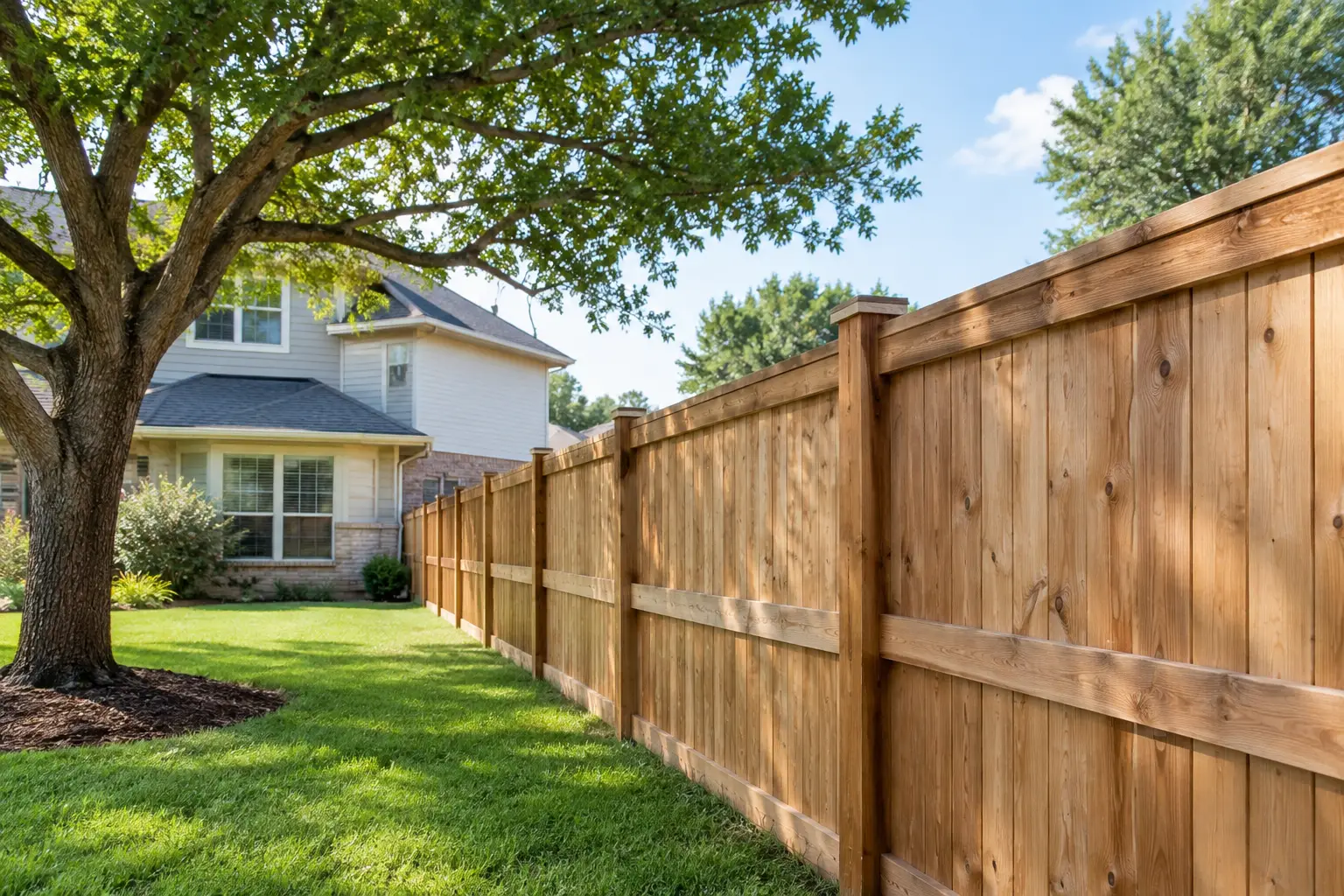
For either material, a board-on-board fence can be a smart choice where privacy and appearance are priorities. Its overlapping design helps reduce visible gaps as boards naturally shrink over time. Top caps and rot boards can also improve both looks and longevity. A rot board sits at the bottom of the fence and can take the brunt of ground-level moisture and damage, making it easier to replace one component instead of sacrificing the bottom of every picket.
Signs Your Fence Needs Repair Instead of Replacement
Age alone does not tell the whole story. A 12-year-old fence with solid posts may be a strong candidate for repairs, while a 7-year-old fence with widespread post rot may be nearing the end of its useful life.
Look for a few key indicators. Loose or cracked pickets, isolated broken rails, minor leaning, and a gate that no longer latches properly are often repairable issues. Replacing sections after tree or storm damage can also make sense when the surrounding fence is stable and still matches reasonably well.
GottaCallMAC regularly helps property owners evaluate whether fence repair will provide real value or whether replacement will prevent repeat expenses. For rentals, commercial properties, and homes being prepared for sale, that distinction matters. The goal should be a practical solution that improves security, privacy, and curb appeal without replacing materials that still have useful life left.
When Full Fence Replacement Makes More Sense
Replacement becomes the better choice when structural problems are widespread. Multiple rotted or leaning posts, rails that are failing throughout the yard, recurring panel blowouts, and extensive insect or moisture damage are signs that isolated repairs may only buy limited time.
A full replacement also gives you an opportunity to correct problems with the original fence design. You may choose stronger posts, a more durable gate layout, rot boards, top caps, better access gates, or a board-on-board privacy style. If you are replacing a fence after a storm, it is a good time to clear overhanging limbs and address vegetation that contributed to the damage.
Not every property needs a wood fence. Aluminum and ornamental metal fencing can be a good fit for pool areas, commercial properties, front yards, or locations where visibility matters. Wood remains a popular choice for backyard privacy, but the right material depends on your goals, maintenance preferences, and the conditions around the property.
Maintenance That Helps a Fence Last Longer
A little attention each year can make a real difference. Walk the fence line after major storms and look for loose boards, leaning sections, damaged hardware, and areas where soil has washed away from posts. Catching a loose rail early is usually much easier than waiting until an entire panel falls.
Keep leaves, mulch, soil, and thick vegetation from staying piled against the bottom of the fence. Trim shrubs and tree limbs back enough to allow airflow. If sprinklers regularly soak the same panels, adjust them away from the wood where possible. These simple steps help the fence dry after rain instead of holding moisture against the boards.
Sealing or staining can also help protect the appearance of cedar and treated pine once the lumber is ready for it. The right timing depends on the wood and its moisture level, so it is worth asking for guidance before applying a product. A finish will not repair rot or poor construction, but it can help reduce surface weathering and extend the time between major improvements.
Get a Straight Answer on Your Fence Condition
If your fence is leaning, losing pickets, sagging at the gate, or showing signs of rot, you do not have to guess whether it needs a repair or a complete replacement. A professional on-site assessment can identify whether the posts and framing are still worth saving and what options fit your property and budget.
GottaCallMAC provides dependable fence installation, replacement, repairs, and gate work for residential and commercial properties throughout the Greater Houston area. We focus on clear communication, quality materials, fair pricing, and workmanship built for real local conditions. For a free estimate, call GottaCallMAC at 936-290-3502 or visit www.gottacallmac.com. Addressing a small fence problem now can help you avoid a larger, more expensive one after the next round of Houston weather.
