 Roofing Services
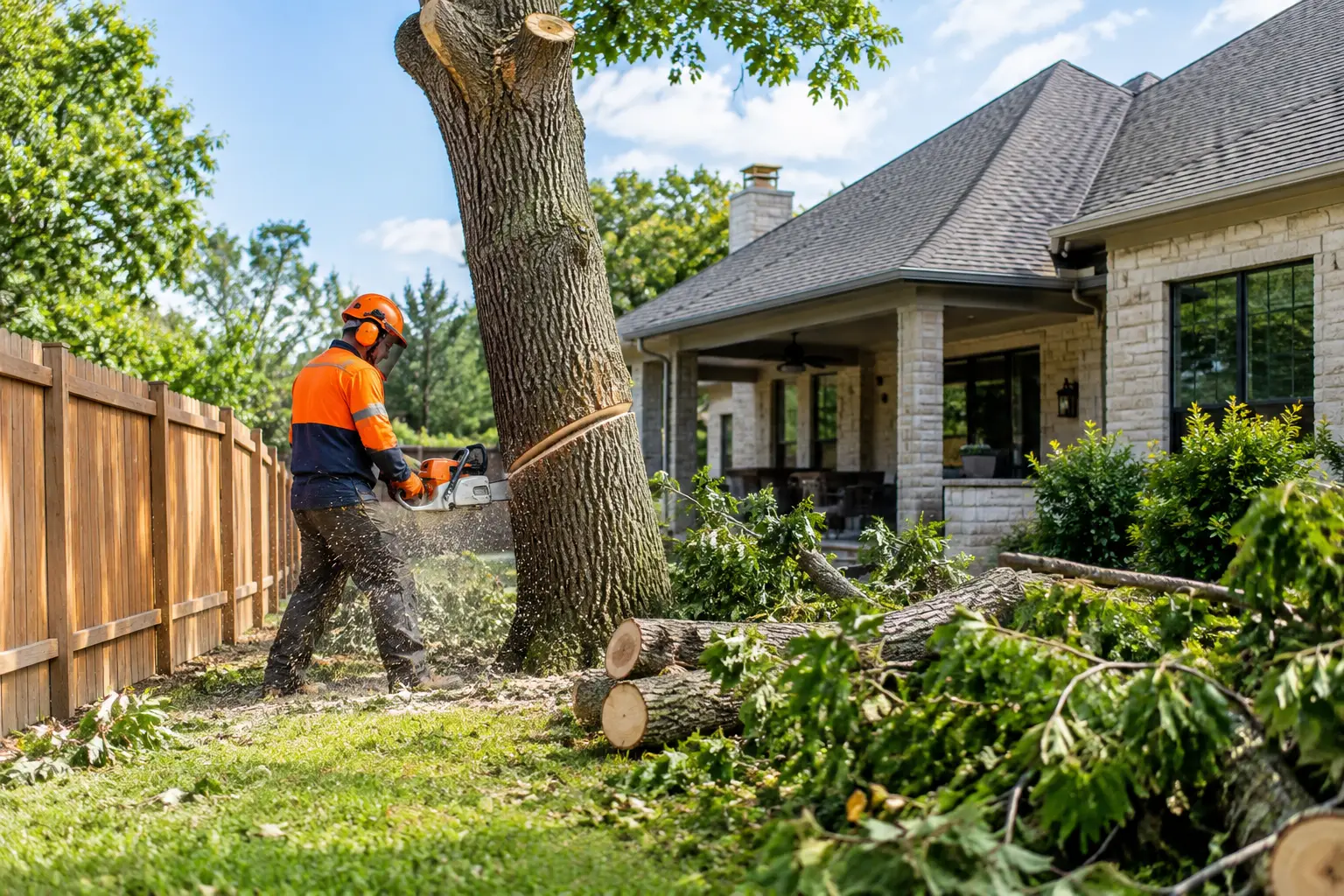
A leaning pine over a backyard fence is not just a tree problem. It can turn into a fence replacement, cleanup, and access problem fast, especially after heavy Houston-area rain or high winds. These tree removal examples show when removal may be the practical choice and why GottaCallMAC looks at the whole property before recommending a plan.
Tree Removal Examples Property Owners See Often
Tree removal is not always about cutting down a healthy tree because it is inconvenient. Sometimes trimming is the better value. Other times, a tree has become a real risk to a home, fence, driveway, business entrance, or neighboring structure. The right approach depends on the tree’s condition, its location, access to the work area, and what is below or around it.
1. A Dead or Declining Tree Near the House
One of the clearest reasons for removal is a tree that is dead, badly declining, or showing major decay. You may notice bare limbs during the growing season, peeling bark, large dead sections, mushrooms near the base, or limbs dropping more often than usual. Those signs do not automatically mean the entire tree must come down, but they are good reasons to have it evaluated.
A dead tree close to a roof, parked vehicles, air-conditioning equipment, or a wooden privacy fence can create a bigger repair bill if it fails. In this situation, removing the tree before it comes down on its own can be the more controlled, practical option. Cleanup matters too. A professional plan should account for branch removal, hauling debris away, and protecting the areas that can be protected during the work.
2. A Tree Damaging or Threatening a Fence
This is one of the most common tree removal examples for homeowners who call about fencing. A mature tree may be pressing against fence panels, lifting posts with roots, dropping heavy limbs across the top cap, or leaning directly toward the fence line. A fence can look like the immediate problem, but replacing boards without dealing with the tree may lead to the same damage again.
Sometimes selective trimming gives a cedar, treated pine, board-on-board, or ornamental metal fence enough clearance. If the tree is unstable, diseased, or growing in a way that makes future damage likely, removal may make better long-term sense. The order of work is important. Removing the tree first can give the crew a clean path for fence repair or replacement and prevent new materials from being damaged during cleanup.
3. Storm-Damaged Limbs and Split Trees
Strong winds, saturated ground, and sudden storms can expose problems that were easy to miss before. A tree may split at a major branch connection, lose a heavy limb, or begin leaning after the soil around its roots becomes soft. Not every storm-damaged tree needs full removal. A healthy tree with limited limb damage may respond well to careful trimming and cleanup.
The concern increases when a trunk is split, a large section has separated, roots have lifted, or the tree is hanging over a home, gate, fence, or parking area. Avoid trying to pull, cut, or climb around a damaged tree yourself. Storm cleanup requires a careful work plan because branches can be under tension and the situation can change quickly.
For residential and commercial properties, GottaCallMAC can help with practical storm cleanup, tree removal, debris hauling, and repairs to affected exterior features. Handling related property work through one local contractor can make the next steps less complicated.
4. Clearing Space for a New Fence or Gate
A new fence needs a clear, workable line. Small trees, volunteer growth, brush, low limbs, and old stumps can interfere with post placement, straight runs, gate openings, and access for the crew. This is especially common on larger lots, rental properties, and commercial sites that have not been maintained for several seasons.
Removing selected trees does not mean clearing every bit of shade from the property. Good planning preserves what works while making room for the improvement you actually need. For example, clearing a narrow path for a privacy fence may be enough, while a driveway gate installation might require more room for vehicles to enter, turn, and operate safely.
Before starting a fencing project, consider where water drains, how equipment will access the area, and whether roots or branches will keep creating maintenance issues. A little planning upfront helps produce a fence line that looks clean and stays easier to maintain.
5. Removing Trees for Lot Cleanup or Property Turnover
Landlords, investors, property managers, and business owners often face a different type of tree removal decision. The issue may not be one dangerous tree. It may be an overgrown lot with dead saplings, invasive brush, fallen limbs, and trees crowding a structure, parking area, or boundary fence.
For a property being prepared for sale, lease, renovation, or new construction planning, cleanup can change the first impression quickly. Clearing overgrowth can expose fencing that needs repair, reveal damaged siding or exterior trim, and make it easier to evaluate the rest of the property. It can also improve access for painting, repairs, deck work, or debris removal.
The trade-off is simple: removing too much can leave a property exposed and reduce shade, while doing too little can leave the original maintenance problem in place. A site-specific estimate helps determine which trees should stay, which can be trimmed, and which are reasonable candidates for removal.
6. Trees Crowding a Driveway, Gate, or Business Access
Low branches scraping delivery vehicles, a tree blocking a gate swing, or roots affecting the area beside a driveway can become an everyday hassle. These are often maintenance concerns first, so trimming may solve the issue. But a tree planted too close to a gate, entrance, or traffic area can outgrow the space over time.
This matters for businesses and managed properties where access needs to remain clear for tenants, customers, service vehicles, and regular maintenance. If repeated trimming is no longer effective or the tree is causing ongoing damage, removal may be the cleaner answer. The goal is not to make the property bare. It is to keep entrances functional, safe, and easy to use.
7. Stump Removal After the Tree Is Gone
Removing a tree is only part of the job when the stump is left behind. An old stump can get in the way of mowing, attract unwanted growth, take up usable yard space, and interfere with a new fence, landscaping, or outdoor improvement. Stump grinding is often a good option when you want the area leveled for a future project.
Whether stump grinding is needed depends on the plan for that spot. If a new fence post, gate post, deck feature, or driveway improvement will be nearby, discuss it during the estimate instead of treating it as an afterthought. Coordinating the work can prevent delays and extra disruption later.
How to Plan Tree Removal Without Creating More Work
Start by walking the property and identifying what the tree affects: structures, fences, gates, utility areas, drains, driveways, outdoor equipment, or neighbor-facing boundaries. Take note of access as well. A tree in an open front yard is a different project than one behind a narrow side gate with a pool, fence, and landscaping nearby.
Be clear about the result you want. Are you trying to prevent damage, open space for a new privacy fence, clean up after a storm, prepare a rental, or improve access? That answer helps determine whether trimming, removal, stump grinding, land clearing, or follow-up fence repair is the most sensible scope of work.
A dependable contractor should explain what is included, what debris will be removed, where equipment may need access, and whether other property improvements should be scheduled before or after the tree work. Clear communication is especially valuable when a tree project connects to a fence installation, gate repair, or exterior renovation.
If a tree is crowding your fence line, creating storm concerns, or standing in the way of a property improvement, GottaCallMAC is ready to provide a free estimate and a straightforward plan. Call 936-290-3502 or visit www.gottacallmac.com to discuss your project. A well-planned removal can protect the work you already have and make room for the improvements you want next.
