
 Roofing Services
A fence rarely fails all at once. It starts with a gate that drags after a heavy rain, a few pickets that loosen in the wind, or one section that leans farther each month. Searching for Houston best fence repair usually means the damage has reached the point where a quick patch no longer feels like a real solution. The right repair should restore privacy, security, curb appeal, and daily function without spending money on work that will fail again next season.
Houston-area fences deal with conditions that are hard on every material: saturated soil, high humidity, intense sun, storm winds, shifting ground, and fast-growing vegetation. A useful repair plan has to address the source of the problem, not only the piece that looks damaged.
What Houston Best Fence Repair Should Fix
The visible damage is not always the real issue. A leaning wood fence may have broken rails, but the cause is often a post that has rotted below ground level or loosened in wet soil. Replacing the rails without resetting the post can make the fence look better for a short time while leaving the structure unstable.
The same principle applies to gates. A sagging gate may need a hinge adjustment, but it can also signal that the gate post is moving, the frame is undersized, or the opening has shifted. A reliable Houston fence repair starts with checking posts, rails, fasteners, gate hardware, and the condition of the surrounding ground.
For homeowners, landlords, and commercial property owners, this matters because a fence often does more than mark a property line. It may keep pets contained, provide privacy for tenants, protect equipment, manage access, or separate neighboring spaces. Repairs should match the fence’s actual job.
Start With the Fence Posts
Posts carry the load of the entire fence. When they fail, nearby pickets, rails, and gates usually follow. In Houston, wood posts are especially vulnerable where soil stays wet after prolonged rain or where sprinklers repeatedly soak the same area.
A contractor should inspect whether posts are cracked, decayed, loose, out of plumb, or pulling against the rails. A single failed post can sometimes be replaced without rebuilding the entire run. If several posts are failing along the same line, though, piecemeal repair may become more expensive than replacing that section correctly.
This is one of the biggest repair-versus-replacement decisions. If the posts are solid and only a few boards are damaged, repair is usually practical. If the foundation of the fence is failing, new pickets alone will not create a lasting result.
Signs a post problem is developing
Watch for a fence line that looks wavy, panels that pull apart at the posts, soil gaps around a post base, or a gate that suddenly will not latch. You may also notice that the top rail slopes even though the pickets still look intact. Acting early can limit the work to a few posts and rails instead of a larger rebuild.
Repairing Wood Fences for Houston Weather
Cedar and pine remain popular choices for residential fencing because they provide privacy, fit many property styles, and can be repaired in sections. Cedar generally has better natural resistance to decay and insects, while pressure-treated pine is often a budget-conscious choice that performs well when properly installed and maintained.
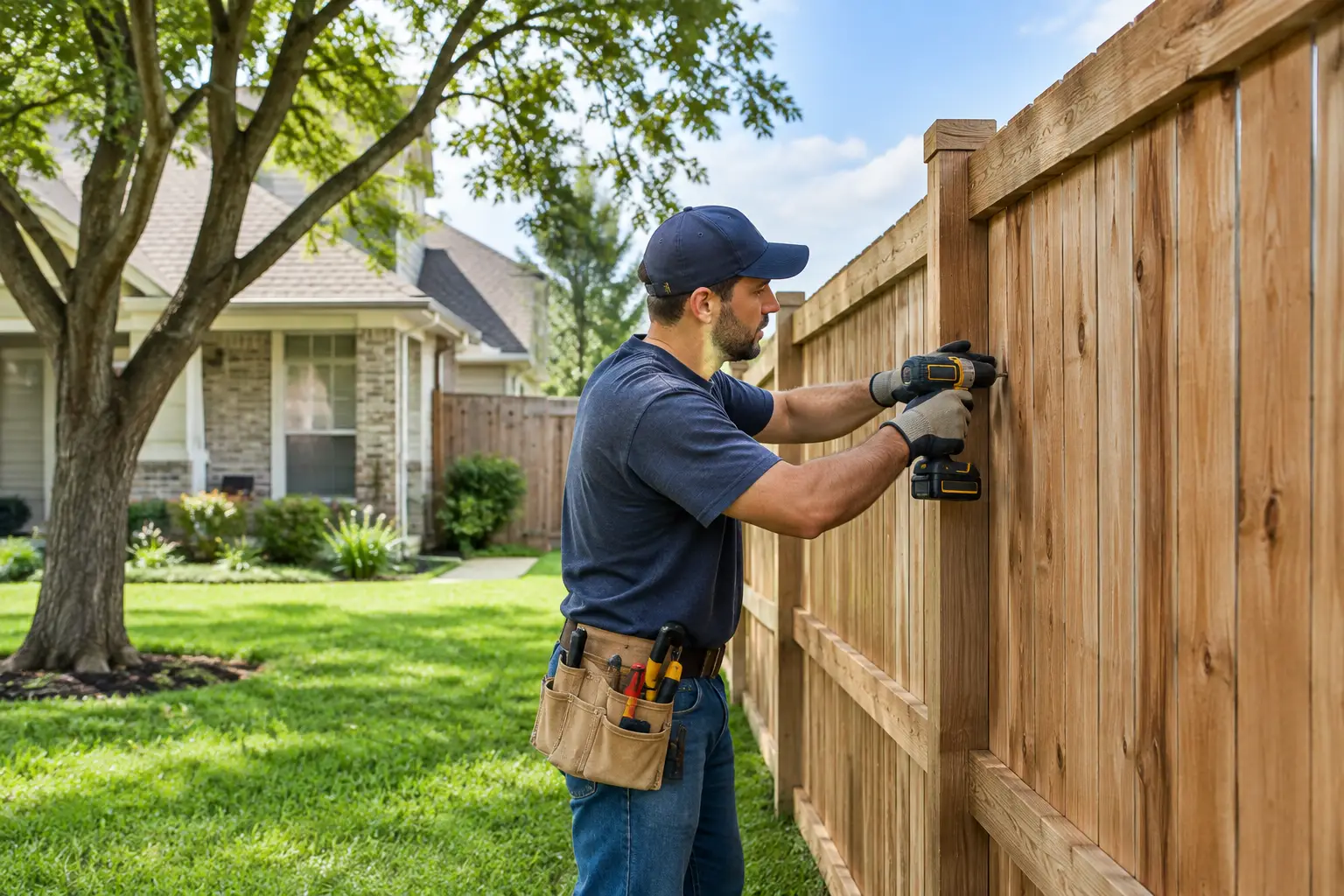
A good wood-fence repair may involve replacing broken pickets, reinforcing or replacing rails, resetting posts, correcting a lean, or rebuilding a gate. Matching the existing wood style matters, especially along the front or street-facing side of the property. Differences in picket width, cap style, rail placement, or stain color can make an otherwise sound repair stand out for the wrong reason.
Fresh wood will often look lighter than an older fence at first. That is normal. It can be left to weather naturally, or the owner can plan staining or sealing after the new wood has had appropriate time to dry. The right timing depends on the material and weather conditions, so it is worth asking before applying any finish.
When Metal, Aluminum, or Chain Link Needs Attention
Metal and aluminum fences do not rot, but they still need repairs after impacts, corrosion, settling, or gate wear. Bent sections, loose panels, damaged welds, rust around hardware, and misaligned gates can all affect security and appearance.
Aluminum fencing is a common choice around pools, landscaped yards, and neighborhood entry areas because it is low maintenance and open in appearance. Repairs often focus on replacing a damaged panel, correcting a post, or restoring gate alignment. Steel and ornamental metal fencing may need more specialized attention when welds, hinges, or rusted sections are involved.
Chain link fencing is often selected for commercial fencing, dog runs, rental properties, and utility areas. A torn fabric section, loose tension wire, damaged top rail, or failing gate can usually be repaired without replacing the complete fence. The key is restoring tension and proper support so the repair does not create a weak point beside the damaged area.
Gate Repair Is Not a Small Detail
A working gate is where a fence proves whether it was built and repaired correctly. Gates carry repeated movement and often take the first hit from ground settling, moisture, people leaning on them, or vehicles backing too close.
If a wood gate sags, the repair may include new hinges, a reinforced frame, diagonal bracing, a reset gate post, or replacement of swollen and deteriorated boards. For driveway gates and commercial access gates, hardware condition and latch alignment deserve close attention. A gate that requires force to open or close will usually get worse, not better.
For properties in Spring, Tomball, Conroe, The Woodlands, and nearby Houston communities, storm debris and tree limbs are another common source of gate and fence damage. If a fallen limb damages both fencing and nearby landscaping, coordinating fence work with tree service can prevent delays and avoid further damage during cleanup.
How to Decide Between Repair and Replacement
There is no single rule, but the condition of the structural components should lead the decision. Repairs make sense when damage is limited, the remaining fence is stable, and new materials can blend reasonably well with the existing section. Replacement may be the better value when widespread rot, repeated repairs, multiple unstable posts, or outdated fence design are creating ongoing problems.
Consider how long you expect to keep the property and what the fence needs to do. A landlord preparing a rental between tenants may prioritize a secure, clean-looking repair completed on schedule. A homeowner planning to stay for years may choose to replace a deteriorated section with a more durable material. A commercial owner may need a solution that improves access control and reduces ongoing maintenance.
A clear estimate should explain what is being repaired, what materials are being used, whether posts are included, how gates will be handled, and whether old damaged materials will be removed. Low pricing can be appealing, but it is only a good value if the work addresses the structural issue rather than covering it up.
Questions to Ask a Houston Fence Contractor
Before scheduling work, ask whether the contractor has inspected the posts and gate supports, not just the damaged boards. Ask how the new materials will match the existing fence, what work is included in the estimate, and whether the repair is intended as a short-term fix or a long-term solution.
It also helps to discuss property lines, utility locations, neighborhood requirements, and access to the work area before the crew arrives. For shared fences, communicate with the adjacent owner early when possible. That can prevent confusion about style, height, costs, or access once work begins.
GottaCallMAC works as a Houston-area fencing, gate, remodeling, and property improvement contractor for residential and commercial properties. For a fence repair, the practical goal is straightforward: identify what failed, explain the options clearly, and complete work that fits the property and budget.
Simple Maintenance That Extends Fence Life
A few routine habits can help a repaired fence last longer. Keep soil, mulch, and standing water from building up against wood posts and pickets. Trim vines and shrubs that trap moisture or place constant pressure on the fence. Check gate hinges and latches periodically, especially after major storms.
Do not wait for a small lean to become a collapsed section. Early repairs are often less disruptive, less expensive, and easier to blend with the existing fence. When the fence protects your yard, tenants, pets, equipment, or privacy, a careful inspection is a practical first step toward getting it back in shape.
