
 Commercial Remodeling
A fence has a job to do long before it becomes a finished line around the yard. It needs to give your family privacy, keep pets where they belong, define a rental property, protect a business area, or replace a worn-out section after a storm. When you are looking for a fence contractor Spring Texas property owners can depend on, the right choice comes down to clear communication, solid materials, and workmanship that fits the property. At GottaCallMAC, we help homeowners, landlords, property managers, and businesses make practical fencing decisions without making the process harder than it needs to be.
Start With What Your Fence Needs to Do
A new fence is not always a one-material, one-style decision. A backyard privacy fence may need a different approach than a pool-adjacent area, a side-yard gate, a commercial boundary, or a rental home that needs a durable, clean-looking replacement. Before requesting estimates, think about the fence’s main purpose: privacy, security, containment, appearance, access, or a combination of all of them.
For many Spring properties, privacy is the priority. Cedar and treated pine are both common choices because they provide the traditional wood-fence look many homeowners want. Cedar has a naturally attractive appearance and is a popular option for privacy fencing. Treated pine is a practical choice for property owners who want dependable material at a more budget-conscious price point. The better fit depends on your preferred look, maintenance expectations, and the condition of the surrounding fence lines.
If visibility matters more than privacy, aluminum or ornamental metal fencing can be a strong option. These styles can define a property without closing it in, and they are often considered around pools, landscaped areas, commercial properties, and front-facing sections. They are not the right answer for every yard, though. A metal fence will not block a neighbor’s view or create the private backyard feel that a wood privacy fence provides.
Fence Contractor Spring Texas Homeowners Can Plan With
The Houston-area climate is tough on outdoor materials. Humidity, heavy rain, shifting soil conditions, direct summer sun, and storm debris all affect how a fence ages. That does not mean every fence will fail early, but it does mean installation details matter.
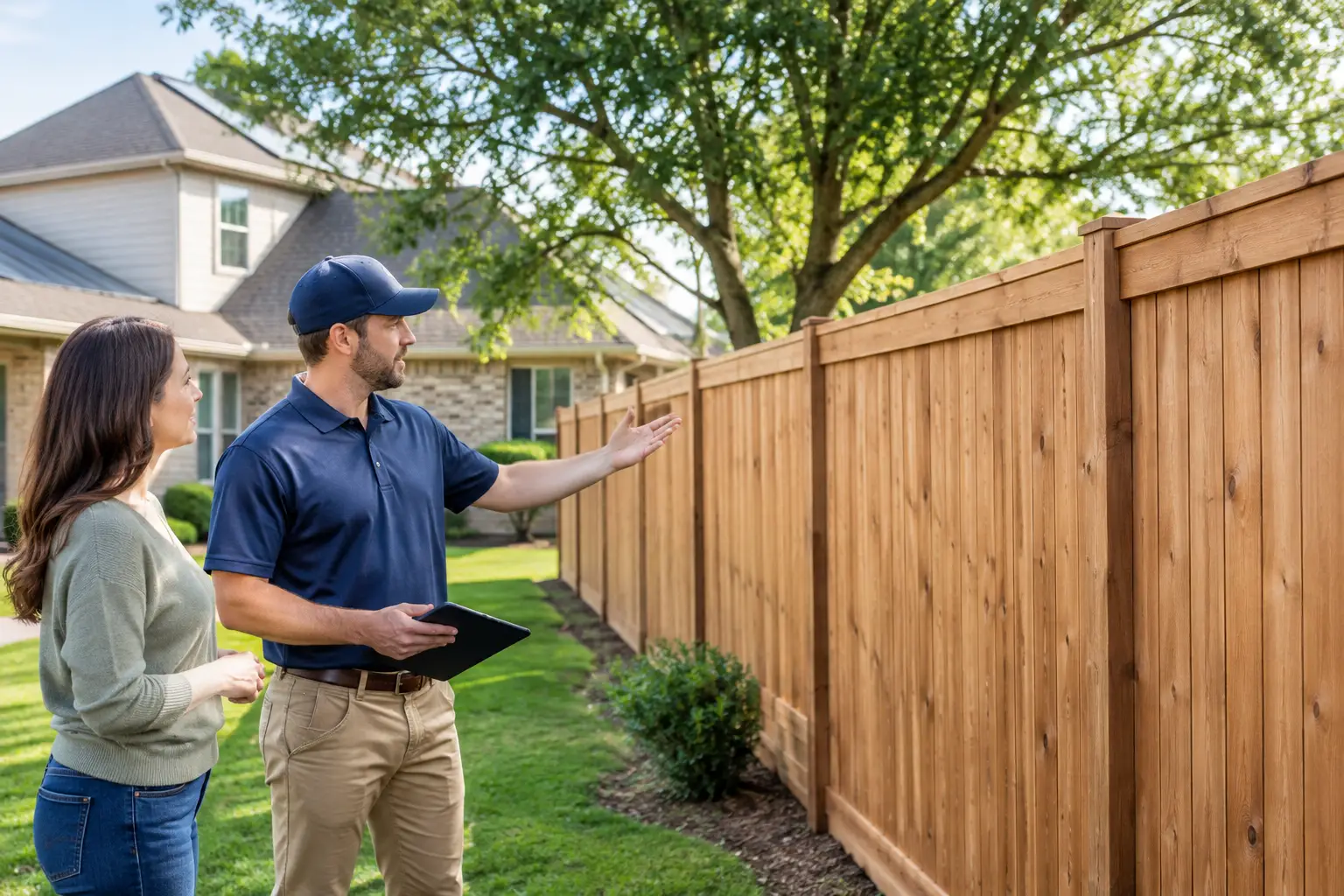
A good fence plan considers the property itself. Uneven grades, mature trees, drainage paths, existing fence connections, utility access, and gate locations can all change the scope of the project. This is why a quick price based only on a rough linear-foot number can leave out important details. A free on-site estimate gives the contractor a chance to see what is actually happening and explain the options clearly.
Ask how the posts, rails, pickets, and gates will be handled. For wood fencing, details such as rot boards and top caps can make a real difference in appearance and long-term maintenance. A rot board helps protect the lower portion of a fence from ground-level moisture and routine yard work. A top cap adds a finished look and helps cover the upper ends of pickets. Neither feature is mandatory for every project, but they are worth discussing when you want a more finished privacy fence.
Board-on-board fencing is another option many property owners consider. The overlapping pickets create more privacy and offer a more substantial appearance than a standard side-by-side layout. It uses more material and labor than a basic privacy fence, so it may not be the lowest-cost route. For a highly visible backyard or a property where privacy is the top concern, it can be a worthwhile trade-off.
Do Not Treat the Gate as an Afterthought
A fence can look great and still become frustrating if the gate is poorly planned. Gates get opened, closed, leaned on, bumped by equipment, and exposed to weather more than nearly any other part of the fence. Their placement, width, swing direction, framing, and hardware should be part of the conversation from the beginning.
Think through how the space is used. A narrow walk gate may be enough for foot traffic, while a wider opening may be needed for lawn equipment, trash access, a trailer, or commercial deliveries. Sometimes an existing gate can be repaired with new hardware, alignment work, or replacement boards. In other cases, sagging, deteriorated framing, or damaged posts point to a full replacement being the smarter long-term choice.
GottaCallMAC handles gate installation and gate repair alongside fence projects, so the goal is not simply to place a gate in the opening. The goal is to create access that works for the way you use the property.
Know When Repair Makes Sense
Not every damaged fence needs to be torn out. A repair can be a cost-effective option when the issue is limited to a few leaning posts, broken pickets, a damaged gate, loose rails, or a localized section affected by a fallen limb. If the rest of the fence is sound, targeted work may extend its useful life and restore the look of the property.
Replacement becomes more reasonable when problems repeat along multiple sections. Widespread rot, deteriorating posts, recurring gate issues, or a fence that no longer matches the security and privacy needs of the property can make patching less practical. A contractor should be willing to explain that difference plainly rather than push one answer for every job.
Storm damage deserves a timely look, especially when trees or branches are involved. A downed limb can damage fencing in a way that is easy to see, but a nearby leaning tree, hanging branch, or uprooted root area can create another problem later. Coordinating tree trimming, tree removal, debris cleanup, and fence repair through one local contractor can simplify the work and help restore the property faster.
Questions Worth Asking Before You Hire
The estimate process should leave you with a clear picture of the project, not more uncertainty. You do not need a technical construction background to ask good questions. Start with the material options, the fence style, and which existing sections will be repaired or removed. Then ask how gates, transitions to neighboring fences, and visible finishing details will be addressed.
It also helps to ask what can affect the final scope after the site is evaluated. Buried obstacles, difficult access, tree roots, uneven terrain, and hidden deterioration in an existing fence can all matter. Straight answers up front help prevent surprises later.
Look for a contractor who returns calls, shows up to review the property, and puts the work in understandable terms. Price matters, but the lowest number does not always account for the same material quality, gate construction, removal work, or finishing details. A fair estimate should let you compare the actual value of each option.
Keep a New Fence Looking Its Best
Once the fence is installed, a little regular attention goes a long way. Keep soil, mulch, and heavy vegetation from staying packed against the bottom boards. Check gates periodically for loose hardware or signs that alignment is changing. After severe weather, walk the fence line and look for shifted posts, loose pickets, or branches rubbing against the structure.
Wood fences naturally weather over time. Cleaning and appropriate staining or sealing can help preserve the appearance, depending on the product and the condition of the wood. If you are unsure whether a section needs maintenance, repair, or replacement, it is better to assess it before a small issue spreads.
A fence project should leave your property more useful, secure, and finished than it was before. Whether you need a new cedar privacy fence, treated pine replacement, board-on-board upgrade, ornamental metal fence, or a gate that finally works right, GottaCallMAC is ready to provide a clear estimate and practical advice. For dependable fencing and property improvements in Spring and across the Greater Houston area, call GottaCallMAC at 936-290-3502 or visit www.gottacallmac.com to request your free estimate. A well-planned fence is not just a boundary – it is one less property problem you have to think about.
