
 Roofing Services
A leaning privacy fence after a Cypress thunderstorm is more than an eyesore. It can create a safety concern, weaken the remaining sections, and leave a backyard less secure for children, pets, tenants, or equipment. Fence repair Cypress property owners need should begin with a close look at what actually failed – not a quick patch that hides a deeper problem.
Houston-area weather is hard on fences. Heavy rain softens soil around posts, high winds strain panels and gates, and long stretches of heat and humidity wear down untreated wood. Knowing whether a fence needs a targeted repair or a larger replacement helps homeowners and property managers spend wisely.
Start With the Type of Fence Damage
Not every damaged fence needs to come down. A few loose pickets, one broken rail, or a sagging gate can often be repaired without disturbing solid posts and panels nearby. The key is finding the source of the issue.
A fence that leans in one small area may have a failed post. If the wood around the post is soft, cracked, or loose in the ground, replacing pickets alone will not solve the problem. The post needs to be reset or replaced so the repaired section has a stable foundation.
Wind damage often looks worse than it is. A panel may be pushed over while the posts remain sound, allowing a contractor to rebuild that section rather than replace the entire fence line. On the other hand, damage across multiple sections, especially when posts are leaning in different directions, can signal widespread age or soil-related failure.
For commercial fencing, inspect the fence line for bent posts, damaged chain link fabric, loose hardware, and gaps near gates. A small opening can become a security issue quickly at a rental property, business, storage area, or construction site.
When Fence Repair Makes the Most Sense
Repair is usually the practical choice when the majority of the fence is structurally sound and the problem is limited. Replacing a few boards or rails can restore privacy and appearance without paying for materials that do not need to be removed.
Common repair projects include replacing warped cedar pickets, repairing broken pine rails, resetting one or two posts, securing loose panels, and fixing a gate that drags or will not latch. A good repair should match the height, layout, and material of the existing fence as closely as possible.
Cedar is a popular choice for residential fencing because it has a clean, natural appearance and holds up well when maintained. Pine can be a cost-conscious option, particularly for a straightforward privacy fence. For metal, aluminum, and chain link fencing, repairs often focus on posts, brackets, panels, hardware, and gate components rather than the fence surface itself.
A repair is also a smart move when preparing a home for sale, turning over a rental, or correcting a problem along one side of a shared property line. It improves curb appeal and function without forcing a full project before it is necessary.
Repairing a Fence After a Storm
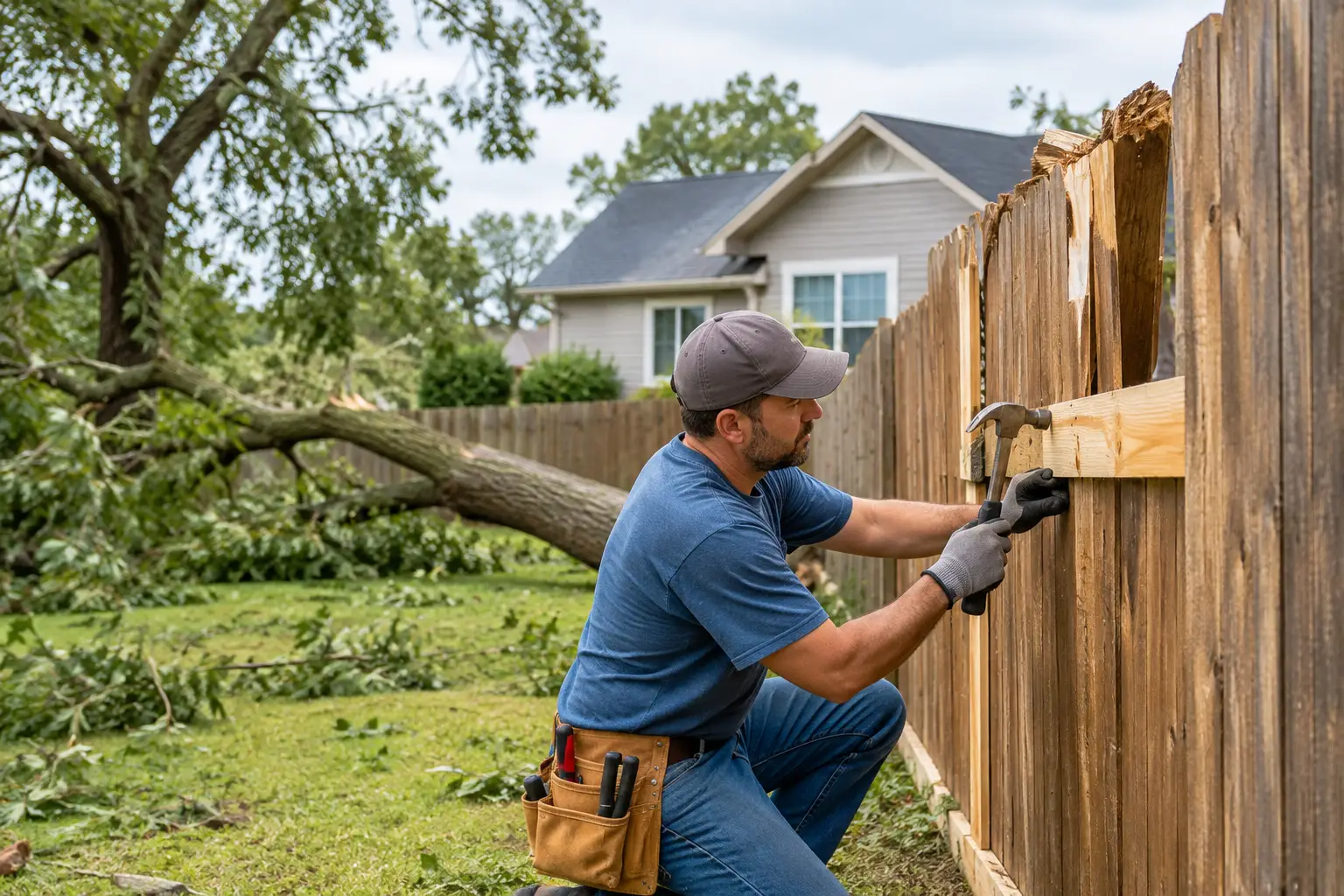
After strong winds, wait until conditions are safe, then walk the perimeter carefully. Do not lean on loose sections or try to straighten a fence by force. Damaged fasteners, splintered rails, and unstable posts can shift unexpectedly.
Take clear photos before moving debris or making temporary repairs. If a fallen tree limb caused the damage, the fence repair may need to be coordinated with tree removal or cleanup first. Clearing the area properly gives the repair crew room to assess posts, panels, and gates without missing hidden damage.
Temporary bracing can help prevent a damaged section from falling farther, but it is not a long-term repair. Water-damaged or rotted lumber will continue to weaken, and a post that has pulled loose from wet soil needs a proper reset.
Signs It May Be Time to Replace the Fence
A fence does not have to be completely down to be at the end of its useful life. Replacement becomes more cost-effective when repairs are needed in several places or when the main structure is failing.
Look for widespread rot at the bottom of posts, multiple leaning sections, repeated rail failures, extensive cracking, or pickets that are badly warped throughout the fence line. If a gate will not stay aligned because the surrounding posts and frame have deteriorated, repairing only the gate may provide limited value.
Appearance matters too, but structural condition matters more. Faded or stained boards can often be cleaned, stained, or replaced selectively. A fence with numerous loose posts and failing rails needs more than cosmetic attention.
For older fences, ask for an honest comparison between repairing the worst sections and replacing the full run. The lower upfront price is not always the better value if another section is likely to fail soon. A contractor should explain the condition clearly and give you choices based on the property, budget, and expected use of the fence.
What Affects Fence Repair Cost in Cypress?
Fence repair pricing depends on the material, damage location, access to the work area, and how much of the structure must be rebuilt. Replacing a handful of pickets is a much smaller job than digging out broken concrete, installing new posts, and rebuilding several panels.
Gate repairs can also vary widely. Sometimes the fix is as simple as new hinges, a latch adjustment, or a replacement board. In other cases, the gate frame is twisted, the posts have shifted, or the opening needs to be rebuilt to make the gate operate correctly.
Access is a real factor on Cypress properties. Tight side yards, landscaping, drainage areas, pools, utility equipment, and neighboring structures can affect labor and planning. For landlords and commercial property owners, scheduling around tenants, customers, or site operations may also shape the scope of work.
The best way to avoid surprise costs is to request a detailed estimate that identifies the damaged areas, materials, repair method, and any related work needed before the fence can be repaired. If the damage was caused by a storm or fallen limbs, make sure the estimate distinguishes cleanup from the fence work itself.
Do Not Overlook the Gate
A fence can look straight while the gate tells a different story. Gates carry more movement and stress than fixed panels, especially on busy family properties, rentals, and commercial sites. When a gate begins to drag, sag, scrape the ground, or resist latching, dealing with it early can prevent damage to the posts and frame.
Gate repair may involve resetting posts, reinforcing the frame, replacing hinges, adjusting the latch, or installing a better support system. A properly functioning gate should open and close without excessive force and should latch securely without being lifted or pushed into place.
If you are upgrading a damaged fence, it can be a good time to rethink the gate size and placement. Wider access may make yard maintenance easier, while a more secure gate can improve convenience for pets, tenants, or service access.
Choosing a Local Fence Contractor
The right contractor should inspect the damage in person when possible, explain whether repair or replacement makes more sense, and provide straightforward recommendations. Be cautious of anyone who promises an answer without looking at the posts, rails, gate, and condition of the surrounding fence.
Ask whether the contractor handles the type of fencing you have and whether related needs can be addressed during the same project. For example, storm-damaged fencing may involve debris removal, tree work, gate repair, or exterior property repairs. Working with one capable local contractor can simplify scheduling and reduce the chance that one unfinished task delays the next.
GottaCallMAC serves Cypress and the greater Houston area with residential and commercial fence and gate services, along with practical property improvement support when a project involves more than the fence alone. Homeowners, landlords, and property managers can request a free estimate by calling 936-290-3502.
Simple Maintenance That Extends Fence Life
A little attention can delay major repairs. Keep soil and mulch from building up against wood posts and pickets, since trapped moisture speeds up deterioration. Trim back vines and branches that hold moisture against the fence or add wind pressure during storms.
Check hardware and gates a few times each year, particularly after severe weather. Refasten loose boards before they tear free, watch for early signs of post movement, and keep drainage flowing away from the fence line when possible. For wood fences, appropriate sealing or staining can help protect the surface from sun and moisture.
A fence does not need to be perfect to be worth saving, but it does need to be stable. Addressing one weak section now can protect the rest of the fence line and keep a manageable repair from becoming a full replacement project later.
