
 Roofing Services
A new fence can change the way your property feels before you ever step inside. It can give your family more privacy, keep pets safely contained, define a commercial lot, and add the finished look that a home in Tomball deserves. But fence installation Tomball Texas property owners can rely on is not just about putting boards in the ground. It starts with a layout, material, and installation plan that fits the property, the budget, and the Texas weather.
Start With What Your Fence Needs to Do
The best fence is not always the tallest or the most expensive one. It is the one that solves the problem you actually have. A backyard with active dogs needs secure spacing, dependable gates, and a fence height that keeps everyone where they belong. A home near a busy street may need privacy and sound reduction. A business property may prioritize access control, boundaries, and a durable material that holds up with less maintenance.
Before choosing a style, consider who uses the space and how. Think about children, pets, pool areas, neighbors, equipment access, and future landscaping. A fence that looks great but puts the gate in the wrong place becomes a daily headache. Planning the layout first helps avoid that problem.
Property lines also deserve careful attention. If there is any uncertainty about where your property ends, confirm the boundary before installation begins. This protects your investment and helps prevent a simple project from turning into a neighbor dispute.
Fence Installation in Tomball, Texas: Material Choices That Make Sense
Tomball properties deal with strong sun, heavy rain, humidity, shifting soil, and occasional storm damage. Those conditions do not mean there is one correct fencing material. They do mean the material should be chosen with its real maintenance needs and expected life in mind.
Cedar for Privacy and Natural Curb Appeal
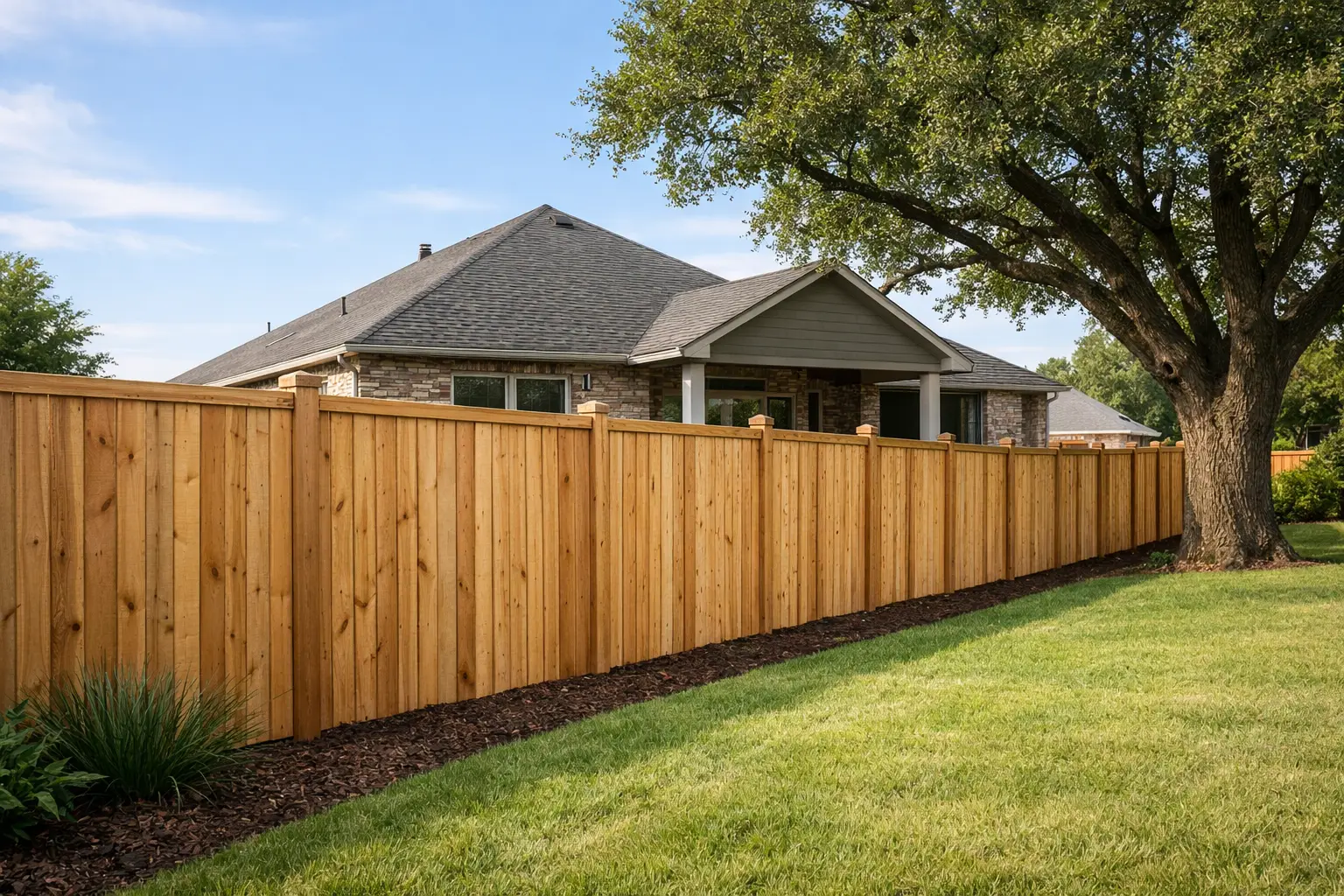
Cedar remains a popular choice for residential privacy fences because it has a warm, natural appearance and works well with many home styles. It can be built in standard privacy designs or customized with top caps, trim, lattice details, or decorative gates. Cedar is a strong fit for homeowners who want an attractive wood fence and are willing to maintain it over time.
Wood will naturally weather outdoors, especially in Southeast Texas. Sealing or staining on a regular schedule can help preserve its appearance and protect the investment. The trade-off is clear: cedar provides classic character, but it requires more upkeep than aluminum or many metal options.
Treated Pine for Practical Value
Pressure-treated pine is often a budget-friendly choice for homeowners who want privacy, security, and a straightforward design. It can be used for solid backyard fences, picket styles, and custom layouts. With proper construction and maintenance, treated pine can provide dependable service while keeping the project cost under control.
The key is not to focus only on the price of the boards. Posts, rails, fasteners, gate framing, and installation quality all affect whether a pine fence stays straight and secure after multiple wet seasons. A low upfront quote may not be a bargain if it skips the details that make a fence last.
Aluminum and Metal for Low-Maintenance Strength
Aluminum fencing is a clean choice around pools, patios, gardens, and properties where visibility matters. It offers a refined look without blocking the view and generally needs far less maintenance than wood. Metal fencing can also serve commercial sites, side yards, and areas where extra security is needed.
These options are not designed to create full privacy on their own, so they are usually best when containment, appearance, and durability matter more than screening. For some properties, a combination works well, such as a privacy fence along the back and aluminum fencing around a pool or front-facing section.
Split Rail and Dog Fence Options
A split rail fence brings a more open, traditional look to larger lots, rural-style properties, and areas where a solid wall of fencing would feel out of place. It can also be paired with wire mesh when pet containment is part of the goal. Dog fencing should be planned around your pet’s size, jumping ability, and digging habits, not just the size of the yard.
The Installation Details That Protect Your Investment
A fence can have premium materials and still fail early if the installation is rushed. In the Tomball area, post depth and concrete setting matter because wet ground and soil movement can affect alignment. Posts should be set with the fence height, wind exposure, soil conditions, and gate loads in mind.
Gates need special attention. They are moving parts, and they receive more stress than a standard fence panel. A properly built gate needs strong posts, solid framing, quality hardware, and enough clearance to open and close without dragging. Whether you need a walk gate, double driveway gate, or access point for lawn equipment, it should be designed for daily use rather than treated as an afterthought.
Drainage is another practical concern. A fence should follow the grade of the yard in a way that looks intentional while leaving reasonable clearance where needed. Holding moisture against wood, blocking a drainage path, or creating gaps that let pets escape can all lead to problems later.
Plan for Privacy Without Closing Off Your Property
Privacy is one of the most common reasons homeowners install a fence, but privacy does not have to mean making every side of the yard identical. The back and sides may call for a tall wood privacy fence, while the front or pool area may look better with aluminum. Decorative elements can soften the appearance of a long run of fencing without sacrificing coverage where it matters.
If you are replacing an aging fence, take the opportunity to improve the original design. Move a gate to a more useful location, widen an access point for equipment, or create a separate enclosed area for dogs. Small layout changes often add more value to daily life than an upgraded board style alone.
For commercial properties and rental homes, practical decisions matter even more. Consider maintenance access, trash enclosure needs, tenant use, visibility from the street, and the ability to repair a damaged section without rebuilding the entire fence. A good installation plan accounts for the property after the crew leaves.
Get a Clear Estimate Before Work Begins
A useful fence estimate should be easy to understand. It should identify the material, height, linear footage, style, gates, removal of old fencing if needed, and any site conditions that could affect the job. This gives you a real basis for comparing proposals instead of trying to compare one vague total against another.
Ask about the expected timeline, how the crew handles existing fence removal, and what happens if hidden issues appear along the line. Trees, roots, uneven grades, buried obstacles, and difficult access can affect the work. Honest communication upfront is better than surprises halfway through the project.
Gotta Call Mac provides free estimates for custom fencing, repairs, gates, and related property projects, with dependable workmanship and competitive pricing. For homeowners who are also planning tree work, land clearing, painting, siding, or a deck, working with one trusted local contractor can reduce the back-and-forth of coordinating multiple crews.
When Repair Makes More Sense Than Replacement
Not every leaning section or broken picket requires a complete new fence. If the posts are solid and most of the structure remains in good condition, targeted repairs may be the smart move. Replacing a damaged gate, resetting a few posts, repairing storm-damaged panels, or swapping out worn boards can extend the life of the existing fence.
Replacement is usually the better long-term decision when posts are failing across multiple sections, rot is widespread, the fence no longer meets your privacy or security needs, or repairs would become a repeated expense. A straightforward on-site assessment can help determine which approach offers better value.
A fence should make your property easier to enjoy, easier to manage, and better protected. Choose a design that fits the way you live now, leave room for the changes you may make later, and make sure the work is built carefully enough to stand up to Texas weather.
