
 Roofing Services
A new fence has to do more than mark a property line. It needs to hold up to hard rain, humid summers, strong sun, active kids, pets, and the occasional Texas storm. When comparing a cedar fence vs pine fence, the best choice comes down to what you want to spend now, how much maintenance you will accept, and how long you expect the fence to perform.
For many homeowners in Spring, The Woodlands, Conroe, and the greater Houston area, cedar is the premium-looking option with natural resistance to decay. Pressure-treated pine is the budget-friendly workhorse. Both can make a solid privacy fence when installed correctly. The difference is how they age, what they need from you, and where shortcuts can cost you later.
Cedar Fence vs Pine Fence: The Real Differences
Cedar and pine do not start on equal footing. Cedar contains natural oils that help it resist moisture damage and insects. Pine used for fencing is generally pressure-treated, meaning preservatives are forced into the wood to help it fight rot and insect activity. That treatment matters in Southeast Texas, where untreated pine can break down quickly.
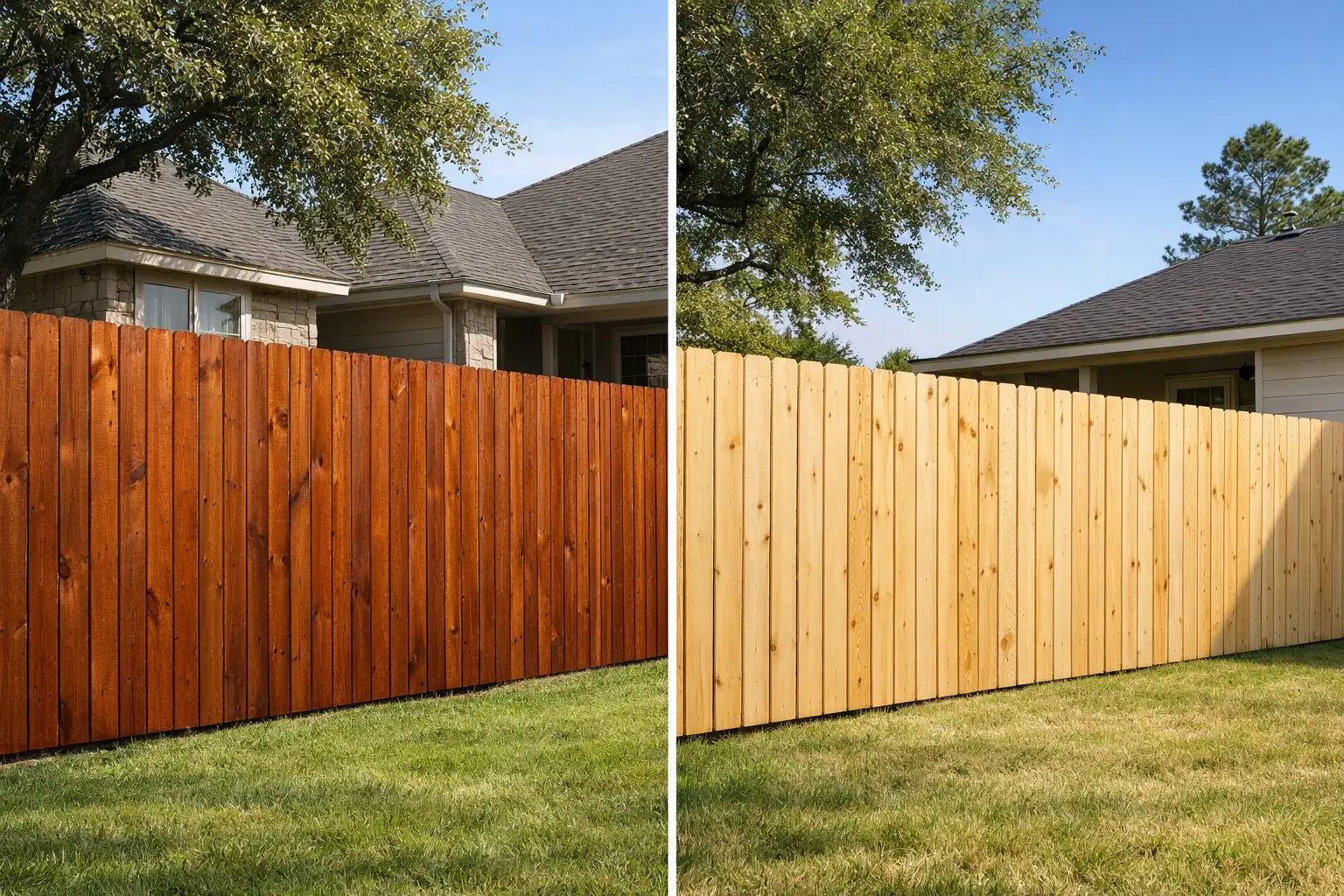
Cedar usually has a more refined appearance right after installation. Its warm color, visible grain, and fewer knots give a fence a clean finish that fits many homes, from traditional neighborhoods to newer developments. Pine has more knots and a lighter, greener tone when fresh from the lumberyard. Once it dries and is stained, though, a well-built pine fence can still look sharp and add real curb appeal.
The biggest practical difference is movement. Cedar is generally more stable, so boards are less likely to twist, cup, or shrink dramatically as they dry. Pressure-treated pine can shrink and develop checks, which are lengthwise splits caused by drying. Checks are common and do not always mean a board has failed, but they can affect the appearance of a fence over time.
Cedar’s strengths and limitations
Cedar is a strong choice when long-term appearance and lower-maintenance performance are high priorities. Its natural resistance gives it an advantage above ground, especially for fence pickets and rails that see constant humidity and rain. It also tends to stay flatter and straighter than pine, which can mean a more consistent-looking privacy fence as the years pass.
That does not mean cedar is maintenance-free. Texas sun can turn unstained cedar gray, and moisture can still lead to mildew or surface discoloration. Cedar is also a softer wood, so it may dent or scratch more easily than dense pressure-treated pine. For homes with big dogs, rough play near the fence line, or equipment regularly moving through a side yard, that is worth considering.
Cedar costs more upfront. Depending on fence height, design, lumber grade, gates, and site conditions, the price difference can be meaningful. It makes sense to pay for cedar when the fence is a major visual feature of the property, when you plan to stay in the home for years, or when you want fewer concerns about boards changing shape after installation.
Pine’s strengths and limitations
Pressure-treated pine is common for a reason: it delivers dependable function at a lower starting cost. It is readily available, works well for privacy fences, and can be stained or painted after it has dried properly. Pine is also structurally strong, which is why it is often used for posts, rails, and framing even when cedar pickets are selected for the visible portion of the fence.
The main trade-off is upkeep and consistency. Pine needs the protection from its pressure treatment, plus a good stain or sealant schedule if you want it to keep a finished appearance. Because the boards often arrive with higher moisture content, they need time to dry before many finishes can be applied. Applying a stain too soon can lead to peeling, blotchy color, or poor absorption.
Pine can be the right call for a rental property, a large fence project where budget matters, or a homeowner who wants a good-looking fence without paying cedar pricing. A properly installed pressure-treated pine fence can provide years of service. The key is not treating it as a disposable option. Good materials, solid posts, proper fasteners, and regular maintenance still matter.
Cost, Lifespan, and Maintenance in Texas
Material price is only one part of fence cost. A low bid can become expensive if it leaves out proper post depth, concrete, gate reinforcement, debris removal, or repairs to damaged sections near the build area. The right comparison is not simply cedar boards against pine boards. It is cedar versus pine in the same fence design, built to the same standard.
Cedar commonly lasts longer above ground when it is cared for, while pressure-treated pine can offer a solid service life at a lower cost. Exact lifespan varies widely. Soil drainage, sprinkler overspray, shade, standing water, termite pressure, and maintenance habits can change the result by years.
In the Houston area, the bottom of the fence is often where problems begin. Pickets that stay in contact with wet soil, leaves trapped along the base, and landscaping that keeps wood damp all encourage decay. A small gap between the pickets and soil improves drainage and helps the fence dry after rain. Keeping sprinklers from hitting the fence every day also makes a noticeable difference.
Whether you choose cedar or pine, plan to inspect the fence at least once a year. Look for loose pickets, leaning posts, rusting hardware, gate sag, and areas where mulch or soil has built up against the wood. Catching one loose rail or failing picket early is far less expensive than waiting for a whole section to fall after a storm.
Construction Quality Matters as Much as Wood Species
A cedar fence with weak posts will fail. A pine fence with deep, secure posts and careful framing can outperform a poorly built cedar fence. The wood decision matters, but the installation details decide whether the fence stays straight and functional.
For a privacy fence, ask what is included in the quote. A complete proposal should clearly address these details:
- Fence height, picket style, and board thickness
- Post size, spacing, depth, and concrete installation
- Rail configuration and fastener type
- Gate width, framing, hinges, and latch hardware
- Removal and disposal of old fence materials
Post material deserves special attention. Many quality cedar fence projects use pressure-treated posts because posts sit in or near the ground, where moisture exposure is greatest. That combination gives you the visual appeal of cedar with the ground-contact durability of treated lumber where it counts. It is not cutting corners. It is often the practical way to build a fence for local conditions.
Gates also deserve more planning than most property owners expect. A wide gate needs proper bracing and strong hardware, especially if it will be used for lawn equipment, trailers, or frequent access. A gate that is not built square can sag quickly, regardless of whether the surrounding fence is cedar or pine.
Which Fence Is Right for Your Property?
Choose cedar if you want a premium natural look, expect to own the property long term, and prefer lumber that is generally more stable as it ages. Cedar works especially well for front-facing side fences, outdoor living areas, and properties where the fence is part of the overall design.
Choose pressure-treated pine if upfront affordability is the priority and you are willing to keep up with staining, sealing, and routine repairs. It is a practical choice for large backyards, rental homes, commercial boundaries, and projects where you need dependable privacy without stretching the budget.
A mixed-material approach can also be smart. Pressure-treated posts and framing paired with cedar pickets can balance performance, appearance, and cost. The right setup depends on the layout of your property, drainage conditions, gate needs, and the type of fence you want to live with year after year.
Before making a final decision, get a clear estimate that compares the same design in both materials. Gotta Call Mac can walk you through cedar, pine, gates, repairs, and site conditions so you can choose a fence built for your yard, your budget, and Texas weather.
