
 Roofing Services
Best Backyard Fence Materials for Texas Homes
A fence that looks great in the showroom can become a costly headache after a few Texas summers, heavy rains, and strong wind events. Choosing the best backyard fence materials means looking beyond the upfront price. Your fence needs to match the way you use your yard, the privacy you expect, your maintenance budget, and the conditions around your property.
For homeowners across Spring, The Woodlands, Conroe, Houston, and nearby communities, the right answer is rarely one-size-fits-all. Cedar may be the best fit for a private backyard retreat. Aluminum can make more sense around a pool or along a scenic property line. A practical conversation about your goals before installation helps prevent regret later.
How to Choose the Best Backyard Fence Materials
Start with the job the fence needs to do. A privacy fence for a busy neighborhood has different requirements than a dog fence, a decorative front-yard boundary, or a durable enclosure for a commercial property. Height, visibility, gate placement, local rules, and the layout of your land all matter.
Texas weather should also be part of the decision. Strong sun can fade finishes, humidity can affect wood, and saturated ground can put pressure on posts after long periods of rain. Quality installation matters just as much as the material itself. A well-built fence starts with properly set posts, straight lines, strong gates, and materials selected for the conditions they will face.
Before settling on a material, consider these four questions: Do you need full privacy? How much maintenance are you willing to handle? Are pets or children using the yard? And are you planning to stay in the home long enough for a higher-cost material to pay off?
Cedar Fencing: A Strong Choice for Privacy
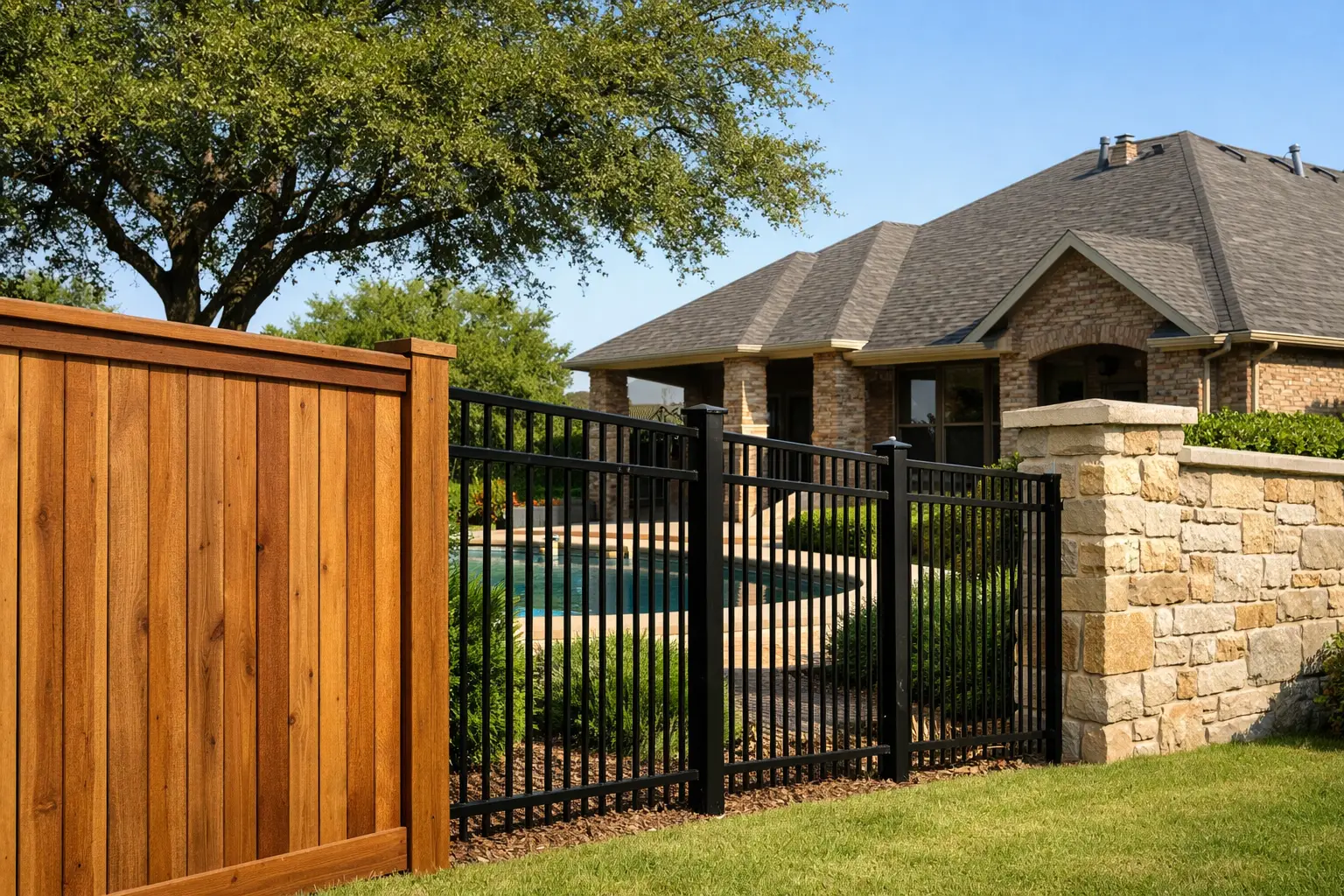
Cedar remains one of the most popular backyard fence materials for good reason. It has a warm, natural appearance that works well with traditional homes, new construction, decks, gardens, and outdoor living areas. Cedar also contains natural oils that give it better resistance to insects and decay than many lower-cost wood options.
For a standard backyard privacy fence, cedar offers a good balance of appearance, durability, and value. It can be installed in classic vertical pickets, board-on-board designs, horizontal styles, shadowbox layouts, and custom patterns. That flexibility makes it easy to create a fence that fits your home instead of looking like an afterthought.
Cedar does need care. Sun, rain, and moisture will gradually change its color, and unprotected boards can crack or warp over time. Staining or sealing the fence periodically helps preserve the wood and extend its service life. If you want a natural look and do not mind routine maintenance, cedar is often hard to beat.
When Cedar Makes the Most Sense
Choose cedar when privacy and curb appeal are your top priorities. It is especially well suited for homeowners who want a solid fence around a backyard, patio, play area, or pool-adjacent space. It is not always the lowest-cost choice, but its appearance and performance can make it a smart long-term investment.
Pine Fencing: Budget-Friendly and Versatile
Pressure-treated pine is a dependable option for property owners focused on keeping initial costs down. It is widely available, can be built into many of the same privacy and picket styles as cedar, and is treated to resist rot and insect damage.
Pine is a practical choice for rental properties, large yards, quick replacements, and projects where the fence needs to do its job without stretching the budget. It can be painted or stained, giving you flexibility with color and finish.
The trade-off is maintenance and long-term appearance. Pine can be more likely to shrink, warp, split, or develop knots as it ages, particularly when exposed to intense heat and moisture. That does not make it a poor material. It simply means installation quality, regular inspection, and protective finishing matter more. A properly built pine fence can still provide years of solid service.
Aluminum Fencing: Clean, Durable, and Low Maintenance
Aluminum fencing is a strong contender when you want clear boundaries without blocking the view. It has a clean, upscale appearance and works especially well around pools, landscaped yards, ponds, and homes with attractive wooded or open views.
Unlike wood, aluminum does not rot, splinter, or require staining. Quality powder-coated aluminum holds up well against moisture and normal outdoor wear. It is also easier to adapt to sloped ground than many rigid fence systems, which can be helpful on uneven lots.
Aluminum is not designed for privacy. The open picket style allows visibility through the fence, so it will not hide a neighboring property or create a secluded outdoor area. It can also cost more upfront than basic wood fencing. Still, for homeowners who value low maintenance and a polished look, aluminum can be money well spent.
Pool and Safety Considerations
A pool fence has to do more than look good. Gate hardware, self-closing features, latch placement, fence height, and spacing requirements can all affect safety and code compliance. Aluminum is a common choice because it creates a secure barrier while keeping sight lines open for easier supervision.
Metal Fencing: Built for Security and Tough Conditions
Metal fencing is a broad category that can include ornamental steel, welded wire panels, corrugated metal privacy panels, and other heavy-duty options. It is often chosen for commercial properties, large acreage, security-focused applications, and homeowners who prefer an industrial or modern style.
Ornamental steel can offer a more substantial feel than aluminum and may be a good fit for entry areas or high-traffic boundaries. Corrugated metal panels can create excellent privacy and a distinctive modern look. Welded wire and ranch-style combinations may make sense for larger properties where containment matters more than complete privacy.
The material and finish matter here. Untreated or poorly coated metal can rust, especially where water sits against posts or panels. A professional installer can recommend the right post system, coating, and layout for the look and performance you need.
Chain Link and Split Rail: Practical Options for Specific Jobs
Chain link is not usually selected for curb appeal, but it remains one of the most practical choices for dog runs, side yards, commercial spaces, and large areas that need affordable containment. Vinyl-coated chain link can soften the appearance while adding another layer of protection. Privacy slats are available, but they do not create the same solid look as a true wood or metal privacy fence.
Split rail fencing is a natural fit for rural properties, larger lots, and homes that want an open country look. It marks boundaries without closing off the landscape. On its own, it is not suitable for small dogs or full privacy, but it can be paired with wire mesh when animal containment is needed.
Do Not Overlook Posts, Gates, and Drainage
The fence boards get the attention, but the structure behind them determines whether the fence stays straight. Posts should be sized correctly, set at the right depth, and installed with local soil and drainage conditions in mind. A low-quality post installation can shorten the life of even premium cedar or metal panels.
Gates deserve the same attention. A gate that sags, drags, or will not latch properly becomes frustrating fast. Wide driveway gates, walk gates, and pet-access gates need sturdy framing and hardware designed for their weight and daily use.
If your yard holds water after rain or has roots, slopes, or uneven terrain, discuss it before the work begins. Adjusting the plan early is far easier than trying to repair a shifting fence line later.
Get a Fence That Fits Your Property
The best material is the one that meets your priorities without creating more upkeep or expense than you expected. Cedar is a proven privacy favorite. Pine offers affordable flexibility. Aluminum delivers a clean, low-maintenance boundary, while metal, chain link, and split rail solve specific security, containment, and property-layout needs.
At GottaCallMAC, we help property owners choose and install fencing built for real Texas yards, not just a catalog photo. A free estimate gives you the chance to compare options, ask practical questions, and plan a fence that works for your home, pets, family, or business. The right fence should make your property easier to enjoy every day.
