
 Roofing Services
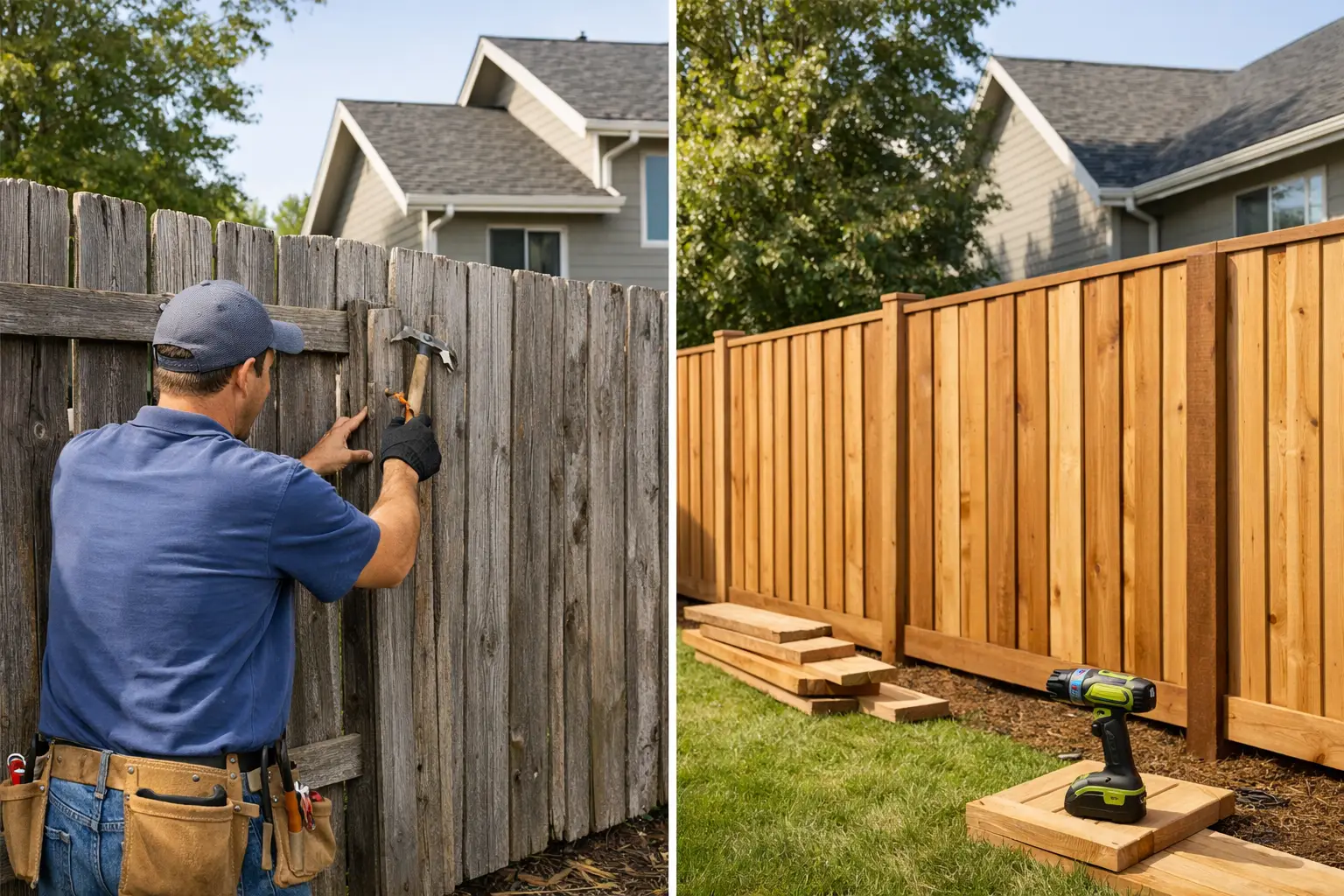
Fence Repair vs Replacement: What Makes Sense?
A leaning fence after a Gulf Coast storm can look worse than it really is. Other times, a fence that seems fixable is already failing below the surface. That is why fence repair vs replacement is not just about what you can see from the driveway – it is about structure, safety, cost, and how long you expect the fence to hold up.
For homeowners, property managers, and commercial owners, the right call usually comes down to one question: are you putting money into a fence that still has life left, or are you delaying a full replacement that is already overdue? A smart decision now can save you from repeat repairs, callbacks from tenants, or a bigger bill six months from now.
Fence repair vs replacement starts with the type of damage
Not all fence damage means the same thing. A few loose pickets, one damaged gate, or a section pushed out by wind may be a straightforward repair. If the posts are still solid and most of the fence is in good shape, repair is often the better value.
Replacement becomes more likely when the damage is widespread or structural. If multiple posts are rotted, panels are warping across long stretches, or the fence is pulling away in several places, repairs can turn into patchwork fast. At that point, you are not really fixing the fence – you are chasing failures one section at a time.
Wood fencing makes this especially tricky. Cedar and pine can often be repaired when damage is isolated, but once rot spreads into posts or rails, the problem is bigger than surface appearance. Metal and aluminum fences may hold up longer overall, but bent sections, rusted connections, or impact damage can still make replacement the more practical move.
Age matters more than many owners expect
A newer fence with one bad section is usually worth repairing. An older fence with repeated issues is a different story.
If your fence is near the end of its expected lifespan, every repair should be viewed in context. Replacing a few boards on a 15-year-old wood fence may solve the immediate problem, but it does not reset the age of the rest of the structure. You may spend money on one section now, then face post failure, gate sagging, or more rot shortly after.
That does not mean every older fence needs to be torn out. Some were built with better materials and have been maintained well. But when age and visible wear line up together, replacement usually gives you better long-term value than repeated repairs.
When repair is the smarter investment
Repair makes sense when the problem is limited, the fence still has solid structure, and the fix will extend the life of the fence in a meaningful way.
A good example is storm damage that affects one side of the yard while the rest of the fence remains stable. Another is a gate that needs adjustment or rebuilding because the surrounding fence is still in strong condition. In situations like these, targeted repair can restore security, improve curb appeal, and avoid the cost of a full new installation.
Repair may also be the better choice if you are preparing a property for sale or trying to address a specific issue quickly without overinvesting. For rental properties, that can be especially important. If a fence is generally sound and the goal is to restore function fast, a repair can be the most efficient path.
The key is whether the repaired section will blend into a fence that still performs well. If the answer is yes, repair is often the right call.
When replacement saves money in the long run
Full replacement can feel like the expensive option, but not always. If you are paying for multiple repairs over a short period, replacement may actually cost less over time.
This is common with fences that have hidden post damage, widespread rot, poor original installation, or years of deferred maintenance. One repair leads to another. Then the gate fails. Then another section leans. Before long, you have spent a substantial amount without solving the root problem.
Replacement also makes sense when appearance matters. If the fence has uneven aging, mismatched materials, or obvious patch repairs throughout, a new fence can improve the look of the entire property. For homes, that boosts curb appeal. For commercial spaces and managed properties, it helps present a cleaner, better-maintained image.
There is also the issue of code, layout, and functionality. If you want a different fence height, stronger materials, better privacy, or improved gates, replacement may be more practical than trying to retrofit an outdated fence.
Cost is important, but value is the real question
Most property owners start with price, and that is understandable. But the better question is not just what costs less today. It is what gives you the best result for the money.
A small repair bill is a good value if it buys you several more years from a solid fence. It is not a good value if the fence continues to fail and needs more work soon after. On the other hand, a larger replacement bill can be the right move if it eliminates recurring issues, improves appearance, and gives you a longer service life.
Material availability can also affect the decision. Matching older boards, styles, or finishes is not always easy. A repair may be structurally possible but visually obvious. For some owners, that is fine. For others, especially if appearance matters from the street or for tenants and customers, replacement gives a cleaner final result.
This is why a free estimate from a contractor who handles both repairs and full installs matters. You want an honest assessment, not a sales pitch in one direction.
Fence repair vs replacement for storm damage
In the Houston area, weather is often the deciding factor. Heavy rain, saturated soil, strong wind, and falling limbs can damage fences in ways that are not obvious at first glance.
A panel blown down may look like a simple fix, but if the posts shifted because the ground loosened, that section may not hold after repair. The same goes for impact damage from trees or debris. Sometimes replacing one section is enough. Sometimes the force travels farther through the rails and posts than expected.
After a storm, it helps to look beyond the most visible damage. Check for leaning posts, loose footings, dragging gates, split rails, and signs of movement in nearby sections. If the fence line is no longer straight, the issue is usually larger than a few broken boards.
What a contractor should evaluate before recommending either option
A proper fence inspection should go beyond the obvious cosmetic damage. The real question is whether the fence is still structurally dependable.
That means checking post stability, rail condition, fasteners, gate hardware, signs of rot or rust, alignment, and the condition of neighboring sections. It also means considering the age of the fence, the type of material, and whether a repair will create a weak point next to aging sections.
A reliable contractor should be able to explain why a repair will hold or why replacement makes more sense. That recommendation should be based on condition and value, not guesswork. If you manage multiple properties or need fast turnaround, that clear advice matters even more.
The practical way to make the call
If the fence has isolated damage, strong posts, and good overall condition, repair is often the smart move. If the fence has broad structural problems, repeated failures, or visible aging across most of the run, replacement is usually the better investment.
If you are stuck in the middle, think about your timeline. Are you trying to get another year or two out of the fence, or do you want to solve the problem and stop worrying about it? Both are valid goals. The right answer depends on the condition of the fence and what you need the property to do.
At GottaCallMAC, we know most customers are not looking for the most complicated answer. They want straight advice, fair pricing, and work that holds up. Whether that means repairing a damaged section or replacing the fence entirely, the best decision is the one that protects your property without wasting your money.
If your fence is leaning, rotting, or simply looking tired, do not wait for a small problem to spread down the whole line. A clear assessment now can save you time, frustration, and a much bigger repair later.
