
 Roofing Services
A small dent from moving furniture is one thing. A wall that feels soft, smells musty, or keeps cracking in the same place is another. If you are asking when should drywall be replaced, the answer usually comes down to what is happening behind the paint, not just what the wall looks like from across the room.
Drywall can last for decades in a dry, stable home. But moisture, impact damage, settling, pests, and poor previous repairs can turn a cosmetic issue into a larger repair. Knowing the difference helps you avoid paying to patch a wall that really needs to come out – or replacing sound drywall that only needs a skilled repair and fresh paint.
When Should Drywall Be Replaced Instead of Repaired?
Drywall should be replaced when the damage affects its strength, cleanliness, or ability to hold a smooth finish. A professional can often patch a small hole, shallow dent, or isolated crack. Replacement is the better call when damage covers a large area, returns after repairs, or points to an ongoing issue inside the wall.
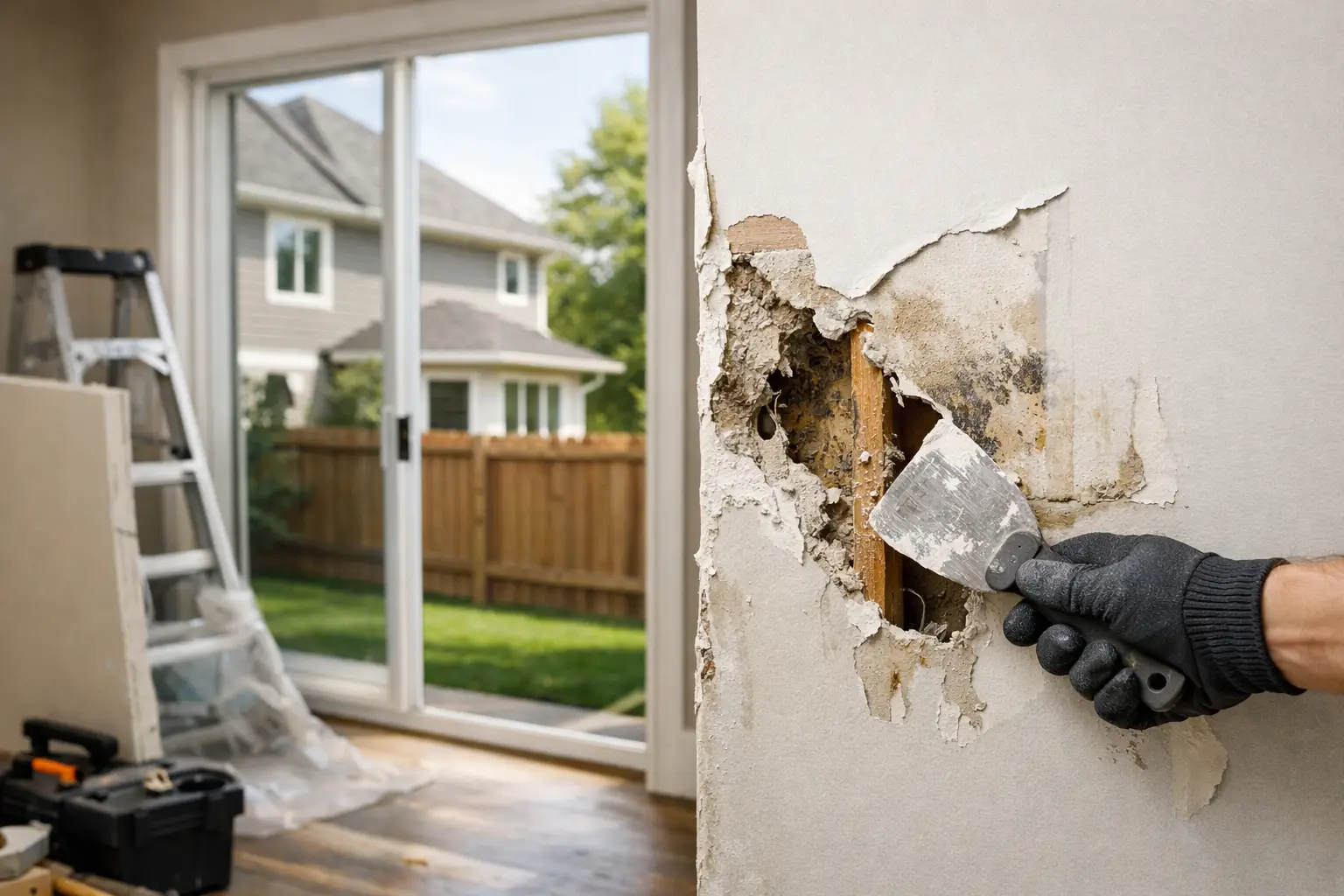
The biggest factor is moisture. Drywall is made with a gypsum core wrapped in paper. Once that paper stays wet long enough, it can stain, swell, soften, grow mold, or pull away from the core. Painting over it may hide the evidence briefly, but it does not restore the wall.
Replacement is also worth considering when there are several patched areas across one wall or throughout a room. At a certain point, repeated patching costs more in labor and leaves a finish that is difficult to make perfectly flat. Installing a clean section of drywall can produce a better long-term result.
Signs Your Drywall Has Reached the Replacement Stage
The Wall Is Soft, Swollen, or Crumbling
Press gently near stains, baseboards, plumbing walls, windows, and ceilings. Healthy drywall feels solid. If it gives under light pressure, has a bubbled surface, or crumbles at the edges, it has likely been exposed to enough moisture to lose its integrity.
A soft spot is not a paint problem. The source of moisture needs to be found and corrected before new drywall goes in. Otherwise, the same damage can return behind the new finish.
There Is Visible Mold or a Persistent Musty Smell
Surface mildew on a nonporous material may sometimes be cleaned, but drywall is porous. If mold has grown into the paper facing or there is a musty odor that does not go away after drying and cleaning, removal is often the safer choice.
The affected drywall should be removed carefully, and the framing and wall cavity should be inspected for moisture and additional growth. The amount of material involved matters. A small, contained issue is different from widespread contamination, especially in a property with ongoing humidity or water problems.
Water Stains Keep Coming Back
A yellow or brown stain does not always mean the drywall must be replaced. If the wall dried quickly, stayed firm, and the moisture source was corrected immediately, a stain-blocking primer and repainting may be enough.
But recurring stains, peeling paint, bubbling texture, or sagging drywall mean the material has likely been compromised. In Houston-area homes, humidity and sudden heavy rain can make moisture problems easy to overlook. Do not assume a stained ceiling or wall is old damage until the area has been checked and confirmed dry.
Cracks Are Wide, Repeating, or Spreading
Hairline cracks along seams can happen as a house settles, particularly around doors and windows. Many are repairable with proper joint tape, compound, sanding, and paint.
Cracks deserve more attention when they are wider than a hairline, run diagonally, return soon after patching, or appear with sticking doors, uneven floors, or gaps around trim. Those signs can point to movement behind the drywall. Replacing the panel without addressing the cause only gives the crack a new surface to travel through.
The Drywall Is Sagging or Pulling Away
Ceiling drywall that sags, bows, or separates at seams should be handled quickly. The fasteners may be failing, the panel may have taken on moisture, or the framing may need attention. A sagging ceiling is not a good candidate for a quick cosmetic patch.
Wall panels can also pull away around corners, near openings, or at joints. If the panel is otherwise dry and undamaged, it may be possible to resecure and finish it. If it has warped or deteriorated, replacement will provide a cleaner and safer repair.
Holes, Gouges, and Damage Cover a Large Area
A doorknob hole, a small access opening, or a single dent can usually be patched. Larger holes and widespread impact damage are different. If the damage is bigger than a simple patch can support, extends through multiple areas, or leaves the drywall fractured around the opening, replacing a section is usually more dependable.
This is especially common after furniture moves, tenant turnover, storm cleanup, or remodeling work. A cleanly cut replacement section lets the installer fasten new drywall to solid framing, tape the seams correctly, and blend the texture before painting.
Repair or Replace: How the Decision Is Made
A good drywall assessment looks beyond the visible spot. First, determine whether the area is dry and whether the cause of damage has stopped. Next, check how much of the panel is affected and whether the drywall remains firm. Finally, consider the finish. A wall with matching texture and a single small repair may look great after patching. A wall covered with old patches, stains, and wavy seams may be better off with a fresh panel.
There is also a cost trade-off. Patching is less invasive and can be the affordable option for limited damage. Replacement costs more upfront because it involves removing material, installing new drywall, finishing joints, matching texture, and painting. Yet replacement can prevent repeat repairs and give the room a more uniform appearance when damage is extensive.
For rental properties and homes being prepared for sale, this choice matters. Buyers and tenants notice stains, uneven patches, and cracks around trim. Replacing damaged drywall in high-visibility areas can make a room feel cared for, while addressing the underlying problem protects the investment.
What to Do Before New Drywall Is Installed
Do not rush straight to the new panel. The conditions behind the wall need to be right first. Any moisture source, plumbing concern, pest entry point, or framing issue should be resolved before the wall is closed back up.
If water damage is involved, the cavity should be fully dried and inspected. Damp framing or insulation can create problems long after the drywall has been replaced. It is also smart to document damage before removal if you are managing a commercial property, coordinating with insurance, or planning several repairs at once.
Once the area is ready, the repair should include properly sized drywall, secure fastening, taped and finished seams, texture matching where needed, primer, and quality paint. Skipping steps may save time for a day, but it often leads to visible joints, popped fasteners, or uneven sheen later.
Get a Clear Answer Before Damage Gets Worse
Drywall problems rarely improve by being ignored. A firm, dry wall with a small blemish may only need a professional patch. A wall with soft spots, mold, recurring stains, sagging, or spreading cracks deserves a closer look before the damage reaches insulation, framing, flooring, or nearby rooms.
Gotta Call Mac helps homeowners, property managers, and commercial property owners handle drywall repair and replacement with practical recommendations, dependable workmanship, and fair pricing. Whether the job is one damaged section or part of a larger interior update, getting an honest assessment early can save time, money, and a much bigger repair later.
