
 Roofing Services
If you own or manage a business property, a roof problem can turn into a budget problem fast. That is usually when people start asking, what is commercial roofing, and how is it different from the roof on a house? The short answer is that commercial roofing refers to the materials, systems, installation methods, and maintenance practices used on buildings like offices, warehouses, retail centers, restaurants, apartment complexes, and industrial facilities.
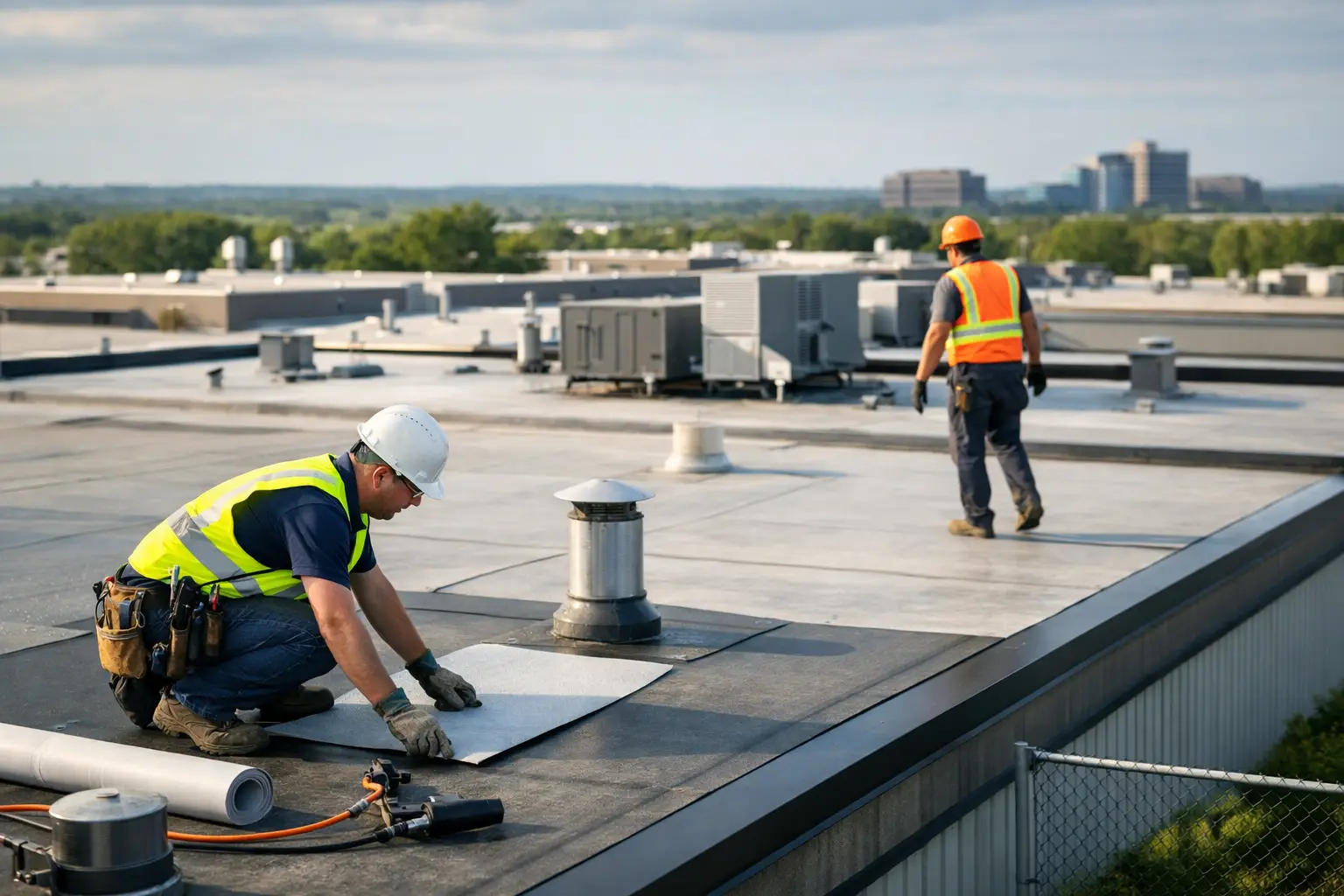
Commercial roofs are built for different demands than residential roofs. They often cover more square footage, sit on flatter surfaces, handle more foot traffic from service crews, and support equipment like HVAC units, vents, and drainage systems. That changes everything from the material choice to the repair process.
What is commercial roofing and why is it different?
Commercial roofing is a category of roofing designed for business and multi-unit properties rather than single-family homes. Most commercial buildings use low-slope or flat roof systems, while most homes use steeper roof pitches with shingles. That one difference affects water drainage, material performance, installation techniques, and long-term upkeep.
A commercial roof is not just a top layer that keeps rain out. It is a full system. In many cases, that system includes insulation, a membrane or protective surface, flashing, drains, edge metal, sealants, and penetration details around rooftop equipment. If one part fails, the whole roof can become vulnerable.
This is also why commercial roofing tends to require more planning than many homeowners expect. On a business property, the roof has to protect not only the building itself but also tenants, inventory, operations, and customers. A leak over a living room is frustrating. A leak over a server room, restaurant kitchen, or retail stock area can shut down business.
Common types of commercial roofing systems
There is no single best roof for every commercial property. The right choice depends on the building design, budget, weather exposure, expected lifespan, and how the roof will be used.
One common option is TPO roofing. TPO is a single-ply membrane used on many low-slope commercial buildings because it is cost-effective, reflective, and relatively lightweight. In hot Texas conditions, reflective roofing can help reduce heat absorption, which matters when cooling bills are already high.
EPDM is another single-ply membrane, usually recognized by its black rubber appearance. It has a long track record and can perform well, but heat gain may be a concern depending on the building and coating choices.
PVC roofing is often chosen for buildings that need strong chemical resistance or extra durability around grease vents and industrial use. It can be a smart fit for restaurants and some manufacturing spaces, though it often costs more upfront.
Modified bitumen is an asphalt-based roofing system designed for low-slope roofs. It is known for toughness and layered protection. Built-up roofing, sometimes called BUR, is another older but still-used system that combines layers of asphalt and reinforcing materials.
Metal roofing also shows up on commercial buildings, especially where slope, visibility, and longevity matter. It can be a strong long-term investment, but the details around fasteners, seams, and expansion need to be handled correctly.
Flat does not mean simple
A lot of people assume flat commercial roofs are easier because they look basic from the ground. In practice, low-slope roofing can be very detail-sensitive. Water does not shed as quickly as it does on a steep roof, so drainage matters a lot. Even small installation issues can lead to ponding water, membrane stress, seam failure, or leaks around penetrations.
That is one reason commercial roof inspections should never be rushed. A roof may look fine from one area and still have soft spots, flashing problems, clogged drains, storm damage, or hidden moisture in the insulation below the surface.
For property owners in places like Houston and The Woodlands, this matters even more because heavy rain, wind, heat, and storm activity can all work against a commercial roof system. The roof has to do more than survive a sunny day. It has to hold up through the rough weather too.
What a commercial roofing system includes
When people ask what is commercial roofing, they are often thinking only about the outer membrane or visible surface. But a commercial roof usually includes several working parts.
The roof deck is the structural base. Above that, there may be a vapor barrier, insulation, cover board, and the actual roofing membrane or metal panels. Around the perimeter, edge details help secure the system and direct water. Flashing protects transitions and penetrations. Drains, scuppers, or gutters move water off the roof.
If the building has rooftop HVAC units, skylights, vents, solar equipment, or satellite hardware, every one of those penetrations creates a potential leak point. Commercial roofing is as much about detail work as it is about surface coverage.
Installation, repair, or full replacement?
Not every commercial roofing issue means the whole roof needs to be replaced. Sometimes a targeted repair is the smart move, especially if the system is still within its service life and the damage is isolated. A puncture, open seam, flashing failure, or storm-damaged section may be repairable.
Other times, repeated leaks are a sign of a bigger problem. If the insulation is saturated, the membrane is aging out, or repairs keep stacking up in different areas, replacement may be more cost-effective than constant patching. It depends on the roof condition, the building use, and how much risk the owner is willing to carry.
A coating may also be an option in some cases. Roof coatings can extend life and improve reflectivity, but they are not magic fixes. The existing roof has to be a good candidate. If the substrate is compromised, coating over the issue usually just delays a larger repair bill.
How long does commercial roofing last?
Service life depends heavily on the material, installation quality, maintenance schedule, and weather exposure. A well-installed commercial roof that gets regular inspections can last decades. A poorly installed roof on the same building might start causing trouble much sooner.
Foot traffic is another factor people overlook. Commercial roofs often get walked on by HVAC technicians, electricians, cable installers, and maintenance crews. Every visit adds wear, especially if traffic pads or protection are missing.
That is why preventive maintenance matters. Catching a small seam issue or drainage problem early is a lot cheaper than dealing with interior damage, mold concerns, ruined inventory, or tenant complaints later.
Cost depends on more than square footage
Commercial roofing prices vary widely. Square footage matters, but it is not the only factor. Material choice, tear-off requirements, insulation thickness, access to the building, number of penetrations, drainage improvements, and warranty level all affect the final number.
A lower bid is not always the better value. If a contractor skips prep work, uses lower-grade materials, or ignores underlying moisture issues, the savings can disappear fast. On the other hand, the highest price is not automatically the best either. The goal is a system that fits the building, the budget, and the long-term plan for the property.
For many owners and managers, the real cost question is not just what the roof costs today. It is what the roof will cost over ten or fifteen years when repairs, energy use, downtime, and future replacement are all considered.
How to choose the right commercial roofing contractor
Commercial roofing is not a place to gamble. The right contractor should understand the type of system your building has or needs, explain the scope clearly, and document the roof condition instead of guessing from the ground.
Look for a contractor that is licensed, bonded, and insured, and one that can handle both urgent repairs and larger property improvement needs when the job overlaps with storm damage, siding, drywall, or interior restoration. For many property owners, working with one reliable company saves time and avoids finger-pointing between trades.
A good contractor should also be honest about trade-offs. If a repair makes sense, they should say so. If the roof is too far gone for another patch job to be worth it, they should say that too. Straight answers matter more than a sales pitch.
At GottaCallMAC, that practical approach is a big part of how we serve property owners across the greater Houston area. People want clear pricing, dependable work, and a crew that shows up ready to solve the problem, not drag it out.
What is commercial roofing really about?
At its core, commercial roofing is about protection, planning, and keeping a property operational. It is not just a construction detail. It affects energy use, repair budgets, tenant satisfaction, storm resilience, and how confidently you can manage the building.
If your roof is aging, leaking, or just overdue for a professional look, the smartest move is usually to deal with it before it becomes an emergency. A commercial roof does not need to be flashy. It just needs to do its job every single day, especially when the weather stops cooperating.

Comment (01)
Leave a Comment
You must be logged in to post a comment.
Commercial Roofing – Houston Texas – GottaCallMAC
May 26, 2026 4:25 pm[…] is one of the most practical answers to why are commercial roofs flat. The shape fits the purpose of the […]