
 Roofing Services
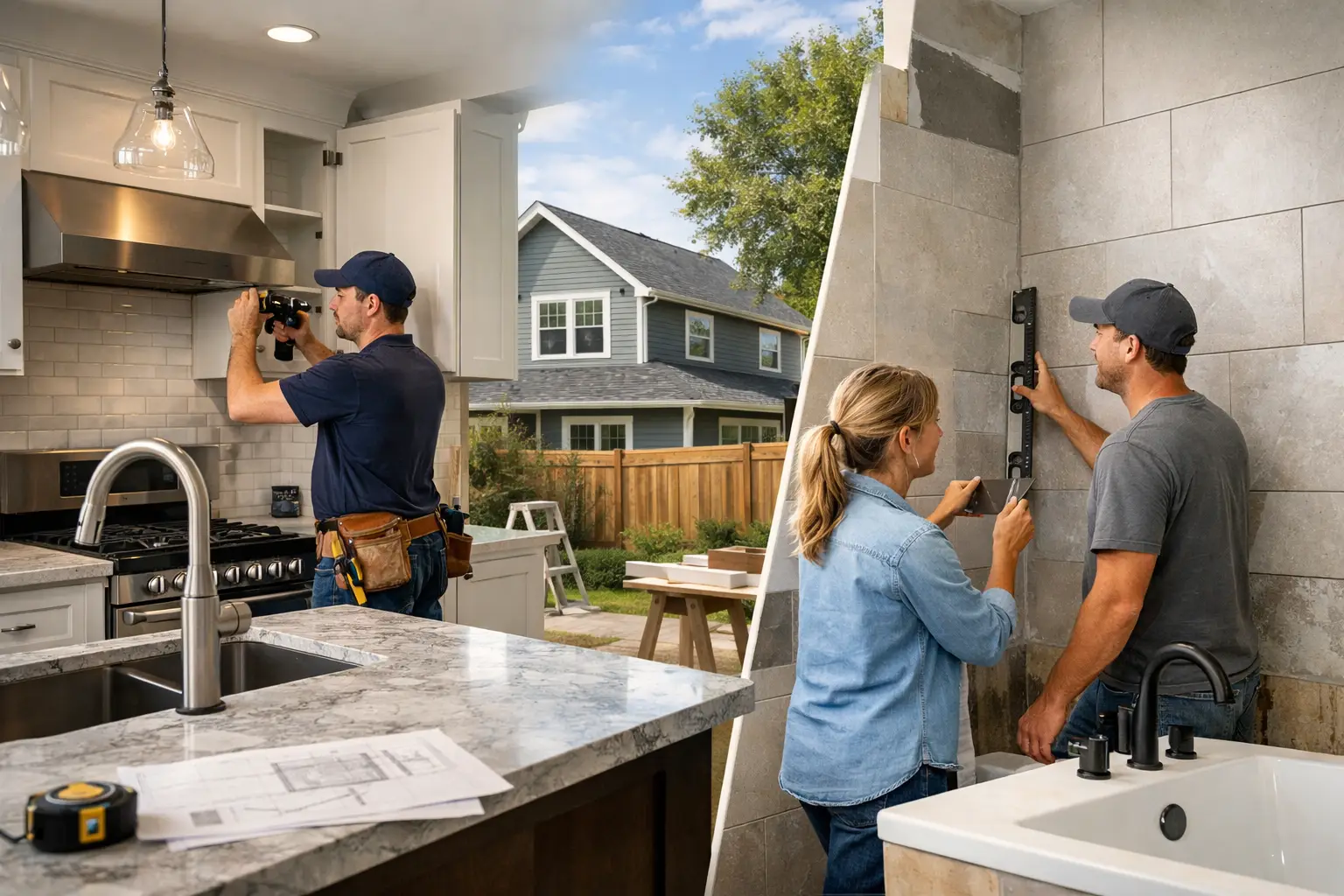
Kitchen and Bathroom Remodeling Contractors Near Me
You usually start searching for kitchen and bathroom remodeling contractors near me right after something stops working for your life. The kitchen feels cramped. The bathroom looks dated. Storage is lacking, finishes are worn out, and every small annoyance starts to feel bigger because you deal with it every day.
That search matters more than most homeowners expect. A remodel is not just about picking tile, paint, and cabinets. It is about hiring a contractor who can keep the job moving, communicate clearly, protect your home, and deliver work that holds up long after the dust is gone.
What to expect from kitchen and bathroom remodeling contractors near me
A good local remodeling contractor should do more than give you a number and a start date. They should help you think through layout, materials, timing, and the real scope of the work. Kitchens and bathrooms are high-use spaces with plumbing, electrical, flooring, drywall, cabinetry, and finish work all tied together. If one piece slips, the whole project can slow down.
That is why homeowners often prefer a contractor who can handle multiple parts of the remodel instead of leaving them to coordinate several crews. It saves time, reduces confusion, and makes it easier to keep quality consistent from demolition to final punch list.
Local experience also matters. Contractors who regularly work in your area tend to understand what homeowners actually want, how to plan around Texas homes and weather, and how to keep projects practical instead of overbuilt. The best remodels look good, function well, and make sense for the property.
The right remodel is not always the biggest one
A lot of people assume a successful remodel means tearing everything out and starting over. Sometimes that is the right call. Sometimes it is not.
In a kitchen, you may not need a full redesign if the layout already works. New cabinets, updated counters, better lighting, fresh flooring, and cleaner finishes can completely change the space without moving every utility line. In a bathroom, replacing an outdated vanity, upgrading the shower, improving storage, and updating tile may give you the biggest return without the cost of a total reconfiguration.
This is where a practical contractor earns their keep. They should be honest about what is worth changing and what is not. If a smaller project gets you the result you want, that is usually the smarter investment.
How to judge a contractor before the work starts
The early conversations tell you a lot. A dependable remodeling contractor should ask good questions about how you use the space, what is frustrating you now, and what your budget needs to cover. If they only talk about finishes and never ask about function, that is a red flag.
You also want clear communication from the start. Estimates should be understandable. Timelines should sound realistic, not rushed just to win the job. If there are trade-offs, a trustworthy contractor will tell you. For example, custom work may give you a better fit and better storage, but it usually adds cost and lead time. Quick material choices can speed up a project, but they may limit your design options.
Licensed, bonded, and insured matters too. Homeowners and property managers should not have to guess whether the company is operating professionally. It is basic protection, and reputable contractors should be ready to stand behind their work.
Questions worth asking kitchen and bathroom remodeling contractors near me
Before you hire anyone, ask how they handle scheduling, change orders, material delays, and cleanup. Those issues affect your day-to-day experience just as much as the final look.
You should also ask who is doing the work. Some companies sell the project and then disappear behind subcontractors. Others actively manage the work and stay accountable from start to finish. That difference shows up fast when a problem needs to be fixed.
It also helps to ask what similar projects typically run into. An experienced contractor should be able to tell you where budgets often stretch, where hidden damage sometimes appears, and which upgrades usually give homeowners the most value. You are not looking for a perfect promise. You are looking for honest expectations.
Budget matters, but cheap work gets expensive fast
Everyone wants a fair price. That makes sense. But remodeling is one of those jobs where the lowest bid can cost more later if corners are cut.
A kitchen or bathroom has a lot going on behind the finished surfaces. Poor prep, rushed installation, uneven flooring, sloppy drywall, weak waterproofing, or bad trim work may not show up right away. Then a few months later, you are dealing with repairs, callbacks, or parts of the project that never looked right in the first place.
The smarter move is to look for value. That means competitive pricing, clear scope, dependable workmanship, and a contractor who respects your time and property. If a company can offer affordable pricing and still back it up with professional standards, that is where homeowners usually come out ahead.
What makes kitchen remodels different from bathroom remodels
Kitchens are usually about flow, storage, and daily use. Families gather there, meals happen there, and clutter builds there. A strong kitchen remodel improves movement, adds functional storage, and creates surfaces that are easier to live with every day. Lighting often makes a bigger difference than people expect, especially in older homes with poor task lighting.
Bathrooms are more compact, but they are not necessarily simpler. Moisture control, layout efficiency, and durable finishes matter more in a smaller space because every inch counts. A bathroom remodel often succeeds or fails on practical details such as shower design, ventilation, storage placement, and how easy the space is to clean.
If you are remodeling both at once, there can be advantages. Bundling work may save time on scheduling and reduce the hassle of hiring separate contractors for each area. It can also create a more consistent style throughout the home. On the other hand, doing both at once means more disruption, so it depends on your budget, timeline, and tolerance for temporary inconvenience.
Why local homeowners often want one contractor for more than one job
A remodel rarely stays limited to one exact task. Once walls are opened or old finishes come out, homeowners sometimes decide to update flooring, repaint nearby areas, repair drywall, or improve adjoining spaces at the same time.
That is why many property owners look for a contractor with broad hands-on experience instead of a narrow specialty. It is easier to work with one reliable team that can manage multiple aspects of the job than to line up separate providers and hope they stay coordinated. For busy homeowners, landlords, and property managers, convenience is not a small benefit. It can be the difference between a manageable project and a frustrating one.
For that reason, companies like GottaCallMAC appeal to customers who want one source for remodeling and other property improvement needs without sacrificing craftsmanship or affordability.
Signs you are ready to move forward
If you have been putting off the project because the room still functions, ask yourself a better question. Does it function well? A kitchen that feels cramped every day or a bathroom that lacks storage and looks worn out is more than a cosmetic issue. It affects how your home works.
You are probably ready to hire a contractor when you know what is bothering you, you have a rough budget range, and you want real answers instead of endless online inspiration. At that point, the best next step is a straightforward estimate and a conversation with someone who knows how to turn ideas into a plan.
The right contractor will not pressure you into the biggest remodel on the block. They will help you make smart choices, explain the trade-offs, and give you a result that fits your home, your schedule, and your budget. When that happens, the project stops feeling overwhelming and starts feeling possible.
A well-done kitchen or bathroom remodel should make everyday life easier, not just give you something nice to look at. If your space is no longer working for you, that is reason enough to start the conversation.
