
 Roofing Services
Best Siding Options for Homes in Texas Heat
Houston-area weather is tough on exterior materials. Long stretches of sun, heavy rain, high humidity, wind-driven debris, and sudden temperature changes can turn a small siding issue into peeling paint, warped boards, moisture damage, or unwanted pests. The best siding options for homes are the ones that fit your budget, your home’s style, and the conditions your exterior faces every day.
A good siding project is more than a color update. It protects the wall structure, improves curb appeal, and can reduce the maintenance headaches that come with aging exterior materials. Here is a practical look at the most common choices for Texas homeowners and what to consider before making a decision.
Best Siding Options for Homes: Start With Your Priorities
There is no single siding material that works best for every house. A homeowner planning to sell in a few years may prioritize clean curb appeal and upfront cost. A family staying in the home long term may prefer a more durable material with fewer maintenance needs. Property managers may need a dependable option that makes repairs straightforward across several units.
Before selecting siding, think about four basic questions: How much maintenance are you willing to handle? How exposed is the home to direct afternoon sun and moisture? Does the material match the neighborhood and architectural style? And does the installation budget include needed repairs behind the existing siding?
The last question matters. New siding cannot solve hidden wall damage by itself. If moisture has affected framing, trim, insulation, or sheathing, those areas should be addressed before the new material goes on. A thorough estimate should account for the condition of the exterior, not just the square footage.
Fiber Cement: A Strong All-Around Choice
Fiber cement is one of the most popular siding choices for homes across Spring, The Woodlands, Conroe, and greater Houston. It is made from a blend of cement, sand, and cellulose fibers, creating a durable panel or plank that can be manufactured to resemble painted wood.
Its biggest advantage is its ability to handle demanding conditions. Fiber cement resists rot, insects, and moisture better than traditional wood. It also holds up well against intense sun exposure and does not warp as easily as some lighter materials. Homeowners can choose lap siding, vertical panels, shake-style accents, and trim pieces for a more customized look.
The trade-off is cost and installation. Fiber cement is heavy, requires experienced handling, and needs proper cutting and fastening. It also needs repainting eventually, although quality paint and professional installation can extend the time between paint jobs. For homeowners who want a classic appearance without the ongoing upkeep of natural wood, fiber cement is often worth the investment.
When fiber cement makes sense
Choose fiber cement when durability, a painted finish, and strong curb appeal are high priorities. It is especially practical for homeowners replacing damaged wood siding or updating an older property before listing it for sale.
Vinyl Siding: Budget-Friendly and Low Maintenance
Vinyl siding remains a practical option for homeowners who want a clean exterior at a lower initial price. It comes in many colors and profiles, including traditional horizontal lap styles, board-and-batten looks, and insulated options. Because the color is built into the material, vinyl does not require regular painting.
For busy homeowners, that low-maintenance benefit is a major draw. Routine cleaning with a gentle exterior wash is usually enough to keep it looking presentable. Vinyl is also lightweight, quick to install, and generally easier to replace in a small damaged area than heavier materials.
Still, vinyl has limits in Texas heat. Lower-quality products can fade, crack, or distort under prolonged sun exposure, particularly on walls that receive hard afternoon light. Dark colors may absorb more heat, and impact damage can be more visible than with fiber cement. The quality of the product and the installation details make a real difference here. Proper spacing, flashing, trim, and ventilation help the siding perform as intended.
Vinyl works well when cost control and simple upkeep matter most. It can be a smart choice for rental properties, starter homes, and exterior refreshes where a homeowner wants reliable value without taking on a major maintenance schedule.
Engineered Wood: Warm Style With Better Protection
Engineered wood siding gives homeowners the look of real wood while addressing some of the weaknesses that come with traditional wood boards. It is typically made from treated wood strands or fibers bonded into strong panels and coated for moisture resistance.
This material can create a warm, detailed exterior that fits farmhouse, craftsman, and traditional home styles. It is lighter than fiber cement and may be easier to install, which can help with labor costs. Engineered wood is also available in lap siding, panel siding, shakes, and trim, making it useful for homes with several exterior design features.
It does require careful installation and ongoing attention. Cut edges, joints, and exposed areas must be properly sealed to keep moisture out. Like fiber cement, it needs paint maintenance over time. If installation shortcuts leave gaps or unprotected edges, Houston humidity can create problems sooner than expected.
Engineered wood is a good middle-ground option for homeowners who want a wood-forward appearance but do not want the higher upkeep associated with solid wood siding.
Natural Wood: Beautiful but Demanding
Cedar and other natural wood siding have a character that manufactured materials cannot fully copy. The grain, texture, and depth of real wood can make an older home feel restored or give a new build a high-end, custom appearance. Wood can be installed as lap boards, vertical boards, shakes, or decorative accents.
The challenge is maintenance. Wood needs regular sealing, staining, or painting to protect it from moisture, sun, insects, and movement. A missed maintenance cycle can lead to peeling finishes, soft spots, cracks, or rot. In humid parts of Texas, shaded walls and areas near landscaping deserve extra attention.
Natural wood is best for homeowners who truly value its appearance and are prepared to maintain it. It can also work well as an accent material alongside a lower-maintenance main siding product, giving the home warmth without covering every wall in a high-maintenance finish.
Metal Siding: Modern, Durable, and Different
Metal siding is no longer limited to barns, workshops, and commercial buildings. Steel and aluminum panels are increasingly used on modern homes, additions, garages, and accent walls. The look can range from clean and contemporary to rustic, depending on the panel profile and finish.
Metal performs well against insects and does not rot. It can be a strong choice for homeowners who want crisp lines and minimal maintenance. Aluminum is lighter and resistant to corrosion, while steel offers added strength. Both materials can be finished in colors designed to hold up against fading.
The main considerations are appearance, noise, and denting. Metal does not fit every neighborhood or home style, and thin panels may dent from impacts. Quality trim and careful installation are essential to prevent rattling, visible gaps, and water intrusion around edges and openings. Used thoughtfully, metal can be an attractive long-lasting option rather than an industrial-looking compromise.
Brick and Stone Veneer: Best for Accent Areas
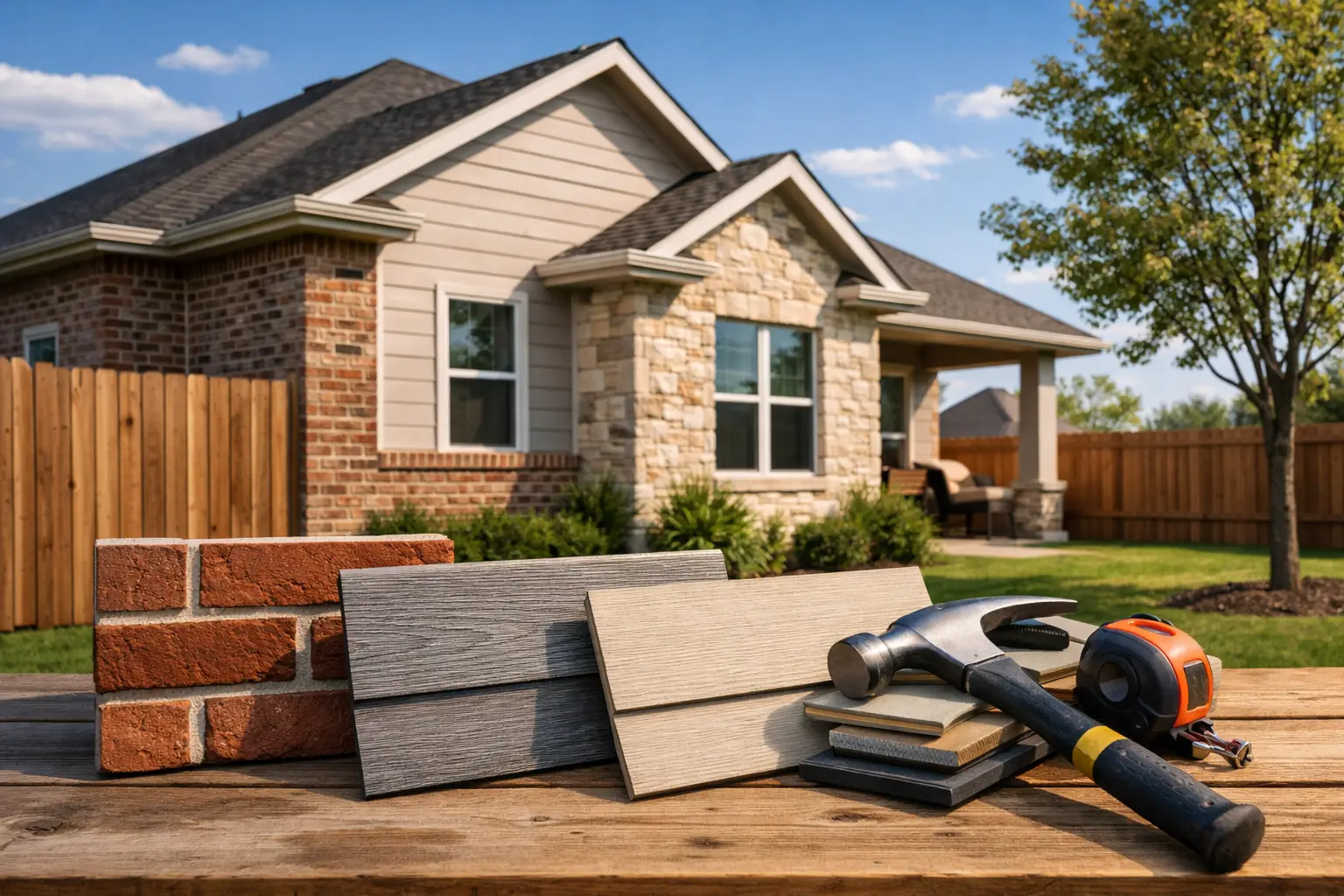
Brick and stone veneer are often used to add depth and curb appeal around entryways, lower walls, columns, chimneys, or outdoor living areas. They are not usually a full replacement for traditional siding, but they can make a plain exterior feel more substantial and customized.
Manufactured stone veneer is generally lighter and more affordable than full-depth stone, while still providing a textured look. Brick veneer offers a classic Texas appearance that pairs well with fiber cement, engineered wood, and painted trim.
These materials cost more to install than vinyl and require a solid moisture-management system behind them. They also are harder to modify later if you need to move an exterior fixture, add a window, or make a repair. For the right home, though, a well-planned accent can deliver a major visual upgrade without covering the entire exterior.
Do Not Ignore Installation Details
Even the best material can fail early when the installation is rushed. Siding needs properly installed moisture barriers, flashing around windows and doors, sealed transitions, correct fasteners, and clean trim work. Caulk should be used where it belongs, not as a shortcut for gaps that should have been built correctly.
This is also the time to inspect fascia, soffit, exterior trim, windows, and any areas where water has been getting in. Handling related repairs during the siding project can save money and prevent having to remove new materials later. GottaCallMAC helps homeowners coordinate siding work with the exterior repairs and improvements their property may need, keeping the project simple and the pricing straightforward.
Choose the Material That Fits the House, Not Just the Trend
The best siding choice is the one that holds up to your property’s conditions and makes sense for your plans. Fiber cement is a dependable long-term choice for many Texas homes. Vinyl offers practical value and easy upkeep. Engineered wood provides a convincing wood look with more protection, while natural wood and metal serve homeowners with specific style goals.
Before choosing a color or profile, ask for a clear assessment of the existing exterior and a detailed estimate that explains what is included. A well-installed siding system protects more than curb appeal – it gives your home a cleaner, stronger exterior built for the years ahead.
