
 Roofing Services
A mature tree can add shade, privacy, and real value to a property. But after a hard Texas storm, a sudden lean, cracked trunk, or dead limbs over the driveway can turn that same tree into a serious concern. So, when is tree removal necessary? It is necessary when the tree presents a reasonable safety risk, has declined beyond recovery, or stands in the way of a planned property improvement.
The right answer is not always obvious from the ground. A tree may look healthy while its root system is failing, and a leafless branch may be harmless while a split trunk requires immediate attention. Knowing what to watch for helps homeowners and property managers act before a tree damages a fence, blocks access, or injures someone.
When Is Tree Removal Necessary for Safety?
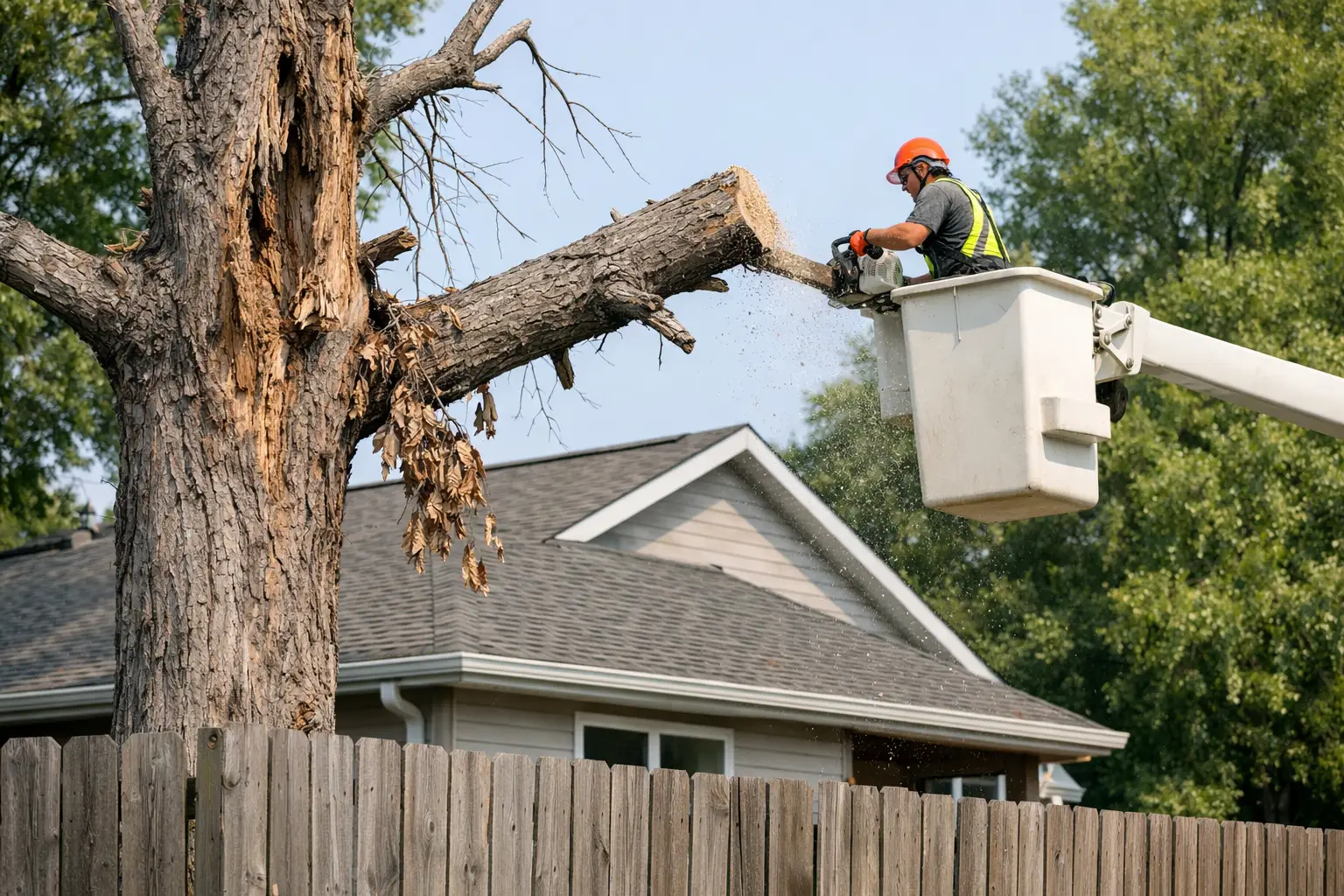
Tree removal should move to the top of your list when a tree could fall, drop major limbs, or cause damage if it fails. Dead trees are a clear example. Once a tree has died, its wood becomes brittle over time, and branches can come down with little warning. A fully dead tree near a home, parking area, fence line, play space, or neighboring property should not be left standing.
A severe lean also deserves prompt attention, especially if it is new. Trees naturally grow at angles, so an old, stable lean is not always an emergency. The concern is a tree that suddenly shifts after saturated soil, high winds, excavation, or impact. Raised soil or exposed roots on one side of the trunk can signal that the root plate is lifting and the tree may be unstable.
Large cracks, deep cavities, or splitting where major limbs meet the trunk are other serious warning signs. A crack does not always mean the entire tree needs to come down, but it should be assessed before another storm puts pressure on it. If a large branch is hanging over a structure or a heavily used area, removing that limb or the tree may be the safer and more cost-effective choice.
Keep a close eye on trees near power lines. Never attempt to prune or remove branches that are touching, leaning into, or dangerously close to utility lines. That work requires the proper safety planning and coordination.
Signs a Tree Is Dying or Structurally Weak
Healthy trees can have a few dead twigs or seasonal leaf loss. The concern is a pattern of decline across the tree, particularly when paired with trunk or root damage. Watch for bare branches during the normal growing season, peeling bark across large sections, mushrooms growing from the trunk base, extensive insect activity, or hollow areas in major structural wood.
Fungal growth around the base can indicate internal decay in the roots or lower trunk. It does not automatically mean removal is required, since some fungi grow on surface debris. Still, mushrooms appearing directly from the trunk, large root flares, or old wounds are worth taking seriously. Internal decay can reduce a tree’s strength even when the outer bark still looks solid.
Root damage is another issue homeowners often miss. Construction, trenching, soil changes, vehicle traffic, and repeated standing water can damage roots long before the canopy shows symptoms. If a tree begins thinning out, dropping branches, or leaning after work has taken place nearby, do not assume it will recover on its own.
A tree with multiple trunks may also need closer review. When two or more trunks join in a narrow V-shaped connection, bark can become trapped between them. This creates a weak union that may split under wind, ice, or the weight of a heavy canopy. Strategic trimming can sometimes reduce the risk. In other cases, removal is the practical long-term answer.
Removal Is Not Always the First Option
Taking down a tree is a major decision, and it is not the right solution for every damaged or overgrown tree. Proper trimming can often remove dead limbs, improve clearance over a driveway, reduce the weight of an overextended branch, and keep foliage away from a fence or building.
A tree may also look unhealthy because of drought stress, insect pressure, compacted soil, or a temporary disease issue. Removing it immediately could mean losing a tree that could recover with the right care. On the other hand, waiting too long on a structurally compromised tree can increase the danger and the cost of cleanup.
The difference comes down to condition, location, and targets. A small declining tree in an open back corner may be manageable for a period of time. The same tree over a patio, commercial entrance, vehicle lane, or children’s play area deserves a faster response. A professional evaluation can help determine whether selective trimming, cabling, treatment, or complete removal makes the most sense.
Storm Damage Calls for a Fast, Careful Decision
High winds and heavy rain can expose problems that were already developing. After a storm, walk your property from a safe distance and look for broken limbs, fresh splits, branches resting on structures, leaning trees, and roots pulling up from the ground. Take photos if needed for your records, but do not walk beneath hanging limbs or try to pull down a branch that is caught overhead.
Partially fallen trees are especially unpredictable. A trunk caught in another tree may be under heavy tension. Cutting it without the right equipment, experience, and escape planning can cause it to shift suddenly. The same goes for uprooted trees that are still attached to part of their root system.
Fast action matters after storm damage, but rushed DIY work can make a bad situation worse. A qualified tree service can remove hazardous material in sections, protect nearby improvements, and clear debris so you can move forward with repairs or restoration.
Think About Your Fence, Driveway, and Future Plans
Tree removal is sometimes necessary because the tree conflicts with how you need to use your property. Roots can push against driveways, lift walkways, interfere with drainage, and place pressure on fence posts. Branches that repeatedly rub against a fence can shorten its life, while a large tree planted too close to a future deck, addition, or gate can limit the project before it starts.
Removal can also make sense for land clearing, lot preparation, improved access, or a safer sightline at a driveway entrance. On commercial properties, dead or low-hanging trees can create liability concerns around customer parking, entrances, and loading areas.
There is a trade-off, of course. Removing a large tree changes shade patterns, privacy, and the appearance of the property. Before scheduling removal, consider what the space will need afterward. You may want stump grinding so the area can be used again, along with grading, fence repairs, new planting, or drainage adjustments. Planning the whole project at once often saves time and avoids calling multiple contractors later.
Do Not Ignore the Stump
Removing a tree does not always include removing the stump. In some locations, leaving it is perfectly reasonable. In others, a stump becomes a trip hazard, attracts insects, sends up new shoots, or prevents a new fence, lawn area, or landscape feature from being installed.
Stump grinding is usually the better option when you need a clear, usable surface. It removes the visible stump below grade while leaving the deeper roots to break down naturally over time. If you are preparing for construction or dealing with aggressive roots, discuss the end goal before work begins so the removal plan fits the project.
Get a Clear Assessment Before the Problem Grows
A hazardous tree is not a project to put off until the next storm. If you see a new lean, dead canopy, major cracks, root movement, or broken limbs over an active area, arrange an inspection promptly. Ask what work is necessary now, what can be monitored, how the surrounding property will be protected, and whether debris and stump removal are included in the estimate.
For homeowners and property managers across the greater Houston area, GottaCallMAC provides practical tree trimming, removal, land clearing, and storm-damage help with the dependable service you expect from one local contractor. A free estimate gives you a straightforward path forward without guessing at the risk or the cost.
A tree should earn its place on your property by adding beauty and function, not by keeping you worried every time the wind picks up. When its condition or location creates a real hazard, timely removal protects the people, structures, and improvements you have worked hard to maintain.
