
 Roofing Services
Metal Fencing That Fits Texas Property Needs
A fence has to do more than mark a line on a survey. Around here, it has to handle heat, heavy rain, shifting soil, pets, traffic, and the everyday wear that comes with real use. That is why metal fencing stays at the top of the list for homeowners and property managers who want something strong, clean-looking, and built for the long haul.
For some properties, metal is the right answer immediately. For others, it is the better long-term choice once you compare upkeep, durability, and appearance. If you are weighing options for a home, rental, business, or mixed-use property, it helps to know where metal works best and where the details really matter.
Why metal fencing makes sense
The biggest reason people choose metal fencing is simple – it holds up. Wood can look great, but it is more vulnerable to rot, warping, insect damage, and repeated repair work over time. Chain link has its place, especially for utility and budget-driven jobs, but it does not always give a property the finished look people want out front.
Metal hits a middle ground that appeals to a lot of Texas property owners. It offers real strength, strong curb appeal, and a more permanent feel than lower-cost options. On the right project, it can also raise the overall appearance of the property without creating constant maintenance.
That said, not all metal fences are the same. Material, coating, height, spacing, and gate design all affect how the fence performs. A decorative front fence and a heavy-duty commercial perimeter may both be metal, but they are not interchangeable.
Types of metal fencing for different properties
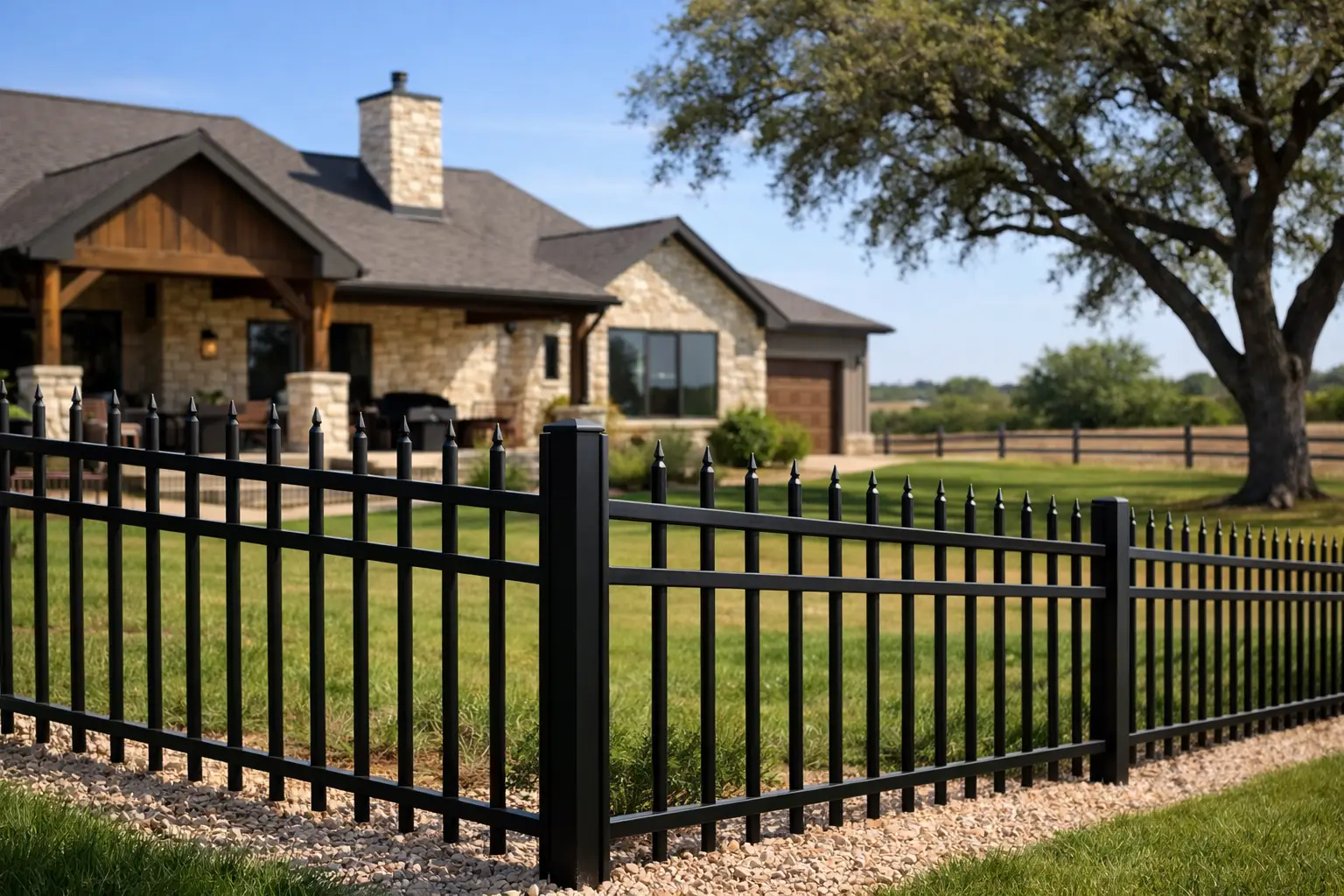
Aluminum is one of the most popular choices for residential work because it gives you a clean, upscale look without the weight of wrought iron. It resists rust well, which matters in humid conditions, and it works nicely for front yards, pool areas, driveways, and decorative perimeter fencing. If your goal is appearance, security, and lower maintenance, aluminum is often a smart fit.
Steel is a stronger option when the project calls for more impact resistance and a tougher overall build. It is commonly used for security-focused residential fencing, commercial properties, gated access points, and areas where the fence needs to handle more abuse. Steel generally requires quality finishing and proper installation to prevent corrosion problems later, but when it is done right, it delivers serious durability.
Wrought iron, or fences designed to mimic that classic wrought iron look, remains a favorite for owners who want a more traditional and upscale appearance. It adds character and presence, especially on custom homes and formal entry areas. The trade-off is cost and maintenance. It can be worth it, but only if the look is a major priority.
Some projects also use corrugated or panel-style metal fencing for privacy and a more modern appearance. This style works well when owners want a clean, solid barrier instead of an open picket design. It is especially useful in side yards, commercial spaces, and properties where privacy matters as much as security.
Where metal fencing works best
Metal fencing is a strong choice when visibility matters. If you want to secure a yard without closing it off visually, open-style metal fencing gives you a clear boundary while preserving the look of the property. That is one reason it is common around front lawns, apartment entrances, office buildings, retail spaces, and shared community areas.
It is also a good fit for gates and access control. Metal pairs well with manual and automatic gate systems because it has the rigidity needed for repeated opening and closing. If you are planning a driveway gate, a business entrance, or a fenced area with frequent access, metal gives you more design flexibility than many people expect.
For pet owners and families, metal can be a solid choice too, but only if the spacing and height are right. A decorative fence with wide gaps may look great from the street, yet it may not be ideal for a small dog. This is where the design matters as much as the material.
What to consider before you install metal fencing
The first question is purpose. Are you trying to improve security, boost curb appeal, protect children or pets, define a property line, or secure a commercial site? One fence rarely does every job equally well. The better approach is to decide which outcome matters most and build around that.
Height is another big factor. A low ornamental fence can frame a front yard beautifully, but it will not provide much privacy or security. Taller metal fencing offers more protection, though local codes, neighborhood rules, and sightline concerns may affect what is allowed.
Then there is the issue of terrain. Not every property is flat. Slopes, drainage patterns, tree roots, and older concrete can all affect installation. A fence that looks straightforward on paper can become more technical once layout begins. That is why proper measuring, post placement, and gate alignment matter so much.
Finish matters too. Powder-coated metal fencing generally performs better and keeps its appearance longer than unfinished or poorly coated materials. In a climate with moisture, sun exposure, and seasonal storms, the finish is not a small detail. It is part of what determines whether the fence still looks good years later.
Metal fencing vs. other common options
Compared with wood, metal fencing usually asks for less maintenance over time. You are not dealing with the same cycle of staining, replacing damaged pickets, and watching for moisture-related deterioration. Wood can still be the right pick when full privacy and a softer natural look are the priority, but it often needs more attention to stay in shape.
Compared with chain link, metal fencing usually wins on appearance. It gives a property a more finished and intentional look, especially in visible areas. Chain link may still be the best budget move for large utility areas, back lots, and basic containment, so this is not a one-size-fits-all decision. It comes down to whether appearance, privacy, and presentation matter as much as function.
Compared with vinyl, metal often feels stronger and more refined. Vinyl can work well in certain residential settings, but it can crack or become brittle over time depending on conditions and product quality. Metal tends to offer a firmer, more secure feel, especially around gates and active access points.
Choosing the right design for curb appeal and function
A fence should match the property, not compete with it. On a traditional home, a classic black metal fence with simple pickets may look clean and timeless. On a newer build, horizontal or panel-style metal fencing can create a sharper, more modern look.
Commercial properties usually need a slightly different balance. The fence has to look professional, but it also needs to control access, protect assets, and stand up to daily use. In those settings, gate design, entry width, and traffic flow become just as important as the fence panels themselves.
Color is often overlooked, but it makes a difference. Black remains the most popular for a reason – it looks clean, works with almost any exterior, and tends to visually disappear from a distance. That helps landscaping, buildings, and entry features stand out without the fence looking too heavy.
Installation quality matters as much as the material
Even the best metal fencing will disappoint if the installation is rushed. Posts set too shallow, poor alignment, weak gate framing, or bad spacing can shorten the life of the fence and lead to sagging, movement, or repeated repairs. The difference between a fence that lasts and one that becomes a headache often comes down to the crew doing the work.
That is especially true in Southeast Texas, where weather and soil conditions can test any exterior structure. A good install accounts for drainage, expansion, long-term use, and how the fence will perform after months of heat and storms – not just how it looks on day one.
For property owners who want one contractor they can trust to handle the job correctly and keep pricing competitive, GottaCallMAC takes a practical approach. The focus stays on dependable craftsmanship, honest recommendations, and building a fence that matches the property instead of forcing a generic solution.
Is metal fencing worth the cost?
In many cases, yes. The upfront cost can be higher than some basic fencing materials, but the value shows up in longevity, lower maintenance, better appearance, and stronger overall performance. If you plan to stay in the property, care about curb appeal, or need a fence that works hard without constant repairs, metal often justifies the investment.
Still, it depends on the job. If you need complete privacy on a tight budget, another material may make more sense. If you want a front-facing fence, a secure gate, or a durable perimeter that looks sharp year after year, metal is hard to beat.
The best fence is not always the cheapest one on install day. It is the one that still looks right, works right, and protects your property after the weather, wear, and time have had their say.
