
 Roofing Services
Dog Fence Options That Actually Work
A dog fence sounds simple until you watch a determined dog test every weak spot in your yard. Some jump. Some dig. Some squeeze through gaps you did not think mattered. Others stay put for years – until a squirrel, storm, or open gate changes the routine. That is why the right dog fence is not just about marking a property line. It is about building a safe, reliable barrier that fits your dog’s size, behavior, and daily environment.
For homeowners and property managers, the wrong fence usually costs more than doing it right the first time. You might save a little on materials, then spend more fixing loose pickets, patching dig-outs, or replacing sections after weather damage. A well-built fence should keep your dog secure, hold up through Texas heat and rain, and still make the property look clean and well cared for.
What makes a good dog fence?
A good dog fence does three jobs at once. It protects your pet, gives you peace of mind, and adds usable outdoor space without creating a constant maintenance problem. The best setup depends on your dog’s habits as much as your lot size.
If you have a small dog, spacing matters. Wide gaps that look harmless on paper can become escape routes fast. If you have a large or athletic dog, height matters more. A short fence may work for a calm older pet but fail quickly with a young dog that likes to run and jump. Then there are diggers, who can make even a sturdy fence useless if the bottom is not installed with that behavior in mind.
This is where homeowners often run into trouble. They pick a fence based on appearance alone, then try to adapt it later. In most cases, it works better to start with the dog’s behavior and then choose the style, height, and material around that.
Dog fence material options
Not every fence material performs the same under daily wear, weather exposure, and dog activity. The right choice usually comes down to balancing privacy, strength, appearance, and budget.
Wood fencing
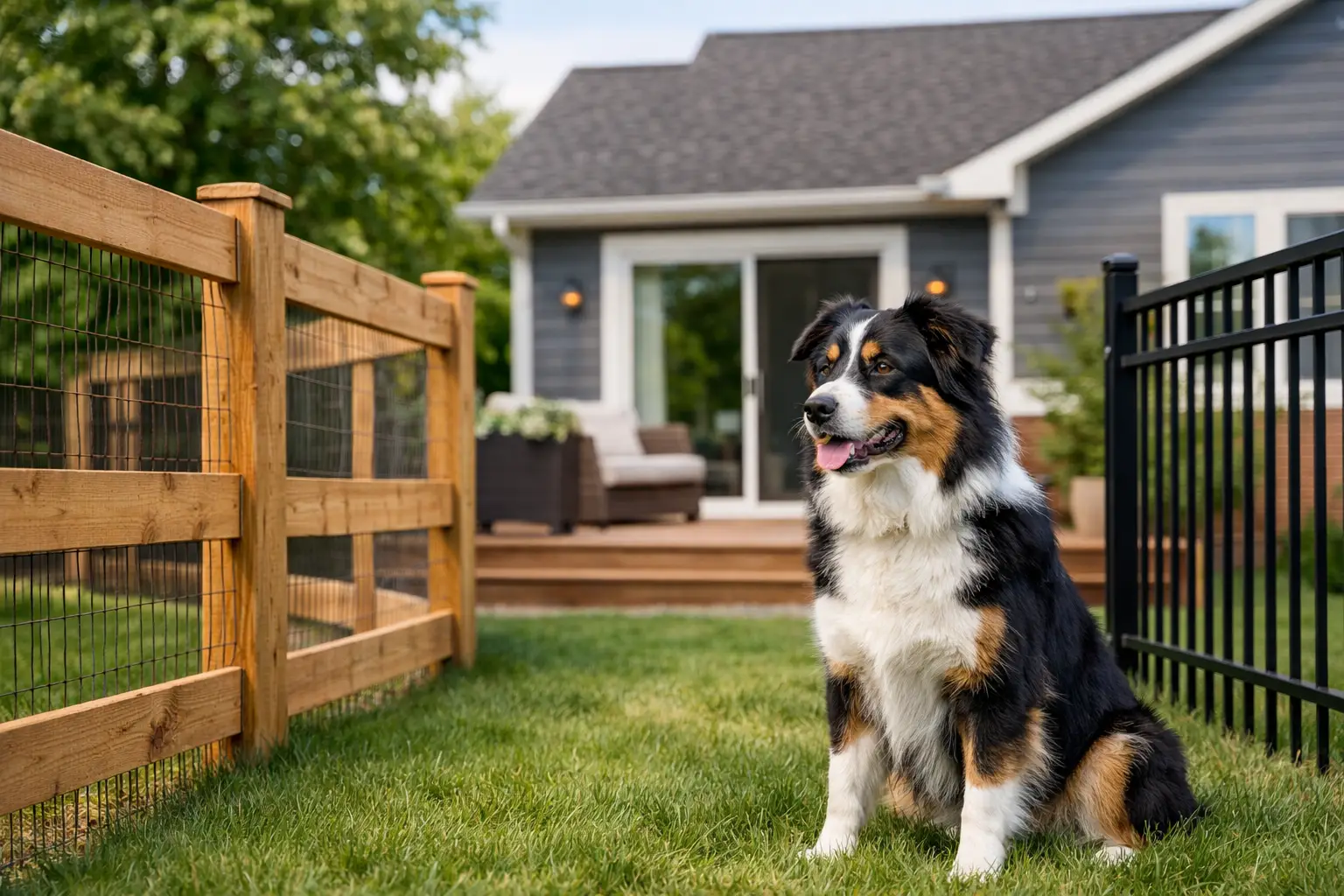
Wood is a popular choice because it offers privacy and a classic look that works well in most neighborhoods. Cedar is especially attractive for homeowners who want a fence that resists decay better than many basic wood options. A solid wood fence can also reduce visual distractions, which helps with dogs that bark at every passerby, car, or animal.
That said, wood needs maintenance. Boards can warp, shrink, or loosen over time, especially in tough weather conditions. If the fence is not installed correctly, even a good-looking wood fence can develop gaps near the ground or between pickets. For many families, the privacy and appearance are worth it, but it helps to go in with realistic expectations about upkeep.
Metal and aluminum fencing
Metal and aluminum fences are strong, clean-looking, and typically lower maintenance than wood. They can be a great fit when you want durability and visibility across the yard. For larger dogs that are not likely to squeeze through openings, this style can work very well.
The trade-off is visibility and spacing. Some dogs get overstimulated when they can see everything happening outside the yard. Others may fit through openings if the design is too open. If you like the look of metal but need better containment, the specific panel style matters a lot.
Chain link and utility-focused fencing
For some properties, function comes first. Chain link and similar utility-style options can provide dependable containment at a lower price point. They are often practical for large yards, rental properties, or commercial spaces where durability and cost matter more than a decorative finish.
Still, chain link is not perfect for every situation. Climbers can use it like a ladder, and highly reactive dogs may stay worked up if they can constantly see activity beyond the fence. It does the job in many cases, but it is not automatically the best dog fence just because it is common.
Fence height, gaps, and ground clearance matter more than most people think
A fence can be built from quality material and still fail if the layout details are wrong. Height is the most obvious issue. A four-foot fence may be enough for one dog and completely useless for another. Breed helps, but personality matters too. Plenty of mixed-breed dogs can surprise you when motivated.
Ground clearance is another major factor. Even a small gap under the fence can turn into a habit once a dog learns where to push. Soft soil, drainage patterns, and uneven grading can all create escape points if they are not addressed during installation.
Then there is spacing. Decorative fences often look great from the street, but if the gaps are too wide, small dogs can slip through or get stuck trying. This is one reason custom planning matters. A fence should fit the pet using it, not just the property around it.
Yard layout can make or break your dog fence
Flat, square yards are the easy ones. Real properties usually come with slopes, trees, drainage issues, odd corners, or existing structures that complicate the job. A fence line that looks straightforward may need extra reinforcement or custom fitting once the work begins.
Gates deserve special attention here. Many fence failures are really gate failures. A fence may be strong all the way around, but if the gate sags, latches poorly, or leaves extra space at the bottom, that becomes the weak point. Dogs learn routines quickly. If there is one spot that gives, they will find it.
For homes with pools, side yards, or separate activity areas, it can also make sense to think beyond one perimeter fence. Some owners benefit from sectioning part of the yard for safer everyday use. That can be especially helpful for households with multiple dogs, children, or frequent foot traffic.
When a custom dog fence is worth it
A custom build is usually worth considering when your property has unique layout issues or your dog has specific escape habits. Standard fence packages can work on straightforward lots, but they often leave little room to solve problems like digging, climbing, or awkward terrain.
A custom approach lets you adjust height, panel style, gate placement, and reinforcement where needed. It can also help match the fence to the rest of the property, which matters if you care about curb appeal or are preparing a home for sale or lease. For property owners who want one solution that looks right and performs well, custom work often saves frustration later.
In areas like Spring, The Woodlands, Conroe, and greater Houston, weather can also influence the build. Heavy rain, shifting soil, and long heat exposure can wear down cheap materials and rushed installation. A fence has to do more than look good on day one.
Repair or replace?
Sometimes the best dog fence is the one you already have – if it can be repaired correctly. A few damaged boards, a loose post, or one failing gate does not always mean you need a full replacement. Targeted repairs can restore safety and buy more life out of the existing fence.
But there is a point where repeated patch jobs stop making sense. If multiple sections are leaning, materials are rotting, posts are unstable, or the fence design was never right for the dog in the first place, replacement is usually the smarter investment. The goal is not just to make the fence stand up. It is to make it dependable.
Choosing the right contractor matters
A dog fence is only as good as the installation behind it. Good materials can still underperform when posts are set poorly, grades are ignored, or gates are treated like an afterthought. That is why it helps to work with a contractor who understands both fencing and the real-world way people use their yards.
Homeowners want something practical. Property managers want something durable and cost-conscious. Real estate professionals want something that improves appearance without creating future headaches. All of those priorities can work together if the fence is planned properly from the start.
That is also where clear pricing matters. A cheap quote is not a good deal if it leads to repairs six months later. Fair pricing, solid workmanship, and a fence built for your specific dog will almost always deliver better value.
At GottaCallMAC, we look at the full picture – your dog, your yard, your budget, and the finish you want. That helps us recommend a fence that fits how the property is actually used, not just what looks good in a quick estimate.
If your current setup leaves you second-guessing every time you let the dog outside, it may be time for a better fix. The right fence should let you open the back door with confidence and get on with your day.
