
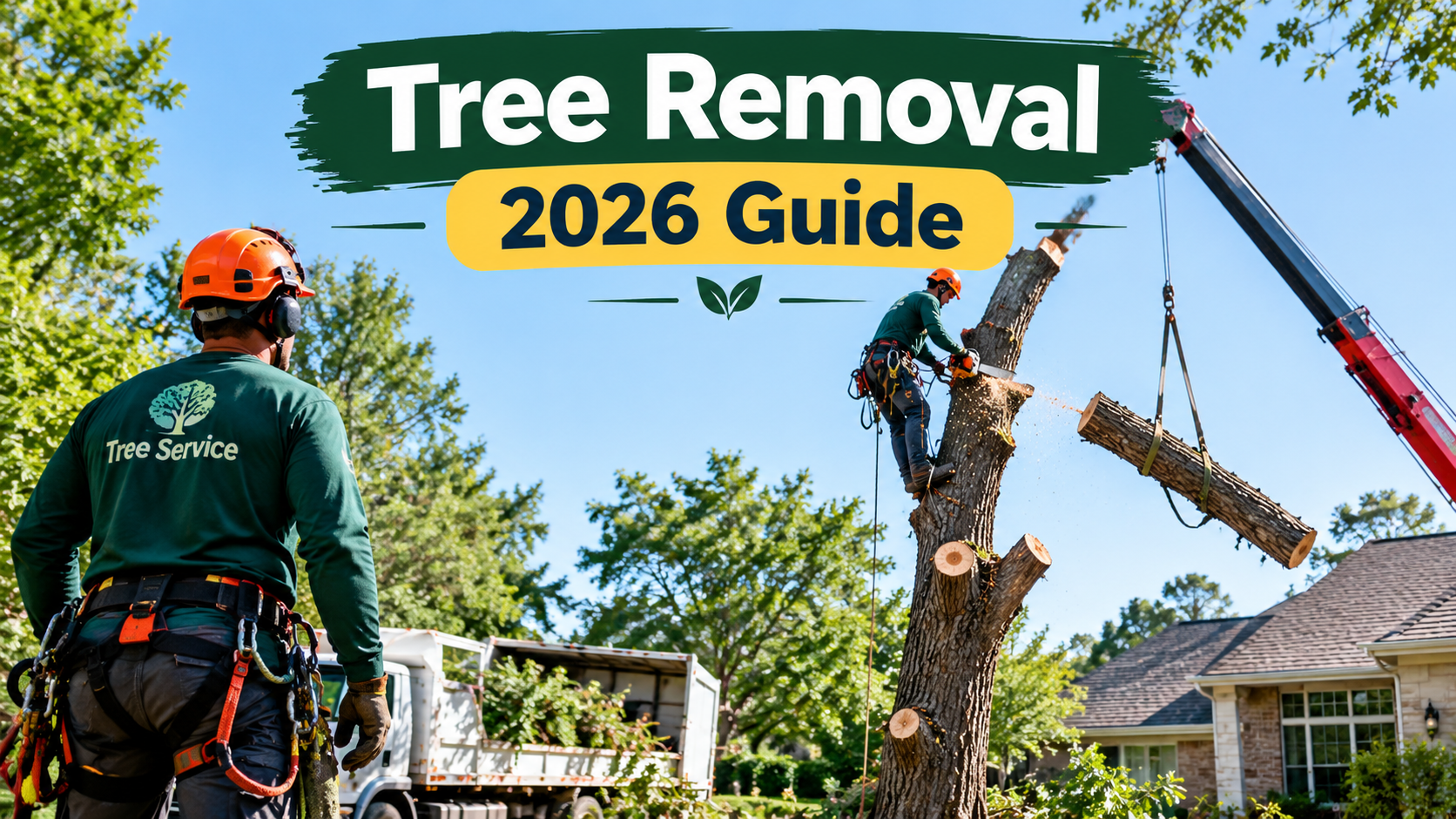
 Tree
You looked up at that tree and thought, “That has to go.” Maybe it’s leaning after the last storm. Maybe it’s dead and dropping limbs on the driveway. Either way, the next question hits fast: what’s this going to cost me?
That’s a fair thing to ask. And honestly, the answer isn’t a single number.
Tree removal cost in The Woodlands varies because no two trees are alike. A 20-foot dead cedar in an open backyard is a very different job from a 70-foot pine hanging over your roof.
This guide walks through real price ranges, what pushes the cost up or down, the extras people forget about, and how to compare quotes without getting burned. We’ve been doing this work across the Greater Houston area for over 25 years, so we’ll share what we see on the job every week.
Average Tree Removal Cost in The Woodlands
Let’s start with the number you came for.
If you’re asking how much does tree removal cost, here’s a realistic range for most homes in The Woodlands, Spring, Conroe, and nearby areas in 2026:
| Tree Size | Typical Height |
| Small | Under 30 feet |
| Medium | 30–60 feet |
| Large | 60–80 feet |
| Very large or high-risk | 80+ feet, or near structures |
These are general market ranges, not a fixed price list. Your final quote depends on the factors below.
A few quick notes on that table:
Prices are for the removal itself. Stump grinding and extras are usually separate.
Tree removal cost Houston quotes often look similar, though dense neighborhoods and tight lots can push them higher.
So what about cost to remove large tree jobs specifically? Expect the upper half of the table. A tall loblolly pine or a mature live oak takes more crew time, more equipment, and more risk. That shows up in the price. It should.
What Affects Tree Removal Cost?
Two trees can be the same height and still get very different quotes. Here’s why.
1. Tree Height and Trunk Size
Taller trees take longer to take down in pieces. A thick trunk means heavier cuts and more weight to lower safely. This is the biggest single driver of price.
2. Species
Not all wood behaves the same.
Pine trees (very common in The Woodlands) are tall and straight. They’re often easier to cut, but their height adds risk.
Live oaks and pecans are heavy, with wide, spreading limbs. They take more rigging and more time.
Sweetgum and water oak can have brittle limbs, which makes climbing trickier.
Dead or diseased trees cost more than you’d think. Rotten wood is unpredictable. A limb that looks solid can snap under a climber’s weight.
3. Location on Your Property
A tree in the middle of an open yard is simple. Drop zone is clear. Equipment can get close.
A tree squeezed between a house, a fence, and a pool? That’s a different story. The crew can’t just fell it. They have to take it down piece by piece, lowering each section with ropes. It’s slower, and it takes skill.
4. Power Lines
This one matters for safety, not just price. If branches touch or sit near power lines, the job changes completely. Only qualified crews should work near lines, and sometimes the utility company has to get involved first. Depending on your address, that may be CenterPoint Energy or Entergy Texas.
Never trim or cut near a power line yourself. Not worth the risk. Call the utility and call a pro.
5. Access
Can a truck and chipper reach the tree? Or does everything have to be carried out through a narrow side gate by hand? Poor access means more labor hours. It’s that simple.
6. Tree Condition
A healthy tree is predictable. A tree that’s leaning, split, half-dead, or already partly fallen is not. Damaged trees need extra care, extra planning, and sometimes extra equipment like a crane.
7. Cleanup Needs
Do you want the logs left for firewood? Hauled away? Chipped on site? Each choice changes the labor and disposal costs.
Extra Charges: Stump Grinding, Debris Haul-Away, and Emergency Rates
This is where homeowners get surprised. A quote that looks cheap often leaves things out. Let’s go through the usual add-ons.
Stump Grinding
When a tree comes down, the stump stays. Many people don’t realize this until the crew is packing up.
If you want it gone, you’ll need stump grinding. The cost depends mostly on the stump’s diameter and how many roots are above ground, with larger stumps costing more.
Here’s the good news. Bundling stump grinding with removal often saves money, since the crew is already on site.
Debris Haul-Away
Branches, logs, and brush add up fast. A single big tree can produce several truck loads of wood.
- Haul-away: crew takes everything. Usually adds to the cost.
- Chip and leave: you keep wood chips for mulch. Often cheaper.
- Logs left on site: works if you want firewood, but you’ll need to move it yourself.
Ask which one is in your quote. Don’t assume.
Emergency and Storm Rates
When a tree falls on your house or blocks your road, speed matters. Emergency work often costs more because crews drop other jobs, work after hours, and deal with unstable situations.
During big storms, prices can spike. So can scams. If someone knocks on your door right after a storm and wants cash up front, say no thanks. A real company will have a license, insurance, and a written estimate. If you need urgent help, our emergency tree service team is available.
Other Possible Add-Ons
- Crane use for very tall or hard-to-reach trees
- Permit or HOA paperwork help
- Extra hauling distance
- Working around fences, pools, or landscaping
What Should Be Included in a Tree Removal Quote?
A good quote is clear. A bad quote is vague. That’s usually the first sign of trouble.
Before you say yes, make sure the written estimate covers these points:
- Exact scope of work: which tree or trees, and what “removal” means
- Cleanup details: is debris hauled off, chipped, or left behind?
- Stump grinding: included, or listed as a separate price?
- Total price: with no surprise fees hiding in fine print
- Proof of insurance: general liability and workers’ compensation
- License and bonding info
- Start date and expected timeline
- Payment terms: reasonable deposit, if any
Think about it this way. If a worker gets hurt on your property and the company has no insurance, you could be on the hook. That’s a financial mess no one wants.
Our team is insured, licensed, and bonded. We’re happy to show proof before work starts. Any company worth hiring will do the same.
How to Save Money on Tree Removal (Without Cutting Corners on Safety)
Nobody wants to overpay. But some savings are risky. Here’s what works and what doesn’t.
Smart Ways to Save
- Get at least two or three quotes. Compare scope, not just price.
- Bundle jobs. Removing two trees and grinding both stumps in one visit usually costs less than separate trips.
- Schedule in the off-season. Demand often drops outside of storm season. Hurricane months tend to be busier and pricier.
- Skip the haul-away if you can use the wood. Chips and logs have real uses.
- Act early. A dying tree is cheaper to remove now than after it falls on the garage.
- Ask about discounts. We offer discount programs for veterans, seniors, and first responders. We also offer price matching on competitor quotes.
- Think about trimming. Sometimes a tree doesn’t need to go. A good trim or tree cutting and removal assessment can tell you whether it’s worth saving.
Savings That Aren’t Worth It
- Hiring someone with no insurance. Cheap now, expensive later.
- DIY on a big tree. Falling trees don’t care about YouTube tutorials. Thousands of people get hurt every year in tree work accidents.
- Choosing the lowest bid without checking what’s included. A low quote might skip cleanup, stump grinding, and liability coverage.
- Topping instead of removing. Chopping a tree’s crown weakens it. It’s bad for the tree and often creates a bigger hazard later.
Here’s the bottom line. Cheap tree work done wrong costs more in the end.
A Real Project Example: Cost, Challenge, and Result
Note for editor: replace the bracketed details with a real project from your files. Add 2 to 3 before/after photos with descriptive alt text.
Numbers on a table are helpful. But a real job shows you how pricing plays out.
The property: [Neighborhood, e.g., a home in The Woodlands near Research Forest Dr.]
The tree: [Species, e.g., a 65-foot loblolly pine], [trunk diameter], [condition, e.g., partly dead and leaning toward the house].
The challenge: [Describe the real problem, e.g., the tree sat 12 feet from the roofline, with a fence on one side and a power line on the other. A crane wasn’t needed, but the crew had to rig and lower each section by hand.]
What we did:
- [Step 1, e.g., inspected the tree and confirmed the risk]
- [Step 2, e.g., set rigging points and lowered sections piece by piece]
- [Step 3, e.g., cleared all debris and ground the stump]
Time on site: [e.g., one day, 6 hours with a 4-person crew]
Final cost: [including removal, haul-away, and stump grinding]
Result: [One or two sentences, e.g., the homeowner’s roof, fence, and landscaping were untouched, and the yard was clean by evening.]
Team member quote (optional): “[Short, honest comment from the lead arborist about what made this job tricky.]”
What to Ask Before You Get a Tree Removal Estimate
You don’t need to be an expert. You just need to ask the right questions. Here’s a quick list you can use when you call anyone, including us.
- Are you licensed, insured, and bonded? Can I see proof?
- Is the estimate free, and is it written?
- What exactly is included? Cleanup, hauling, stump grinding?
- Who will do the work? Employees or subcontractors?
- How will you protect my property? Lawn, fence, roof, driveway.
- What happens if something gets damaged?
- Do I need a permit or HOA approval? (Rules vary by neighborhood, so check with your HOA or local authority first.)
- How long will the job take?
- Do you offer discounts or price matching?
If a company dodges these questions, move on. A good one will answer them without fuss.
Frequently Asked Questions
Is stump grinding included in tree removal?
Usually not. It’s most often a separate charge. Ask for it in writing. Bundling both services often costs less than doing them separately. You can learn more on our stump grinding page.
Do I need a permit to remove a tree?
It depends on where you live. Some HOAs, townships, or protected-tree rules may require approval. Dead or hazardous trees are often handled differently. Check with your HOA or local authority, and we can help you with the paperwork.
How do I find reliable tree removal near me?
Searching tree removal near me will give you plenty of results. To narrow them down, look for a company that’s licensed, insured, and bonded, offers written estimates, and has real reviews and project photos. Local experience matters, too. Trees in Texas behave differently than trees elsewhere.
What’s the best time of year to remove a tree?
You can remove a tree any time of year. Late fall and winter are often easier to schedule and slightly cheaper. Dead or dangerous trees shouldn’t wait, though. If a tree is a hazard, call now.
How long does tree removal take?
Most residential jobs take a few hours to a full day. Large or complicated trees can take longer, especially with cleanup and stump grinding.
Get Your Free Tree Removal Estimate
Prices on a blog are a starting point. Your tree, your yard, and your situation decide the final number.
At GottaCallMAC, we’ve spent over 25 years removing trees safely across The Woodlands, Spring, Conroe, Tomball, and the surrounding communities. Our crews are insured, licensed, and bonded. Estimates are free, written, and honest. And if you find a lower price from a competitor, we’ll match it.
Ready to find out what your tree removal will cost?
📞 Call (936) 290-3502
👉 Request Your Free Estimate
