
 Roofing Services
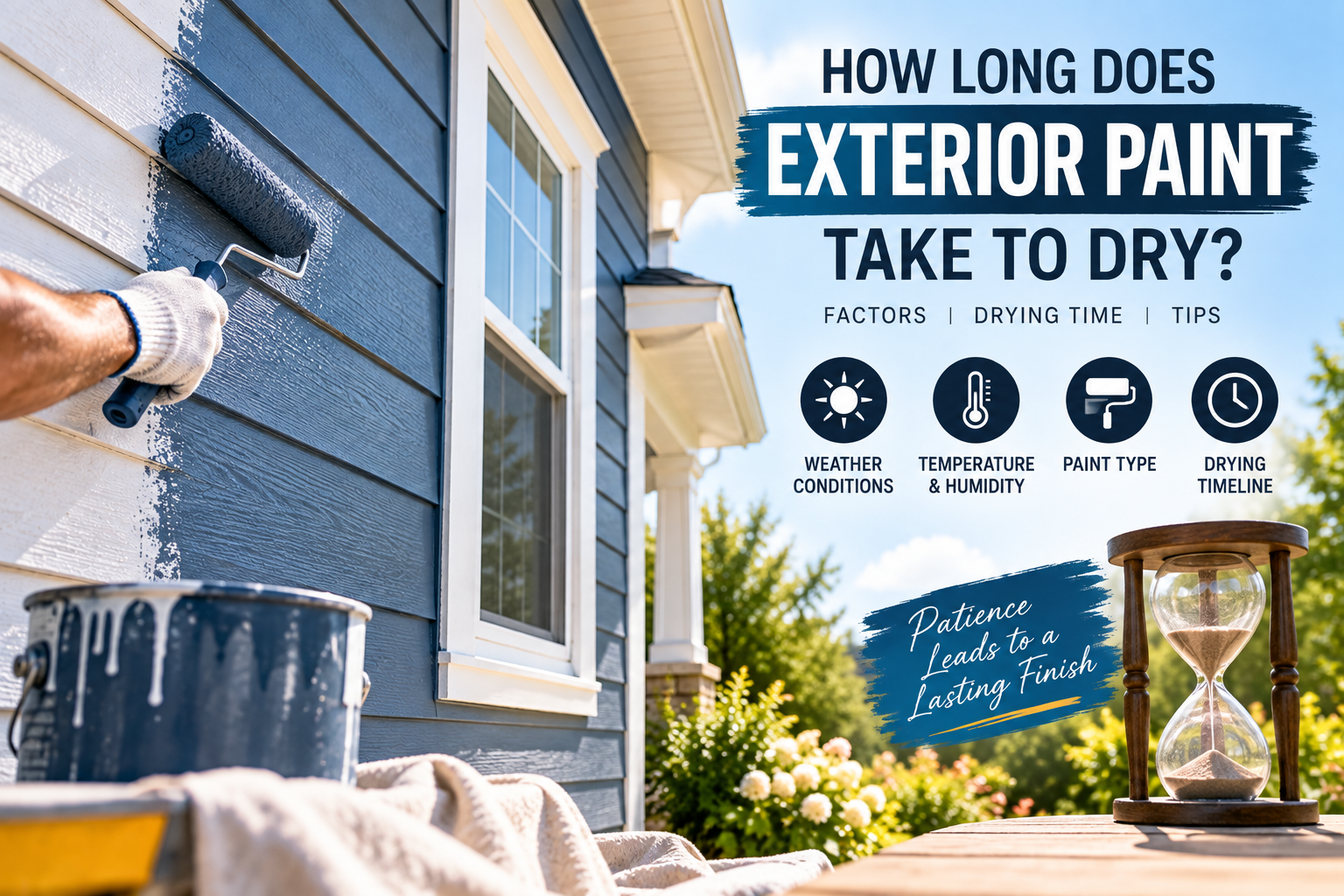
If you have ever watched a freshly painted wall and thought, “It looks dry already,” you are not alone.
It is one of the most common assumptions homeowners make during an exterior painting project.
But here is the truth most people only learn after something goes wrong.
Exterior paint may look dry on the surface long before it is actually cured underneath.
And that difference matters more than you think.
Let’s break it down in a way that actually reflects real job site conditions, not just what is written on a paint can.
The Real Difference Between Drying and Curing
Most homeowners assume paint drying is a single step.
In reality, it happens in stages.
Surface Dry (Touch Dry)
This is when the paint no longer feels wet to the touch.
Depending on temperature and humidity, this can happen within a few hours.
But just because it feels dry does not mean it is ready for stress or weather exposure.
Recoat Dry
This is the stage where you can safely apply another coat of paint.
This usually takes longer than surface drying and depends heavily on the type of paint used.
Full Cure
This is the most important stage and the most misunderstood.
Curing is when the paint fully hardens and bonds with the surface.
This can take several days to weeks depending on weather conditions.
Until paint is fully cured, it is still vulnerable to damage.
Typical Drying Times Homeowners Can Expect
While exact timing depends on product and environment, here is a realistic breakdown most professionals follow:
- Surface dry: a few hours
- Recoat time: several hours to a full day
- Full cure: several days to a few weeks
These timelines shift based on weather conditions and surface type.
Weather Plays a Bigger Role Than Most People Realize
Exterior painting is completely dependent on the environment.
Even the best paint will struggle to perform properly if conditions are not right.
Temperature
Paint dries best within a moderate temperature range.
Too hot and it dries too quickly on the surface without proper bonding.
Too cold and it slows down curing significantly.
Humidity
Humidity is one of the biggest factors affecting drying time.
High moisture in the air slows evaporation, which extends drying and curing time.
This is especially common in areas with seasonal humidity changes like Texas.
Wind and Sun Exposure
Light airflow can help drying, but strong wind or direct sun can cause uneven drying patterns on the surface.
That is why professionals always plan exterior painting around stable weather windows.
Surface Type Also Affects Drying Time
Not all surfaces behave the same when painted.
Wood Surfaces
Wood absorbs paint differently depending on age and condition. Older or dry wood may speed up absorption, while treated wood can slow it down.
Stucco
Stucco has a textured surface that can hold moisture longer, slightly extending drying time.
Siding or Composite Materials
These materials tend to provide more consistent drying results when properly prepared.
Why Rushing the Drying Process Causes Problems
One of the most common homeowner mistakes is touching, cleaning, or exposing freshly painted surfaces too early.
This can lead to:
- Smudging or surface marks
- Uneven finish
- Weak adhesion
- Early peeling
- Water damage before curing
Even something as simple as unexpected rain can affect paint that has not fully cured yet.
Multiple Coats Need Proper Timing
Exterior painting is rarely a one coat process.
Most professional jobs require at least two coats for durability and color consistency.
But the key is timing between coats.
If the second coat is applied too early, it can trap moisture underneath, affecting long term performance.
This is why experienced teams always follow proper recoat windows instead of rushing through layers.
How Professionals Control Drying Conditions
While homeowners are at the mercy of weather, professionals adjust their process to improve results.
This includes:
- Choosing optimal painting days
- Avoiding extreme heat or humidity
- Adjusting work schedules based on forecast
- Using proper surface preparation techniques
In some cases, preparation like Exterior Pressure Washing (Internal Link: Pressure Washing Service) is done days before painting to ensure surfaces are clean and ready for proper bonding.
Common Mistakes That Affect Drying Time
Here are a few issues that often lead to poor paint performance:
- Painting in extreme heat or direct sunlight
- Applying thick uneven coats
- Ignoring manufacturer drying guidelines
- Not allowing proper recoat time
- Painting over damp surfaces
These mistakes may not show immediately, but they often lead to early paint failure.
How Long Should You Wait Before Rain Exposure
One of the most important questions homeowners ask is about rain.
Even if paint feels dry, it should ideally have enough time to set before exposure to moisture.
Freshly applied paint is vulnerable until it reaches a stable bonding stage.
That is why timing exterior painting projects around weather forecasts is critical.
Why Dry Time Is Different From Paint Life
It is important not to confuse drying time with how long paint lasts.
Drying is short term.
Durability is long term.
Even if paint dries quickly, its lifespan depends on:
- Surface preparation
- Paint quality
- Weather exposure
- Maintenance habits
This is why proper application matters just as much as product selection.
Final Thoughts
So how long does exterior paint take to dry?
The simple answer is a few hours on the surface, but several days to fully cure.
The real answer is that drying is a process, not a moment.
Understanding that process helps homeowners avoid damage, improve results, and protect their investment.
Because exterior painting is not just about applying color.
It is about building a protective layer that needs time to properly set and strengthen.
If you are planning exterior painting in The Woodlands or nearby Texas areas, GottaCallMAC provides professional painting services focused on proper preparation, correct application timing, and durable long lasting finishes built for real weather conditions.
Because good paint work is not rushed.
It is allowed to cure the right way.
