
 Roofing Services
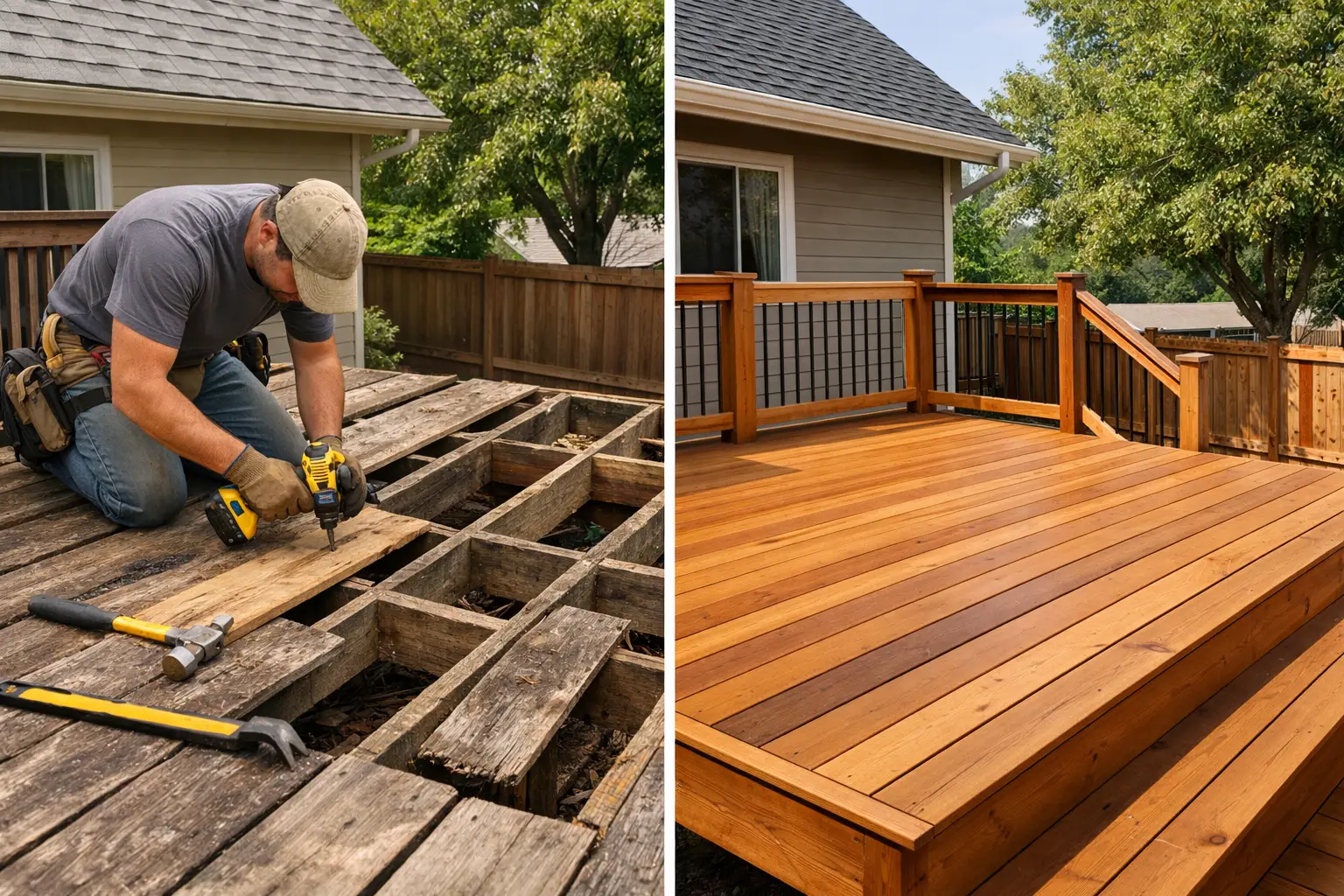
Deck Repair vs Replacement Cost: Repair or Rebuild?
A deck can look fine from the yard and still have trouble hiding beneath the surface. In the Houston area, hard sun, heavy rain, humidity, insects, and shifting soil can all take a toll on outdoor wood. When boards start to soften, railings wobble, or stains keep coming back, the real question becomes deck repair vs replacement cost. The lowest price today is not always the better value if you are paying to patch problems that will return next season.
The right call depends on the deck’s frame, age, safety, material condition, and how much of the structure is affected. A professional inspection helps separate a manageable repair from a deck that needs to be rebuilt before someone gets hurt.
Deck Repair vs Replacement Cost: Start With the Structure
Surface wear is common and often repairable. A few cracked boards, loose fasteners, faded stain, or a damaged stair tread do not automatically mean the whole deck is finished. If the joists, beams, posts, footings, ledger board, and connections are solid, targeted repairs can restore the deck without the expense of a full replacement.
The picture changes when the framing has rot, insect damage, sagging, or weak connections. Deck boards are the visible part, but the support system carries the weight of people, furniture, grills, and changing weather. Covering structural issues with new boards may make the deck look better temporarily, but it does not make it safer.
A contractor should check underneath the deck, around post bases, where the deck attaches to the house, and at the stairs and railings. These are the areas where moisture damage often starts. If deterioration is isolated, repair may make financial sense. If it is widespread, replacement usually prevents repeated service calls and larger costs later.
When Deck Repair Is the Better Value
Repair is often the practical choice when the deck has a sound foundation and frame, but a limited number of components have failed. Replacing several deck boards, securing a loose handrail, rebuilding one set of steps, or correcting a small drainage issue can extend the life of a good deck.
Repairs can also make sense for homeowners preparing to sell. A safe, clean, usable deck improves curb appeal and helps avoid buyer concerns without requiring a major outdoor renovation. Property managers may choose phased repairs when a deck is structurally sound but needs prompt attention between tenants or before a property inspection.
The cost of deck repair varies with access, material type, matching existing boards, and whether hidden damage is found after work begins. A simple board replacement is very different from rebuilding stairs or replacing a damaged support post. The best estimate explains what is being repaired, why it is needed, and whether the surrounding components are expected to hold up.
Be cautious if repairs have become an annual routine. Replacing a few boards once is normal maintenance. Replacing boards, tightening railings, treating rot, and correcting drainage year after year is a sign that the deck may be approaching the point where replacement is more cost-effective.
Signs Replacement Is Worth the Investment
Replacement becomes the smarter investment when the deck has broad structural deterioration or no longer fits the way you use the space. An older deck may have outdated railings, undersized stairs, weak attachment points, or framing that cannot support planned upgrades. In those cases, piecemeal repairs can leave you with a safer-looking deck that still has limited life remaining.
Watch for soft or spongy boards in multiple areas, visible rot on joists or beams, posts that are leaning or sinking, extensive insect damage, recurring standing water, and railings that move when pressure is applied. Separations between the deck and house are especially serious. Do not keep using a deck that feels unstable while waiting to decide what to do.
A full replacement also gives you control over the design. You can adjust the footprint, improve stair placement, add usable space, choose a low-maintenance material, and build a railing style that better matches the property. For commercial properties and rental homes, a replacement can reduce ongoing maintenance demands and create a more consistent appearance.
Replacement costs more upfront because it may involve demolition, disposal, new framing, new decking, stairs, railings, and site preparation. Still, replacing a failing deck once can cost less than trying to save a structure with widespread damage. It also provides a fresh starting point for maintenance and a clearer understanding of what is beneath the finished surface.
The Cost Factors That Change Your Estimate
There is no honest one-size-fits-all number for a deck project. Two decks with the same square footage can have very different prices because the work is not just about the top boards. The condition of the frame and the layout of the site matter just as much.
Material choice is one major factor. Pressure-treated lumber is often a budget-friendly option and works well when maintained properly. Cedar offers a classic natural appearance but needs regular care. Composite decking usually costs more at installation, yet it can reduce long-term staining, sealing, and board replacement needs. Metal or aluminum railing systems may also change the project price while improving durability and style.
Deck height matters too. A ground-level platform is generally simpler than an elevated deck with long stairs, multiple landings, guardrails, or difficult access underneath. Curves, built-in seating, lighting, privacy features, and custom gates add labor and materials. So do drainage corrections, footing work, or removing old materials that are unsafe or difficult to access.
For a fair comparison, do not compare estimates only by the final number. Ask whether demolition and disposal are included, what materials are specified, whether damaged framing will be addressed, and how change orders are handled if hidden rot is uncovered. A lower bid that skips essential repairs is not a lower total cost. It is an incomplete scope of work.
Consider the Cost Over the Next Five Years
The better deck decision is usually the one that creates the fewest surprises over the next several years. A repair may be the right answer when it gives you several more dependable years of use at a reasonable price. Replacement is often the better value when a repair would only delay a much larger project.
Think about maintenance in real terms. Wood decks need periodic cleaning, sealing or staining, and inspections for fastener and moisture issues. Composite materials may reduce those chores, but they still need proper framing, drainage, and installation. No material can overcome a weak structure.
Your plans for the property matter as well. If you expect to stay for many years, a replacement may be an opportunity to build the outdoor space you actually want. If you need a safe, presentable deck now and the frame is in good shape, repairs may protect your budget without overbuilding. For owners managing several properties, choosing durable materials and solving moisture problems can reduce future maintenance interruptions.
Get a Clear Recommendation Before Work Starts
A reliable deck contractor should not pressure you into replacement when a repair will do the job. At the same time, they should be direct when a patch is unlikely to be safe or lasting. Ask for photos of damaged areas when possible, a clear explanation of the recommended scope, and options that fit your budget.
GottaCallMAC helps homeowners, property managers, and commercial property owners make practical decisions about damaged decks across the greater Houston area. Our team can assess the condition of the structure, explain what needs attention, and provide a free estimate built around dependable workmanship and fair pricing.
If your deck is showing early wear, schedule an inspection before a loose board, weak railing, or soft spot becomes a bigger problem. A timely repair can protect a good deck, while an honest replacement plan can give you a safer outdoor space built to last.
